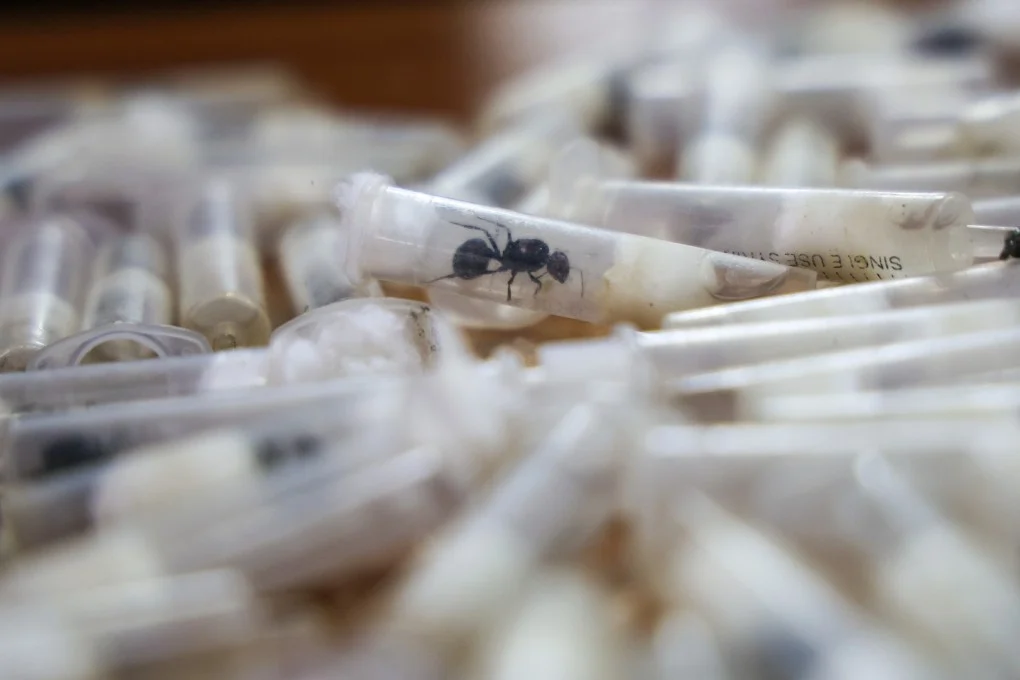
East Africa is witnessing a surge in ant smuggling, with traffickers sending these creatures to China and Europe. This increase is driven by the rising demand for specific ant species in global markets, leading to a notable rise in smuggling operations in recent years.
This phenomenon is part of an illegal trade involving the trafficking of animals and plants, which poses one of the largest threats to biodiversity worldwide. This demand is attributed to the use of ants in scientific research, as well as in some cultures as symbols of wealth or power.
Details of the Incident
According to local reports, ants are considered living organisms used in various industries, including environmental and pharmaceutical research. This demand has led to the emergence of organized smuggling networks operating in East Africa, where ants are captured from their natural habitats and trafficked abroad.
These operations often involve advanced techniques to evade detection by authorities, making it difficult for concerned parties to combat this phenomenon. It is estimated that some rare ant species are sold at high prices in international markets, encouraging traffickers to continue these illegal activities.
Background & Context
Historically, the trade in wildlife has flourished in recent decades, with global markets seeking rare and unique species. In this context, ants are considered part of this trade, as they are used in scientific and commercial research.
Studies show that the demand for ants has significantly increased in recent years, leading to a surge in smuggling operations in regions like East Africa. This type of smuggling poses a significant threat to biodiversity, negatively impacting local ecosystems.
Impact & Consequences
Ant smuggling leads to negative environmental impacts, as rare species are captured unsustainably. This can result in the degradation of ecosystems and loss of biodiversity, affecting local wildlife.
Moreover, this type of smuggling is a violation of international and local laws, necessitating intervention from authorities to combat this phenomenon. Reports indicate an urgent need to develop effective strategies to combat wildlife trafficking, including ants.
Regional Significance
The Arab region is part of the global network for wildlife trade, and it may also be affected by these smuggling operations. The proliferation of ant smuggling could threaten biodiversity in some Arab areas, especially in countries with rich natural environments.
Furthermore, raising awareness about the importance of biodiversity conservation is essential in the region, as joint efforts can contribute to combating these negative phenomena.