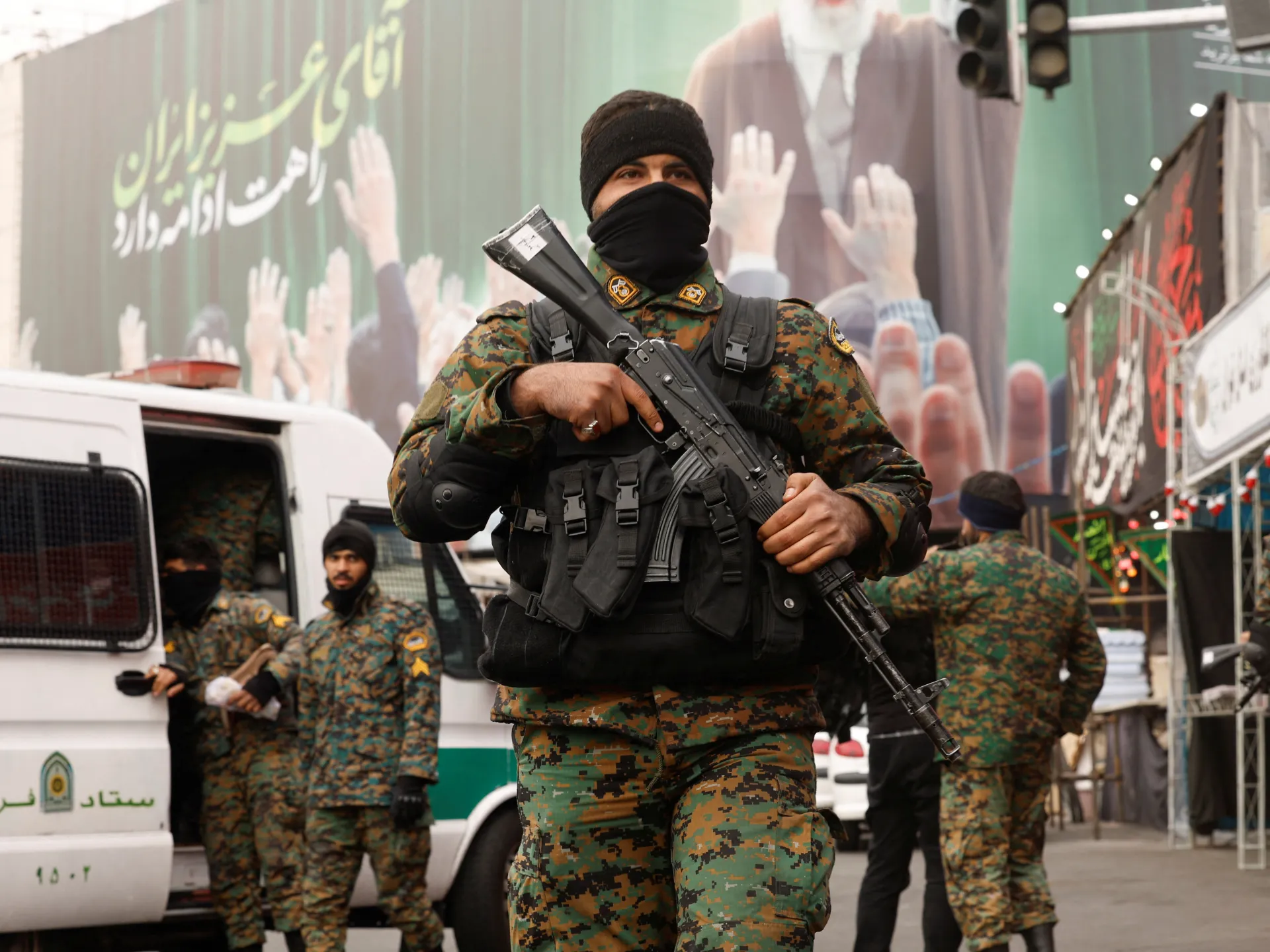
Iran is currently facing a state of increasing security tension, with arrests escalating across various regions as the war enters its fifth week. Iranian authorities assert their military resilience, indicating that any future negotiations must be linked to strict security guarantees to prevent a recurrence of assassinations and the return of conflict.
Al Jazeera's correspondent in Tehran, Sohaib Al-Asa, reported a series of arrests targeting individuals the authorities describe as "collaborators with foreign entities." These arrests have become almost daily occurrences since the onset of the war, affecting individuals accused of possessing weapons or attempting to carry out operations within the country.
Details of the Events
On March 15, the Iranian police chief, Ahmad Reza Radan, announced the arrest of approximately 500 individuals on espionage charges since the start of the American and Israeli attacks. These measures come at a time when diplomatic efforts led by China and Pakistan are aimed at reviving a stalled negotiation process that has been in limbo for weeks.
Despite these diplomatic moves, Iran continues to exercise caution, exchanging messages with the United States but from a standpoint of distrust, which limits its momentum towards a swift resolution. In this context, Tehran appears ready to negotiate "under fire," asserting its military resilience after five weeks of fighting.
Background & Context
Military operations continue in several areas within Iran, where developments intertwine between the strikes Iran is facing and the missiles fired by the Revolutionary Guard. The airstrikes have targeted vast areas including the capital Tehran and its surroundings, as well as Karaj and Isfahan, extending to the west and northwest, including Iranian Kurdistan and Ilam.
Iranian officials speak of "focused strikes on critical infrastructure," including energy facilities and the medical sector. Iranian Foreign Minister Abbas Araghchi pointed to the targeting of a pharmaceutical factory as part of a series of strikes that have hit medical facilities in recent times.
Impact & Consequences
Despite military pressures, Iran continues to launch waves of missiles, reaching the 88th wave, targeting vital logistical and security centers within the occupied Palestinian territories, particularly in Tel Aviv and the Bnei Brak area. The strikes have also focused on military and industrial infrastructure, including targeting the city of Haifa and its port.
These developments indicate that Iran is seeking to bolster its military position, which could lead to further escalation in the region and complicate security and political situations.
Regional Significance
Arab countries are directly affected by the rising tensions in Iran, as these events could lead to increased instability in the region. Additionally, the diplomatic moves led by China and Pakistan may open new avenues for negotiations, but they require caution from all parties involved.
In conclusion, the situation in Iran remains tense, with rising arrests and military pressures, raising questions about the future of security and stability in the region.