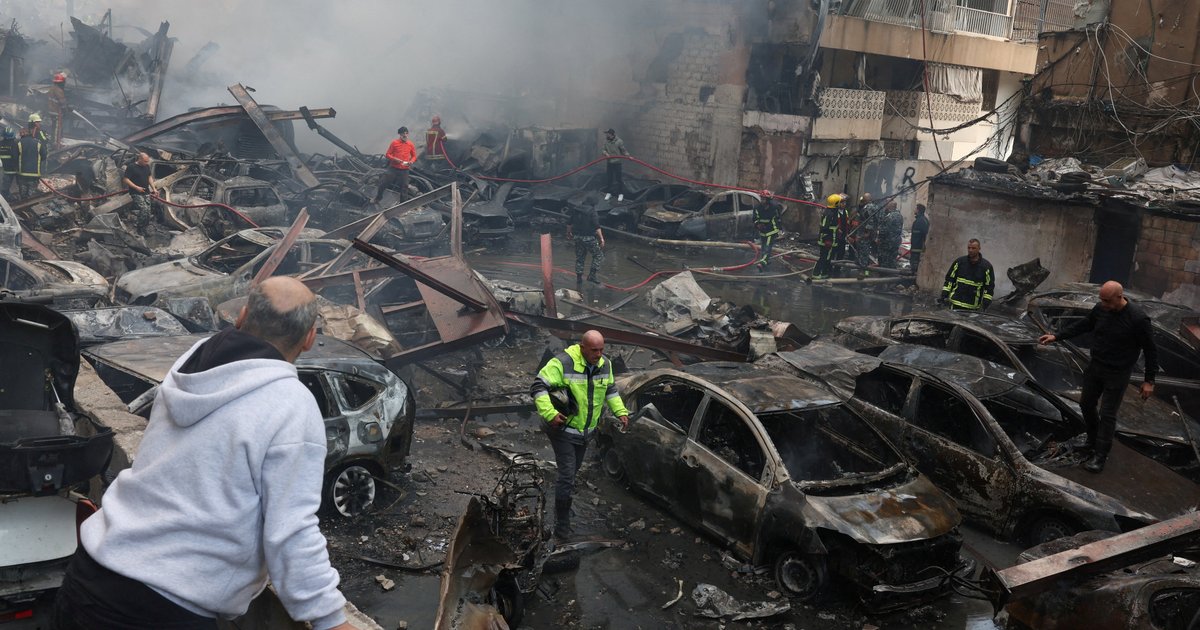
The Lebanese Ministry of Health has announced an increase in casualties resulting from repeated Israeli attacks on Lebanese territory, confirming reports that the death toll has surpassed hundreds. While the exact number of fatalities remains unknown, doctors in Beirut hospitals have warned of the significant pressure these health facilities are experiencing, prompting the American University of Beirut to issue an urgent call for blood donations.
Reports indicate that among the victims, 10 individuals were killed in an attack on a funeral in the eastern village of Shmistar. Additionally, three girls were killed in an attack on the coastal town of Adloun, along with six fatalities in another attack in the city of Sidon. In West Beirut, three more were killed, while two fell in Douris in the Bekaa Valley.
Details of the Attacks
The Israeli attacks on Lebanon come at a sensitive time, as the region is witnessing escalating tensions. The attack on the Shmistar funeral is considered one of the bloodiest incidents, as the victims were participating in memorial services for a deceased individual, raising questions about international humanitarian laws and civilian rights in armed conflicts.
Lebanese cities, particularly Beirut and Sidon, are experiencing a state of panic and anxiety among residents, as attacks are becoming increasingly frequent. Doctors in Beirut hospitals have noted that the health situation is worsening, with insufficient resources to accommodate the large number of injured.
Background & Context
Historically, Lebanon has experienced numerous armed conflicts with Israel, the last major war occurring in 2006. Since then, there have been periods of relative calm, but tensions have not completely dissipated. The recent attacks occur within the context of a broader escalation in the region, where political and military dimensions intersect with humanitarian aspects.
The Israeli attacks on Lebanon are part of a broader strategy aimed at undermining any potential threat from Hezbollah, which the Israeli occupation considers a major adversary. This escalation also reflects increasing regional tensions, especially amid the political and economic crises affecting many countries in the area.
Impact & Consequences
The humanitarian consequences of the Israeli attacks will be far-reaching, exacerbating the humanitarian situation in Lebanon, which is already grappling with economic and political crises. Hospitals facing acute resource shortages will encounter greater challenges in providing necessary care for the injured.
Furthermore, these attacks may lead to a larger escalation in the conflict, potentially dragging the region into further chaos. The international community is now called upon to intervene, as the humanitarian situation demands an urgent response.
Regional Significance
These events serve as an indicator of rising tensions in the region and their impact on regional security. The situation in Lebanon could have implications for neighboring countries, as any escalation may lead to a spillover effect that complicates existing crises.
In conclusion, the ongoing violence not only threatens the stability of Lebanon but also poses a challenge to the broader security landscape in the Middle East, necessitating immediate attention from global powers.