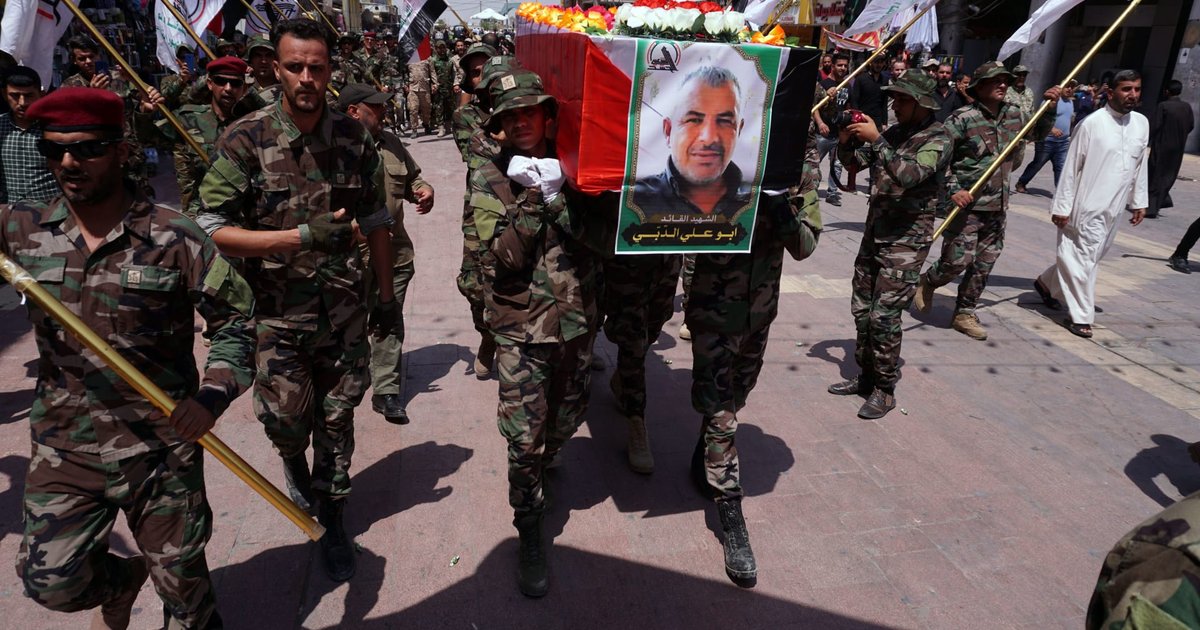
Early Sunday morning, military tensions intensified in Iraq, as airstrikes and drone attacks targeted sensitive sites in Baghdad and Nineveh province. These attacks represent a culmination of the ongoing military operations in the country, with a recent focus on the bases of the Popular Mobilization Forces (PMF) and American troops.
A security source told Al Jazeera that attacks on the international coalition’s logistical support base near Baghdad International Airport have resumed. Airstrikes also targeted PMF locations in the Nineveh plain, near the city of Mosul to the north, signaling a potential escalation of fighting in these strategic areas.
Meanwhile, violent explosions have occurred in western Baghdad as air defenses responded to suicide drones attempting to target civilian areas. Local media sources also reported the death of an Iraqi national intelligence officer due to a drone attack on his position in the city center.
As the conflict in the Middle East enters its fourth week, the security situation in Iraq remains fragile, with Iranian-backed militias conducting numerous attacks. The Iraqi intelligence service issued a statement confirming that their sites have been subjected to terrorist assaults from lawless entities.
Reports indicate that these attacks have resulted in injuries to eight individuals in two separate attacks in central Baghdad, particularly in the Saydiya area where a projectile hit their homes. Sources confirmed additional injuries resulting from drone strikes, with a residential area in Abu Ghraib near the airport witnessing an explosion that left four wounded, including a woman.
In light of these developments, the Pentagon hinted, in an unprecedented analysis, that US combat helicopters have conducted airstrikes against Iranian-backed Iraqi factions on the ground. These aircraft targeted a variety of objectives, including a communications center belonging to the Iraqi national security service, complicating the security landscape in the country.
The armed factions, known as the “Islamic Resistance in Iraq,” continue to execute daily attacks using drones and missiles against American bases in Iraq. Since the onset of the conflict, these factions have also targeted the US embassy, subjecting it to rocket fire and bombardment. Air defenses have managed to intercept many of these attacks; however, the threat remains ongoing.
Iraqi air defenses in Erbil, the capital of the Kurdistan Region, are also striving to fend off the escalating aerial assaults, as this area is considered a hub for military operations against ISIS by the international coalition. Erbil Airport hosts coalition forces and their military advisors.
In the context of the PMF factions, which have previously been referenced in statements from Iranian-aligned Iraqi Hezbollah brigades, these factions have declared a commitment to cease targeting the US embassy in Baghdad for a duration of five days, under specific conditions. The factions asserted that should the enemy not comply, the response would be immediate, with an increase in future attacks.
Since the conflict began, the scope of military operations has expanded to include Iraq as one of the affected countries. Today, the attacks from Iraqi factions have surged, while violations against American interests and Iranian pressure on Kurdish groups in the north increase.
These tense conditions open a wide horizon for multiple ramifications not only on Iraq but on overall regional security, necessitating serious consideration from regional and international leaders for comprehensive political solutions.