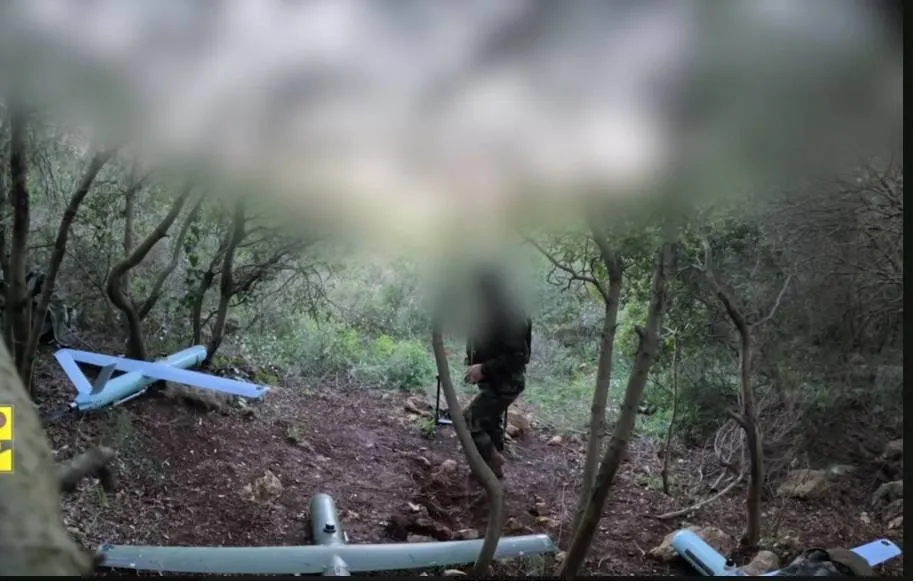
Military operations continue in Southern Lebanon as suicide drones enter the battlefield between Hezbollah and the Israeli army, drawing inspiration from the ongoing conflict in Ukraine. This operational pattern was absent in previous wars between the two sides, where it was limited to the Israeli army's use only.
Hezbollah has introduced the term "kamikaze drones" in its military statements to describe a category of drones equipped with explosive materials, which are used to target gatherings of soldiers and vehicles. These drones have appeared in videos released by the party, reflecting an evolution in its military strategies.
Details of the Event
Dr. Riyad Kahwaji, a researcher in security and defense affairs, clarified that what is referred to as kamikaze drones does not represent a qualitative development but is merely a linguistic description. These drones are used to strike targets in a suicide manner, a pattern that has been known for some time. Kahwaji noted that Hezbollah possesses drones capable of dropping small munitions, but their effectiveness remains limited compared to the advancements seen in the Ukrainian war.
He added that Hezbollah's technical capabilities in this area cannot be compared to those of Ukraine or Russia, whether in terms of accuracy or system integration. The model known as "Shahed 131" is considered the most advanced in the party's arsenal, but it does not alter the overall assessment that these capabilities remain primitive.
Background & Context
Drones are classified as "loitering munitions," which combine reconnaissance and targeting on a single platform. These drones are typically used to pursue fighters on the ground and fly short distances before exploding. The effectiveness of these drones depends on their integration into a broader operational system that includes information gathering and target bank updates.
The gap between the separate use of these drones and their use within integrated systems in modern conflicts directly affects the level of operational impact. Despite Hezbollah's use of drone patterns and previous weapons, field operations have not seen radical changes in tactics.
Impact & Consequences
The Israeli tactic still relies on scorched earth and slow advances, as the Israeli army seeks to lure Hezbollah fighters into confrontation before executing targeted airstrikes. Conversely, Hezbollah continues to use the same weapons and previous tactics, reflecting continuity in the pattern of conflict.
Comparisons with the war in Ukraine are considered inaccurate, as the nature of the terrain and military and organizational capabilities differ radically. The conflict in Southern Lebanon cannot be measured against a model of conventional warfare between two regular armies with advanced technological capabilities.
Regional Significance
Israeli airstrikes continue in Southern Lebanon, where seven people were killed in a strike targeting the town of Kfar Kila, reflecting rising tensions in the region. Lebanese President Joseph Aoun has called for negotiations with Israel, warning that Southern Lebanon could become like Gaza if military operations persist.
Aoun pointed to the severe damage caused by the war, with over 1400 fatalities and 4000 injuries, emphasizing the need for dialogue to avoid further tragedies. He also expressed regret over the attacks on the Lebanese army, stressing the importance of maintaining civil peace under the current circumstances.
Amid these developments, Hezbollah announced targeting an Israeli military ship off the Lebanese coast, indicating a new escalation in the conflict. The war that began last March continues to affect civilian lives, with approximately 20,000 people living in the city of Tyre despite evacuation orders.