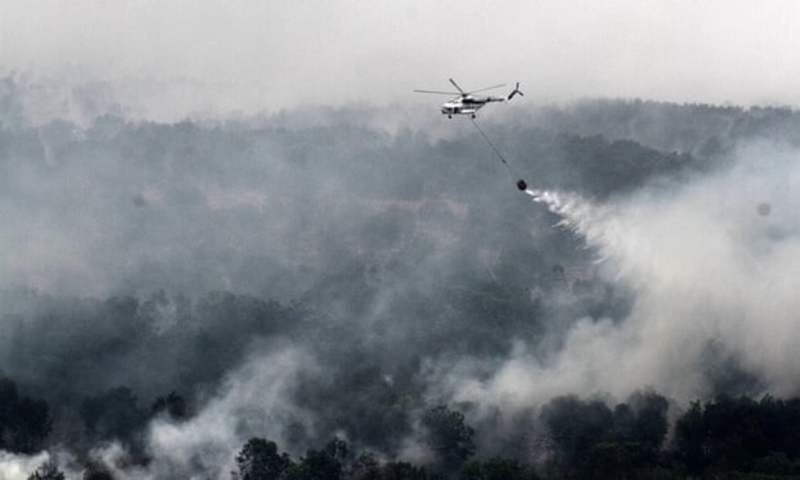
Indonesia and Malaysia have seen a significant rise in the number of fire points, reaching the highest level in seven years. This situation raises serious concerns about the deterioration of air quality in the region, especially with forecasts predicting lower rainfall in the coming months. This development serves as a warning for residents and authorities in both countries, as adverse weather conditions may exacerbate health and environmental issues.
According to reports, the number of fire points in Indonesia and Malaysia has increased dramatically, reflecting a rise in unsustainable agricultural activities, such as forest burning to prepare land for farming. This issue is not new, but it requires urgent attention from governments and local communities.
Details of the Incident
Data indicates that Indonesia alone has witnessed over 2,000 fire points in recent weeks, marking a significant increase compared to previous years. In Malaysia, a similar number of fire points has been recorded, heightening the risk of dense smoke clouds that could affect air quality. Urban areas are expected to be particularly impacted, as these conditions may lead to a rise in respiratory diseases.
These events coincide with an increasing dry season, with forecasts suggesting that rainfall will be below normal in the coming months. This situation amplifies concerns about the potential for further outbreaks of fires, placing additional pressure on government efforts to combat this phenomenon.
Background & Context
Historically, Southeast Asia has experienced recurring cycles of forest fires, especially in Indonesia and Malaysia. These fires are often attributed to unsustainable agricultural practices, such as forest burning, which is used as a method for land clearing. In recent years, governments have taken steps to curb these practices, but challenges remain.
In 2015, the region faced one of the worst smoke crises, where fires significantly deteriorated air quality, affecting millions of people. This situation prompted governments to adopt stricter measures, but it appears that challenges persist as this phenomenon resurfaces.
Impact & Consequences
The repercussions of these fires extend beyond environmental effects, impacting public health as well. Poor air quality can lead to an increase in respiratory illnesses, such as asthma and bronchitis. Vulnerable groups, including children and the elderly, are particularly at risk, necessitating urgent action to protect these populations.
Moreover, the deterioration of air quality can negatively affect the local economy, as adverse weather conditions may lead to a decline in tourism and an increase in healthcare costs. Therefore, governments need to act urgently to address these challenges.
Regional Significance
Although these events are occurring in Southeast Asia, they have global implications. The decline in air quality can have effects on global climate, warranting international attention. Additionally, Arab countries, which face their own environmental issues, could benefit from the experiences of these nations in tackling similar challenges.
In conclusion, the current situation in Indonesia and Malaysia requires an urgent response from governments and local communities. There must be integrated efforts to combat fires and preserve the environment to ensure the health and safety of the population.