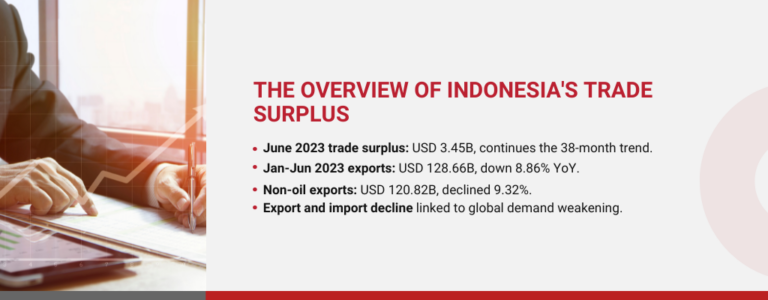
Bank Indonesia (BI) announced that the country achieved a trade surplus of $1.27 billion during February 2026, reflecting a significant improvement in economic performance. This announcement comes at a sensitive time as Indonesia seeks to bolster its capacity to face global economic challenges.
According to data released by the Central Statistics Agency of Indonesia (BPS), the trade surplus in February 2026 was higher than the surplus recorded in January 2026, which was $0.95 billion. Ramadhan Dini Prakasa, the executive director of the communications department at Bank Indonesia, confirmed that the central bank will continue to enhance cooperation with the government and other authorities to strengthen economic stability.
Details of the Trade Surplus
These positive results in the trade balance are indicators of the strength of the Indonesian economy, particularly as the trade surplus continued in the non-oil goods sector, which recorded a surplus of $2.19 billion. Non-oil goods exports valued at $21.09 billion contributed to this surplus, reflecting the strong performance of Indonesian exports.
Exports of raw materials such as animal and vegetable fats and oils, along with manufactured products like vehicles and their parts, are key factors supporting this positive performance. Major markets for Indonesia's exports include China, the United States, and India.
Background & Context
Historically, Indonesia has experienced fluctuations in its trade balance, significantly affected by global commodity prices and changes in demand. However, the continuous surplus in the trade balance over the past months reflects the government's efforts to enhance domestic production and reduce reliance on imports.
Indonesia is one of the largest economies in Southeast Asia and plays an important role in global trade. Strengthening the trade surplus can contribute to improving its financial position and increase its capacity to face economic crises.
Impact & Consequences
Achieving a trade surplus has positive impacts on the Indonesian economy, as it enhances foreign exchange reserves and reduces pressure on the local currency. This surplus can also attract foreign investments, thereby promoting sustainable economic growth.
Furthermore, the continued trade surplus may lead to an improvement in Indonesia's credit rating, making it easier for the government to borrow from international markets at lower interest rates.
Regional Significance
Indonesia is one of the countries that has trade relations with many Arab nations, importing some goods from Arab countries and exporting its products to them. Strengthening the trade surplus in Indonesia may open new avenues for trade cooperation between Indonesia and Arab countries, contributing to enhancing economic relations.
In conclusion, the trade surplus achieved by Indonesia in February 2026 is a positive indicator of the strength of the Indonesian economy, reflecting the ongoing efforts of the government and the central bank to enhance stability and economic growth.