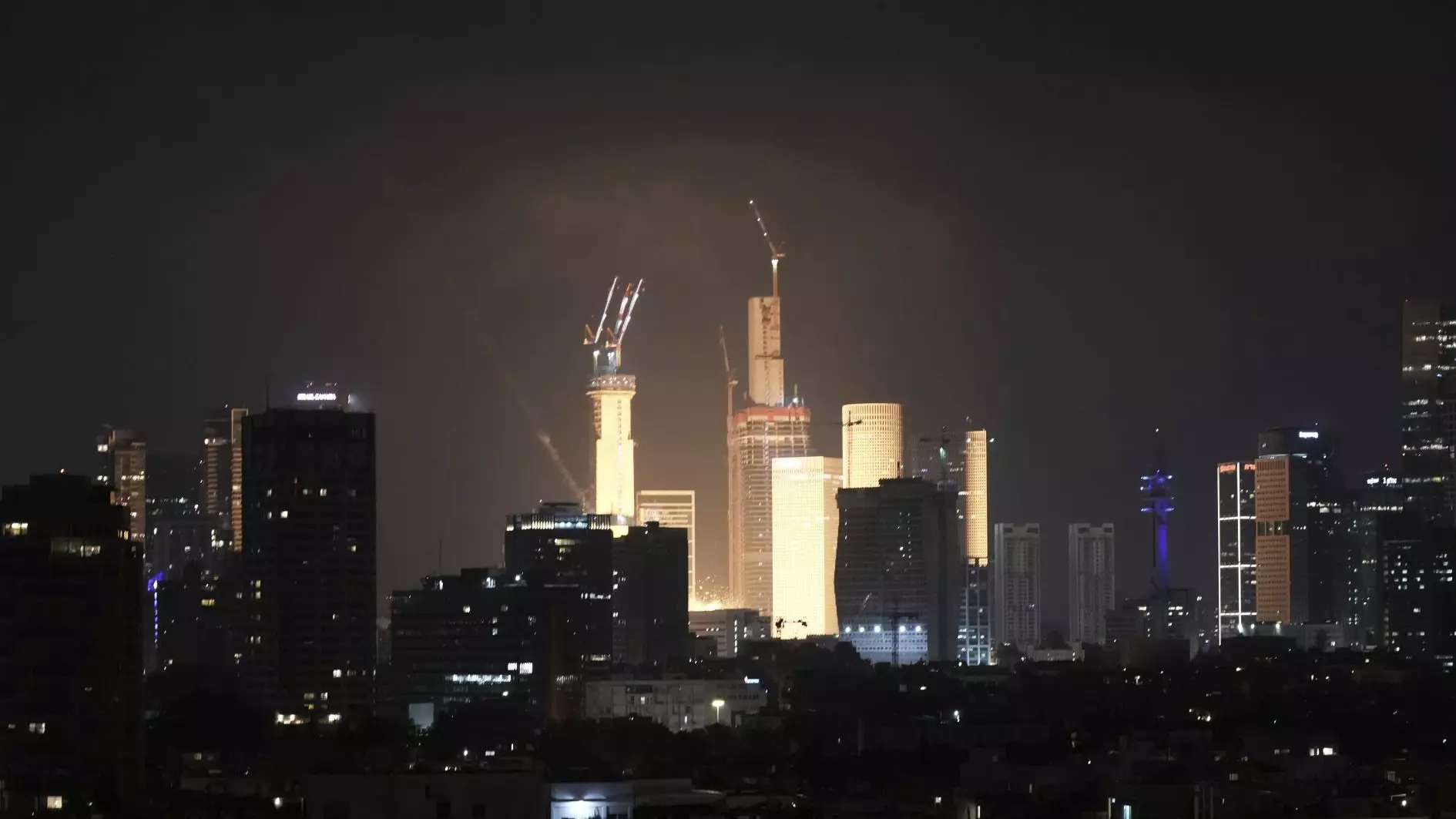
In a significant development, several countries in the Arabian Gulf region have reported missile and drone launches from Iran, shortly after the United States and Iran announced a temporary ceasefire agreement lasting two weeks. This agreement, which came just before the deadline set by President Donald Trump for initiating extensive military strikes if no deal was reached, raises questions about its sustainability amid ongoing threats.
The ceasefire, mediated by Pakistan, requires the full and safe opening of the Strait of Hormuz, as confirmed by Trump in his statements. Iranian officials have stated that their armed forces will halt defensive operations if attacks against Iran cease, which opens the door for interpreting Iran's commitment to the terms.
Details of the Incident
Despite the announced ceasefire, Iran launched missiles towards Israel and several Gulf countries, prompting the activation of air defense systems in the United Arab Emirates and Saudi Arabia. The UAE Ministry of Defense issued public warnings urging people to stay in safe places, indicating that the sounds heard in some areas were due to air defense systems intercepting missiles and drones. Additionally, the General Authority for Civil Defense in Saudi Arabia issued early warnings of potential danger in several regions, including the capital, Riyadh.
At the same time, the Israeli army confirmed that it had detected missile attacks from Iran, further escalating tensions in the region. Reports have shown that missile attacks from Iran have significantly increased since the onset of the conflict on February 28, with the United States and Israel conducting over 3,000 strikes on Iran, while Tehran responded with 1,511 strikes on targets in Israel and neighboring Gulf countries.
Background & Context
Historically, relations between Iran and Gulf countries have been increasingly strained, especially following the United States' withdrawal from the Iranian nuclear deal in 2018. Since then, Iran has employed offensive tactics against Gulf nations, using these attacks as leverage against Arab states and the United States. In this context, the Strait of Hormuz is a vital point for oil transportation, through which a significant percentage of global oil supplies pass, increasing the importance of regional stability.
Recently, reports have indicated that weapon stockpiles in the region are under significant pressure, as some Gulf countries have used a large portion of their interceptor missile inventories. By the end of March, the UAE and Kuwait had utilized about 75% of their Patriot missile stocks, while Bahrain estimated that it had exhausted around 87% of its inventory.
Impact & Consequences
These developments raise questions about whether the ceasefire agreement can withstand ongoing threats. If attacks persist, negotiations may falter or collapse during the designated two-week period. Additionally, military escalation could exacerbate humanitarian conditions in the region, increasing civilian suffering.
Furthermore, Reza Amiri Maghaddam, the Iranian ambassador to Pakistan, warned Gulf countries to pay attention to their relations with Iran, indicating that the United States would eventually leave the region. These statements reflect the growing tension between Iran and Gulf states and highlight the need for long-term solutions to ensure security in the area.
Regional Significance
These events directly impact security and stability in the Arab region. As Iranian threats increase, concerns grow over potential military escalation that could draw other countries into the conflict. Recent attacks on energy infrastructure in Qatar, which led to a 17% reduction in production, suggest that the conflict could affect global energy supplies.
In conclusion, the situation in the Gulf requires urgent international attention, as any escalation could lead to severe consequences for regional and international security.