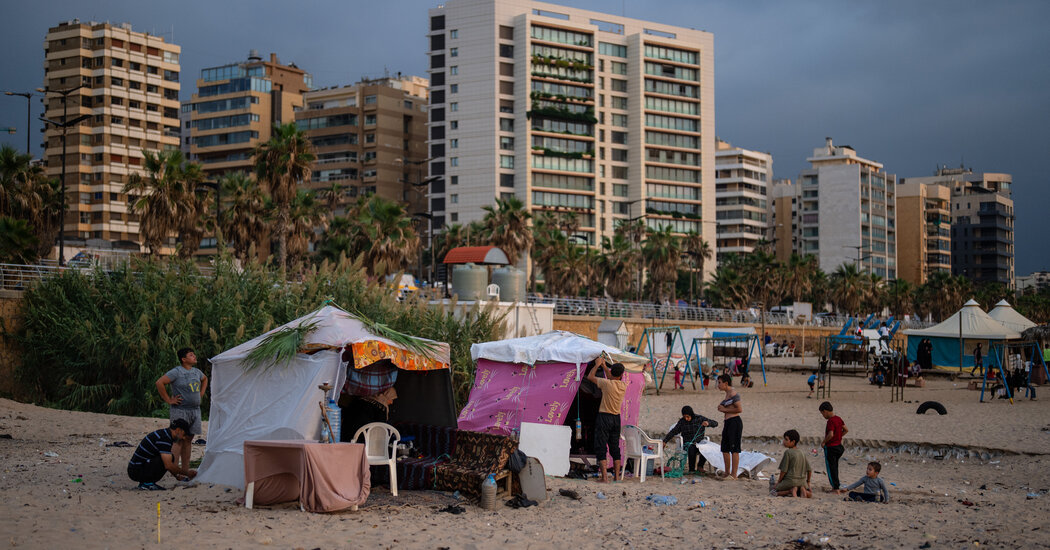
The Lebanese capital, Beirut, is experiencing chaos due to the increasing number of displaced individuals fleeing conflict zones, leading to a radical change in the daily lifestyle of the city. These displaced persons, suffering from harsh conditions, fill the streets in search of shelter and means of livelihood.
Reports indicate that many of these displaced individuals come from rural areas heavily affected by armed conflicts, where they have lost their homes and lands. As their numbers grow, Beirut faces new challenges related to providing essential services such as water, electricity, and healthcare.
Details of the Situation
The displaced individuals are living in difficult conditions, with many forced to sleep in the streets or in temporary shelters. Some have reported facing difficulties in obtaining food and medicine, which exacerbates their suffering. Additionally, the deteriorating economic situation in Lebanon complicates this crisis, as the country suffers from high unemployment rates and a declining currency value.
There are increasing fears that these conditions could lead to the spread of diseases and epidemics, especially given the weakness of Lebanon's healthcare system. Humanitarian organizations have warned that the situation could worsen if urgent measures are not taken to assist the displaced.
Background & Context
Historically, Lebanon has witnessed numerous armed conflicts, starting from the civil war in the 1970s and 1980s to recent conflicts that have affected the country's stability. These conflicts have led to the displacement of many residents, contributing to an ongoing humanitarian crisis.
In recent years, the economic and social conditions in Lebanon have worsened, with political and economic crises leading to a decline in living standards. The outbreak of the COVID-19 pandemic has further increased pressure on the healthcare and economic systems, making it difficult for the displaced to receive the necessary assistance.
Impact & Consequences
The impact of this crisis is not limited to the displaced individuals alone; it extends to the entire Lebanese community. As the number of displaced persons increases, Lebanese citizens face new challenges related to resources and services. This situation could exacerbate social tensions between the displaced and residents, increasing the likelihood of new conflicts.
The international community is closely monitoring the situation, as this crisis could affect relations between Lebanon and other countries. If conditions continue as they are, international intervention may be required to provide humanitarian assistance to the displaced.
Regional Significance
The displacement crisis in Lebanon is part of a larger crisis facing the Arab region, where many countries are suffering from armed conflicts and displacement. These crises affect regional stability and increase the humanitarian challenges faced by neighboring countries.
Ultimately, the situation in Lebanon requires an urgent response from both the international and local communities to provide support for the displaced and improve their conditions. Ignoring this crisis could lead to a worsening of humanitarian and social conditions in the country.