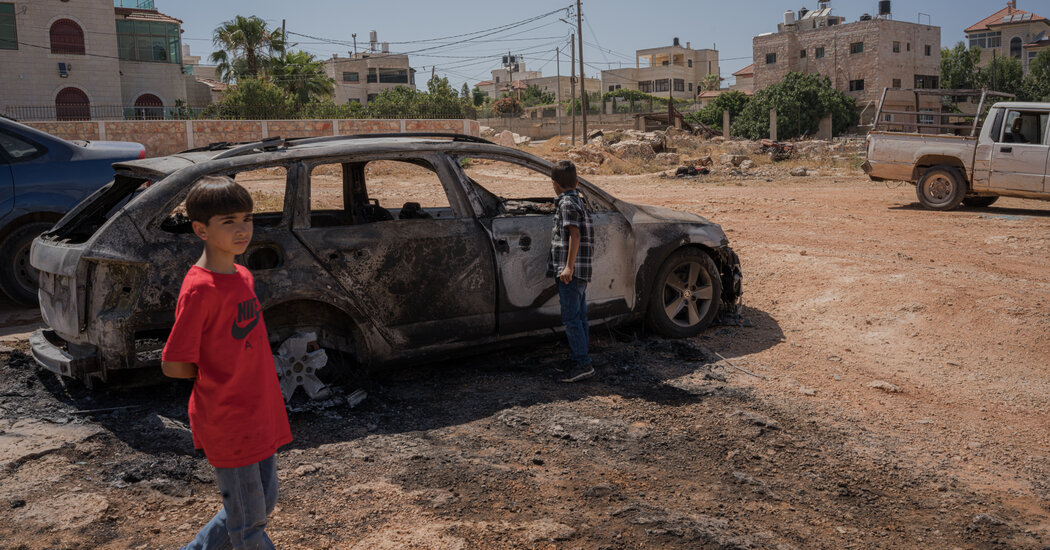
The attacks by Israeli settlers on Palestinians in the West Bank are increasing, supported by the occupation army and police, in a dangerous escalation aimed at displacing Palestinians and Judaizing the land. These assaults come amid the Israeli-American war, where settlers exploit the chaos and political ambiguity to strengthen their presence.
Despite local and international criticism, Benjamin Netanyahu's government continues to support these actions, either through direct actions or through complete silence. There appears to be complicity among some Israelis who choose to ignore these violations, reflecting a division within Israeli society regarding this issue.
Details of the Incident
Since the onset of the Israeli-American war, the West Bank has witnessed a notable escalation in settler attacks. Numerous incidents targeting Palestinians have been recorded, including physical assaults and property destruction. While these attacks are not new, they have become more aggressive recently, raising concerns about the future of Palestinians in the region.
The assaults range from direct attacks on individuals to the burning of agricultural crops and destruction of property, exacerbating the suffering of Palestinians who are already facing difficult economic conditions. Observers indicate that these actions are part of a broader strategy to Judaize the West Bank, which contradicts international laws and human rights.
Background & Context
Historically, the West Bank has experienced ongoing conflicts between Palestinians and Israeli settlers. Since the occupation of the West Bank in 1967, the Israeli government has encouraged settlement, leading to increased tensions. Over time, these settlements have become a major point of contention in the Israeli-Palestinian conflict, as Palestinians view them as an obstacle to achieving peace.
The Israeli government, under Netanyahu's leadership, seeks to promote settlement as part of its policy, further intensifying tensions. At the same time, the government faces international pressure to curb these activities, but it seems that this pressure has not significantly affected its policies.
Impact & Consequences
These attacks exacerbate the humanitarian situation in the West Bank, where Palestinians suffer from a lack of basic resources, including water and electricity. Additionally, these actions increase instability in the region, negatively impacting peace prospects.
Moreover, these attacks contribute to the rise of hatred and division between Israelis and Palestinians, making it difficult to achieve any form of dialogue or understanding. Analysts suggest that the continuation of these policies could lead to further escalation, threatening regional security.
Regional Significance
The events in the West Bank have significant implications for Arab countries, stirring feelings of solidarity with the Palestinians. The ongoing assaults could escalate tensions in the region, affecting relations between Arab states and Israel.
Under these circumstances, the international community must take a firm stance against these violations and work towards finding lasting solutions to the Israeli-Palestinian conflict. Ignoring these situations will only exacerbate humanitarian and political crises in the region.
In conclusion, the situation in the West Bank remains under scrutiny, as these events require urgent action from the international community to ensure the protection of Palestinian rights and to halt the ongoing assaults.