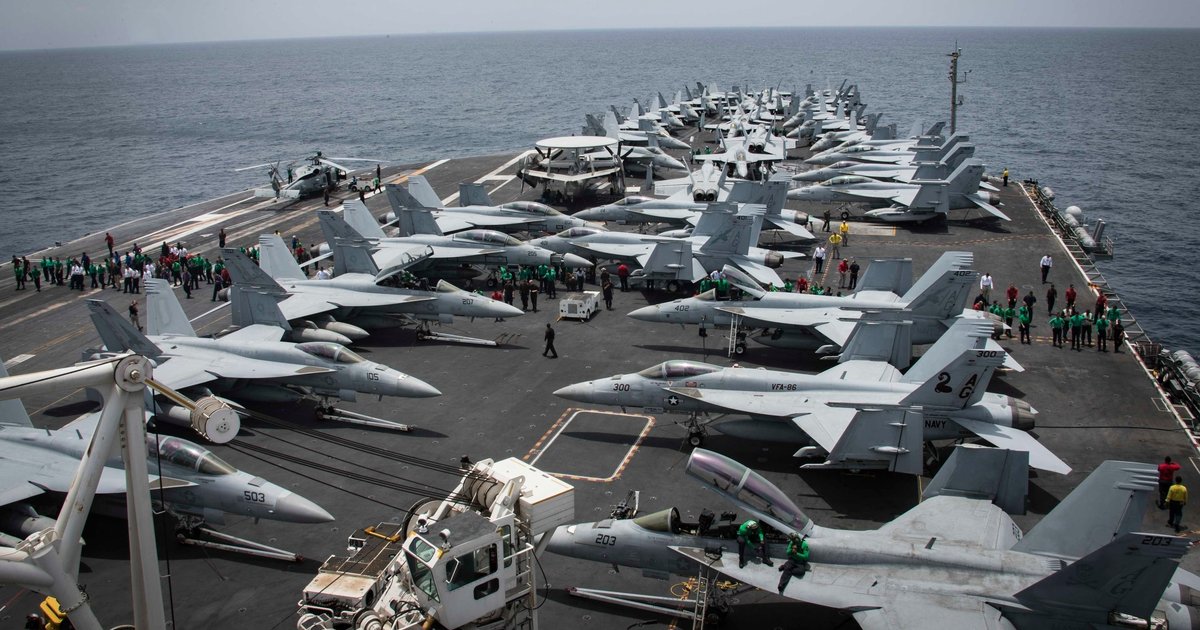
The region is witnessing a growing US military buildup, raising questions about Washington's intentions. This escalation comes at a sensitive time as tensions rise in several hotspots, reflecting a new strategy that the US administration may adopt in the Middle East.
These movements include the deployment of additional forces in strategic areas, as well as enhancing military capabilities at existing US bases. US officials have indicated that these steps aim to bolster regional security amid increasing threats from certain countries and armed groups.
Details of the Recent Developments
Recently, the US Department of Defense (Pentagon) announced the deployment of additional military units to the Middle East, including aircraft carriers and warships. This decision is part of a broader strategy aimed at deterring any potential threats from Iran or associated groups.
Air defenses at some military bases have also been strengthened, reflecting Washington's concerns about potential attacks. Some analysts have pointed out that these movements could serve as a show of force amid rising tensions between the US and Iran.
Context and Background
Historically, the region has seen numerous US military buildups, especially following major events such as the invasion of Iraq in 2003. With escalating tensions in recent years, military buildup has become part of the US strategy to address security challenges.
These challenges include the rise of Iranian military activities in the region, as well as ongoing conflicts in Syria and Yemen. This has led to increased anxiety among US allies in the region, who are seeking to ensure their security amid these changing circumstances.
Implications and Consequences
These movements could escalate tensions in the region, increasing the likelihood of armed conflicts. Additionally, the military buildup may strengthen Iran and its allies' positions, who may perceive this as a direct threat to them.
Furthermore, these developments could affect relations between the US and Arab states, as some allies seek to balance their support for Washington while containing tensions with Iran.
Impact on the Arab Region
This US military buildup is particularly significant for Arab countries, as it may affect the overall stability of the region. Amid ongoing conflicts, some nations may find themselves compelled to reassess their security strategies.
The US military buildup could also lead to increased tensions among various factions in the region, complicating the security landscape. In this context, Arab nations must be prepared to deal with the potential repercussions of these movements.
In conclusion, the US buildup in the Middle East represents a turning point in American policy towards the region. As tensions continue, the most pressing question remains: Will this strategy succeed in achieving stability, or will it lead to further escalation?