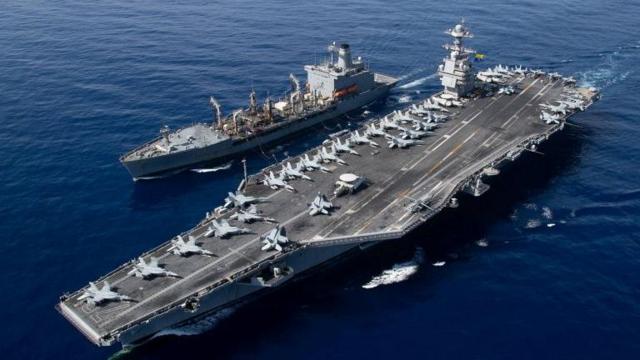
Christian Müller-Glißmann, head of asset allocation research at Goldman Sachs, has reported that the increasing risks due to conflicts in the Middle East are adversely affecting investment strategies. He pointed out that there are "few safe havens" that can currently protect investment portfolios. Under these circumstances, Müller-Glißmann emphasized that the bank prefers to increase the cash liquidity ratio in its investment portfolio.
These statements come at a time when the Middle East is witnessing escalating tensions, with armed conflicts intensifying in several countries, raising concerns among investors about the stability of financial markets. This warning from Goldman Sachs serves as a wake-up call for investors seeking safe opportunities amid the current conditions.
Event Details
Concerns are growing about the impact of conflicts in the Middle East on the global economy, with analysts indicating that these disputes could lead to significant fluctuations in financial markets. Müller-Glißmann noted that the current situation requires investors to reassess their strategies, particularly in light of the uncertainty surrounding the markets.
He also confirmed that cash liquidity has become the safest option at present, as it can provide protection for investors from market volatility. This trend indicates that investors prefer to hold cash rather than risk investments that may be unstable.
Background & Context
Historically, the Middle East has experienced numerous armed conflicts that have significantly impacted the global economy. From the civil war in Syria to the Israeli-Palestinian conflict, these disputes have always been a source of concern for investors. With tensions escalating in recent years, it has become clear that these conflicts are affecting the stability of financial markets.
In past years, there have been multiple attempts to achieve peace in the region, but these efforts have often faced significant obstacles. As risks increase, it has become essential for investors to be more cautious in their investment decisions.
Impact & Consequences
Goldman Sachs' statements underscore the importance of understanding geopolitical risks and their impact on financial markets. Under current conditions, instability in the Middle East may lead to significant fluctuations in oil prices and global financial markets, affecting the global economy as a whole.
Moreover, the rising risks may drive investors to seek other safe havens, such as gold or government bonds, which could lead to a shift in market dynamics. Therefore, the current situation requires investors to be more aware of risks and make informed decisions.
Regional Significance
For Arab countries, the increasing risks in the Middle East may directly affect their economies. Countries that rely on foreign investments may find themselves in a difficult position, as investors may hesitate to inject their funds into an unstable environment.
Furthermore, ongoing conflicts may exacerbate humanitarian crises in the region, increasing pressure on Arab governments. Ultimately, the current situation requires Arab countries to strengthen their economic strategies and achieve political stability to attract investments.