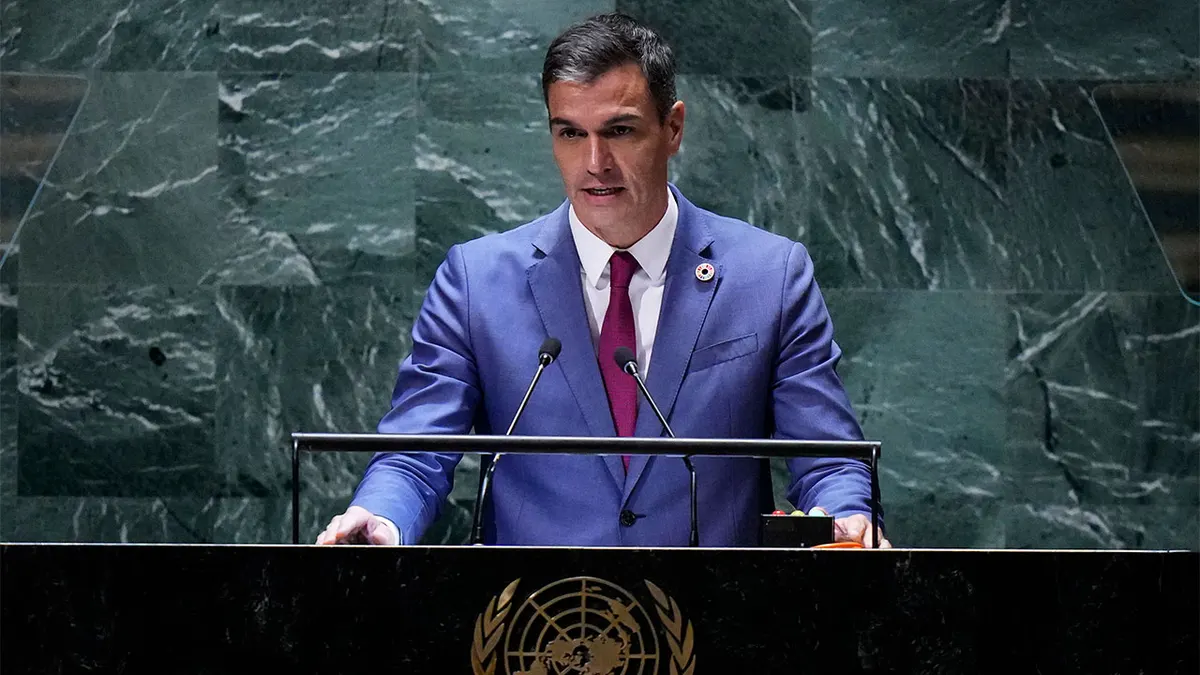
Recent polls published on Monday reveal that Spain's ruling Socialist Party has experienced a notable increase in popularity among voters, largely attributed to Prime Minister Pedro Sánchez's firm rejection of the U.S.-Israeli war on Iran. The results indicate a decline in support for the far-right Vox party, which backs the war, reflecting a shift in the general sentiment among Spanish voters.
Sánchez has emerged as one of the leading Western leaders criticizing the war, labeling it as unjustified and exacerbating tensions in the Middle East. This bold stance reflects the Spanish government's desire to distance itself from military policies that could escalate international crises.
Details of the Event
According to the polls, the Socialist Party has garnered increasing support from voters, with 45% of participants expressing their approval of the party's policies, compared to 38% in previous surveys. In contrast, support for Vox has dropped to 20%, indicating a decline in backing for far-right parties in the country.
These results come at a sensitive time, as tensions in the Middle East rise due to the ongoing conflict between Iran and Israel, making the positions of European countries increasingly significant in shaping the course of events. Sánchez's stance on the war serves as a strong message to Spanish voters that the government prioritizes peace and stability.
Background & Context
Historically, Spain has adopted a cautious policy towards external conflicts, particularly in the Middle East. The country has undergone significant political transformations in recent years, affecting how it engages with international issues. Sánchez's position reflects a shift in Spanish policy towards greater diplomatic engagement rather than military intervention.
The war on Iran poses a considerable challenge for many Western countries, as concerns grow over escalating violence and its impact on regional security. Therefore, Spain's position could influence how other European nations approach this conflict.
Impact & Consequences
These results serve as an indicator of changing public sentiment in Spain, where voters seem to prefer peaceful policies over military options. This trend could impact upcoming elections, as the Socialist Party may seek to strengthen its position by focusing on social and economic issues rather than engaging in military conflicts.
Moreover, this stance may encourage other European countries to reassess their policies towards conflicts in the Middle East, potentially leading to shifts in political and economic alliances in the region.
Regional Significance
The positions of Western countries towards conflicts in the Middle East hold significant importance for the Arab world. As tensions in the region escalate, any support or opposition from European nations can influence the course of events. Spain's rejection of the war may encourage Arab countries to enhance their diplomatic efforts to resolve conflicts peacefully.
In conclusion, Spain's position under Sánchez appears to reflect a growing desire to move away from military policies, which could contribute to fostering peace and stability in the region.