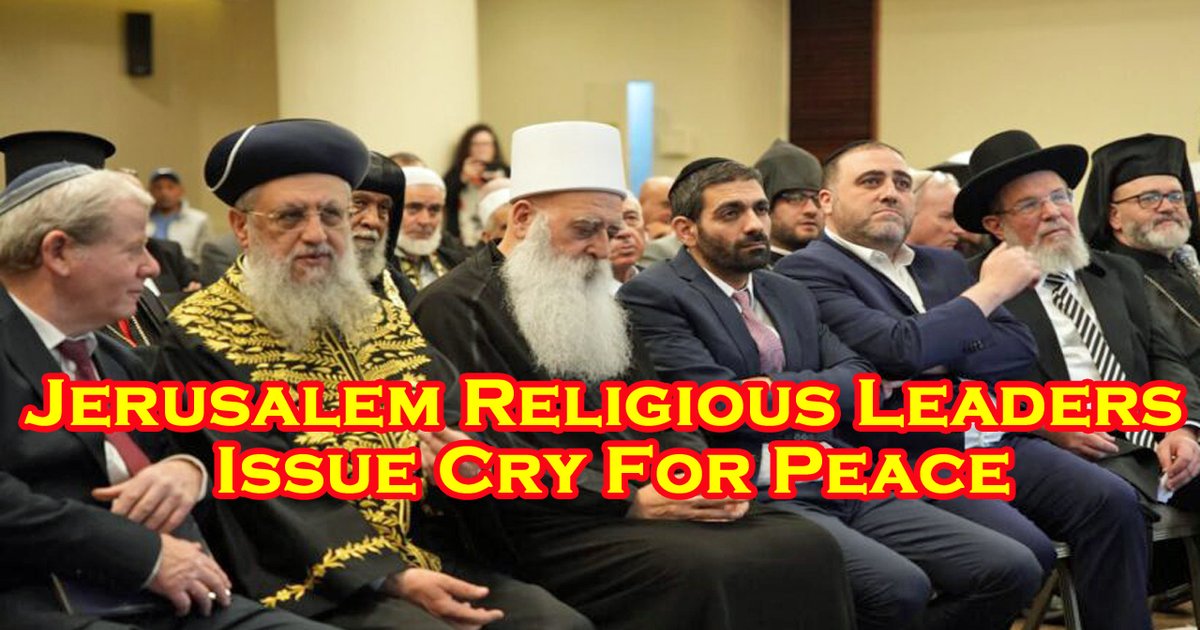
As tensions escalate in Jerusalem, the Latin Patriarch was prevented from accessing the Church of the Holy Sepulchre during the Palm Sunday Mass held on March 29. This incident reflects the challenges faced by religious figures in the region, illustrating how religion has shifted from being a calming influence to a weapon used in the conflict.
Historian Blandine Chéline-Pont, in an article for "Le Monde," states that religion no longer serves as the temporal framework of the conflict in Jerusalem but has become a mere variable used for political purposes. This shift highlights how religion can be exploited in various contexts, complicating the ongoing struggle.
Details of the Incident
The barring of the Latin Patriarch from entering the Church of the Holy Sepulchre, considered one of the holiest Christian sites, underscores the increasing tensions among different religious groups in Jerusalem. This prohibition was not just an isolated incident but reflects a state of religious and political polarization in the holy city.
Historically, Jerusalem has been a center for the three Abrahamic faiths, but in recent years, the city has witnessed a surge in violence and tensions among Jews, Christians, and Muslims. This situation calls for religious leaders to play a more effective role in calming the circumstances, yet their influence appears to have significantly diminished.
Background & Context
The history of the Israeli-Palestinian conflict spans decades, with the region experiencing numerous bloody events that have impacted interfaith relations. In recent years, tensions have intensified, especially in Jerusalem, where access to holy sites is a highly sensitive issue.
The Church of the Holy Sepulchre is a focal point in this conflict, where believers from various denominations gather to celebrate their religious occasions. However, the restrictions imposed on access to these sites demonstrate how religion can be wielded as a tool of control rather than a source of peace.
Impact & Consequences
The increasing use of religion as a tool in the conflict may exacerbate conditions in Jerusalem, heightening tensions among different groups. If this dynamic continues, we may witness an escalation in violence, negatively affecting civilian lives and increasing their suffering.
Moreover, the diminishing effectiveness of religious leadership in calming the situation could lead to a loss of trust among different communities, making it more challenging to achieve peace in the region. It is crucial for religious leaders to work on rebuilding trust and promoting interfaith dialogue.
Regional Significance
The impact of events in Jerusalem extends to the entire Arab region, where the Palestinian cause is considered one of the central issues affecting relations between Arab states and Israel. The escalation of tensions in Jerusalem may provoke strong reactions from Arab nations, further complicating the regional situation.
Additionally, the events in Jerusalem highlight the importance of fostering interfaith dialogue in the region, as this can contribute to achieving peace and stability. It is essential for Arab countries to collaborate with religious leaders to promote values of tolerance and peaceful coexistence.
In conclusion, the barring of the Latin Patriarch from entering the Church of the Holy Sepulchre illustrates how religion can be utilized as a tool in the conflict, necessitating that religious and political leaders work together to calm the situation and achieve peace in Jerusalem.