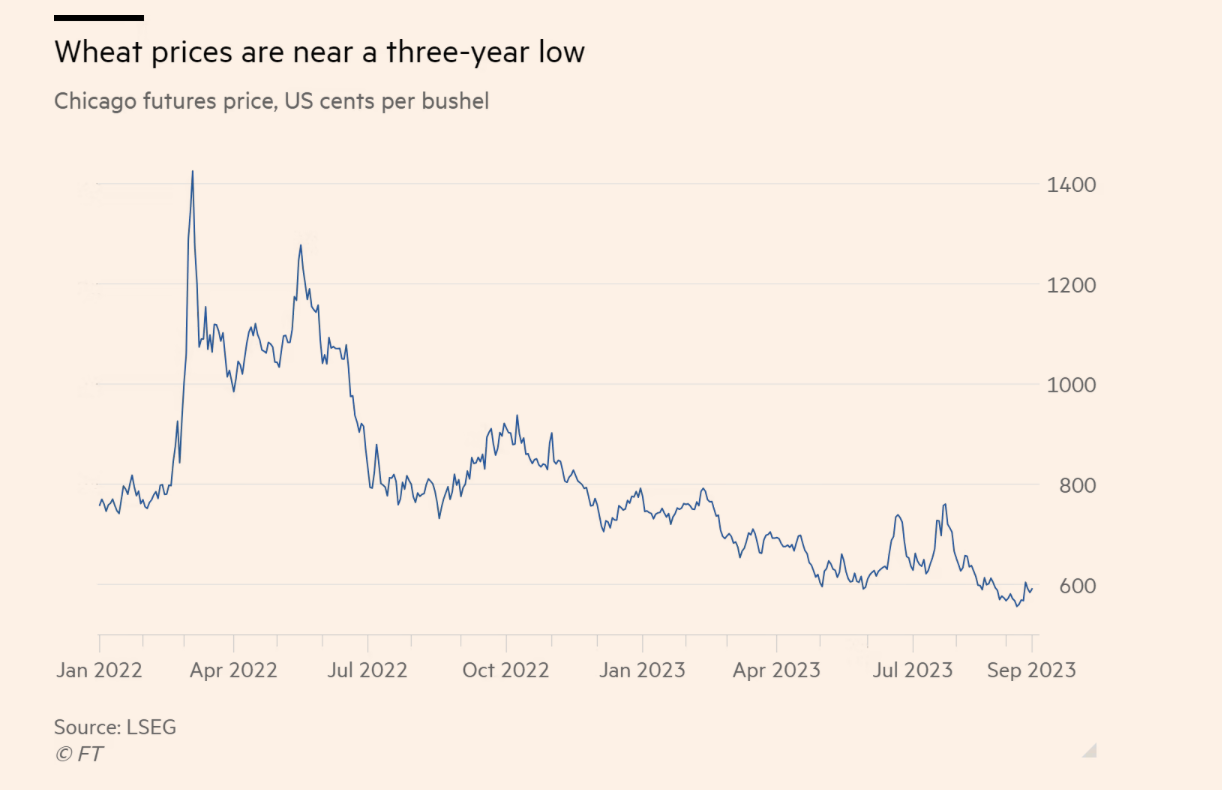
Russian wheat prices have recently surged, reaching new levels due to increasing demand from global markets. This rise occurs amidst growing fears of escalating conflict in Iran, creating uncertainty in food markets.
Russia is one of the largest wheat exporters in the world, with many countries relying on its supplies to meet their food needs. As demand increases, particularly from nations facing supply shortages, prices have risen significantly, raising concerns for both consumers and farmers.
Details of the Event
According to reports, Russian wheat prices have increased by up to 10% in the past few weeks. This rise comes at a sensitive time, as fears of escalating conflict in Iran grow, which could impact trade flows in the region. Additionally, geopolitical tensions play a crucial role in determining commodity prices, prompting markets to react swiftly to any new developments.
Some reports predict that this upward trend will continue, fueled by strong demand from importing countries. At the same time, any new escalations in the Iranian conflict could lead to greater price volatility, adding further pressure on global markets.
Background & Context
Historically, Russia has played a pivotal role in the global wheat market, representing a significant portion of global supplies. However, regional conflicts, such as those occurring in Iran, can negatively affect supply chains. In recent years, food markets have experienced considerable fluctuations due to political and economic crises.
Iran is one of the countries that heavily relies on wheat imports, and any escalation in conflict could worsen food conditions in the country. The effects of these crises extend to neighboring countries, complicating the situation in the region.
Impact & Consequences
The rise in Russian wheat prices is expected to affect many importing countries, potentially leading to increased food costs. This situation could negatively impact weaker economies, as countries may struggle to secure their food needs at reasonable prices.
Moreover, rising prices could lead to increased social pressures in some countries, where protests and demands for improved living conditions may escalate. This situation could create new challenges for governments in the region, necessitating prompt action to mitigate the effects of these crises.
Regional Significance
Arab countries are among the largest wheat importers, making them vulnerable to fluctuations in global prices. With the rise in Russian wheat prices, Arab nations may face challenges in securing their food supplies, which could impact food security in the region.
Under these circumstances, Arab governments need to consider alternative strategies to boost local production and reduce reliance on imports. Regional cooperation in agriculture could also be an effective solution to address these challenges.
The rise in Russian wheat prices reflects the impact of geopolitical crises on global food markets. With increasing demand and fears of escalation in Iran, importing countries must take proactive steps to ensure their food security.