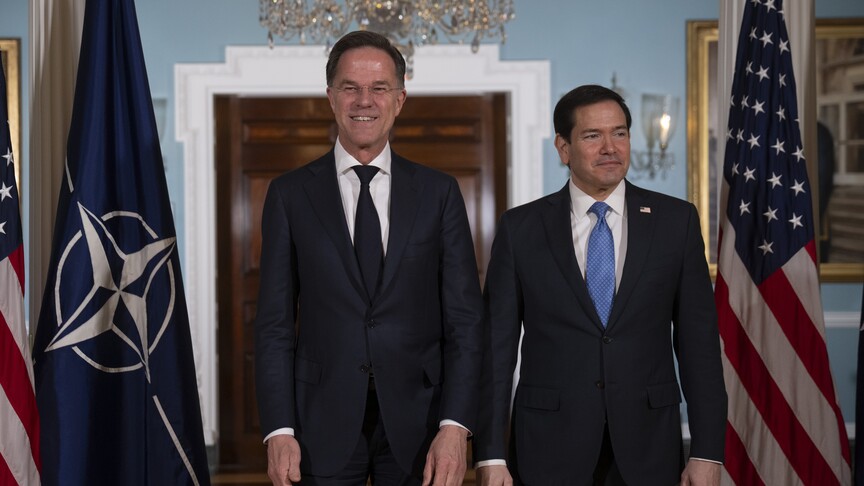
As global tensions rise, NATO's Secretary General Mark Rutte and US Secretary of State Marco Rubio convened to discuss multiple crises facing the world, including the conflict in Iran and the war in Ukraine. These discussions occur at a sensitive time, with increasing criticism from former President Donald Trump directed at US allies in the Strait of Hormuz.
These developments coincide with escalating tensions between NATO and Russia, raising concerns about the potential escalation of the conflict in Ukraine. Additionally, the situation in Iran is causing international alarm, particularly regarding potential threats to navigation security in the Strait of Hormuz, a vital point for oil transportation.
Event Details
The meetings between Rutte and Rubio take place during a critical period as NATO seeks to enhance cooperation among its members to address increasing security challenges. In this context, the situation in Ukraine was discussed, where the ongoing conflict between Russian and Ukrainian forces threatens stability across the entire region.
The discussions also touched on the circumstances in Iran, where tensions have escalated due to the Iranian nuclear program and potential threats from Tehran. These issues place additional pressure on US allies in the region, complicating international relations further.
Background & Context
Historically, relations between NATO and Russia have seen increasing tensions since Russia's annexation of the Crimea in 2014. This escalation led to sanctions imposed on Russia by Western nations, complicating the security situation in Europe. Simultaneously, Iran is facing growing international pressure due to its nuclear program, raising fears of potential military escalation in the region.
The Strait of Hormuz is considered a crucial point for oil transportation, with a significant percentage of global oil supplies passing through it. Any threats to this region could significantly impact the global economy, making it a focal point for major powers.
Impact & Consequences
Concerns are mounting that the ongoing tensions between NATO and Russia could lead to military escalation, negatively affecting European and global security. Furthermore, the situation in Iran could escalate regional conflicts, threatening the stability of Gulf Arab states.
In this context, Trump's criticisms of US allies may influence future relations between Western nations, potentially increasing distrust and complicating international cooperation efforts to address security challenges.
Regional Significance
The situations in Iran and the Strait of Hormuz are particularly significant for Arab nations, many of which rely on oil supplies from this region. Any escalation in conflict could impact oil prices and increase economic pressures on Arab countries.
Moreover, tensions between NATO and Russia could lead to shifts in regional alliances, necessitating Arab nations to reassess their security and political strategies amid these changing circumstances.
The continuation of these global tensions requires Arab nations to take proactive steps to ensure their security and stability in the face of increasing challenges.