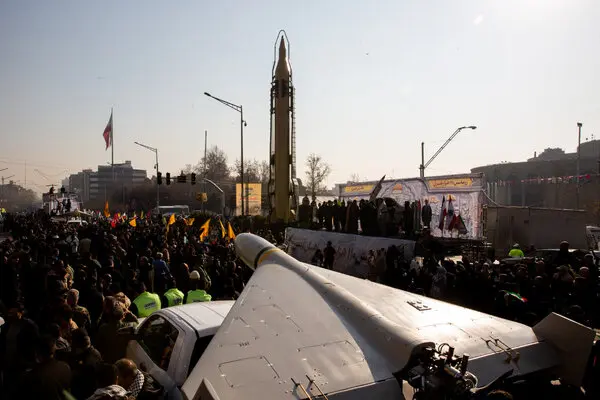
Iranian drones, especially the Shahab models, are viewed as a cheap and effective weapon posing a threat to the security of Gulf states. In a new development, the U.S. Central Command released images showing the destruction of a drone manufacturing facility near Isfahan, which was seen as a significant blow to Iran's defensive capabilities. However, the question remains: can the production of these drones truly be halted?
The images published by the U.S. Central Command depict a modest factory located on a tree-lined road, before and after the attack that completely destroyed it. This factory was believed to be producing drones used in attacks against Gulf states, reflecting the increasing threat posed by Iran in the region.
Details of the Incident
The attack on the factory comes at a sensitive time, as tensions between Iran and Gulf states are escalating, particularly with the rise in drone attacks on vital installations. The U.S. Central Command confirmed that this attack is part of its ongoing efforts to limit Iran's military capabilities.
However, the challenges facing the United States in this context are significant. The technology used in manufacturing these drones has become widely available, making it easier for Iran to produce more of them in small workshops. Additionally, the use of readily available spare parts complicates tracking the sources of these drones.
Background & Context
Historically, Iran relied on advanced military technologies, but over time, it began to develop its own capabilities in the field of drones. These drones, which are considered relatively inexpensive, have become an essential part of its military strategy, being used in attacks on civilian and military targets in Gulf states.
In recent years, the region has witnessed a surge in the use of drones, leading to increased fears that this technology could be employed in future conflicts. Furthermore, Iran is seeking to enhance its defensive capabilities by developing new drones, complicating the security situation in the region.
Impact & Consequences
Iranian drones are seen as a threat not only to Gulf states but also to the United States and its allies. Attacks carried out by these drones could escalate conflicts in the region, necessitating a coordinated international response.
With the ongoing war in Ukraine and rising tensions in other areas, the United States may find itself compelled to intensify its efforts to counter Iranian threats. However, as experts have pointed out, Iran's ability to produce more drones may make it difficult for the United States to achieve its objectives in this context.
Regional Significance
These developments directly impact the security and stability of the Arab region. Gulf states, which rely on regional security, may find themselves facing new threats from Iran. Additionally, the use of drones in attacks could escalate tensions between Arab states and Iran, threatening regional stability.
In conclusion, the greatest challenge remains how to address the increasing threats from Iranian drones. As the conflict continues, Gulf states may find themselves needing to develop new strategies to deal with these threats.