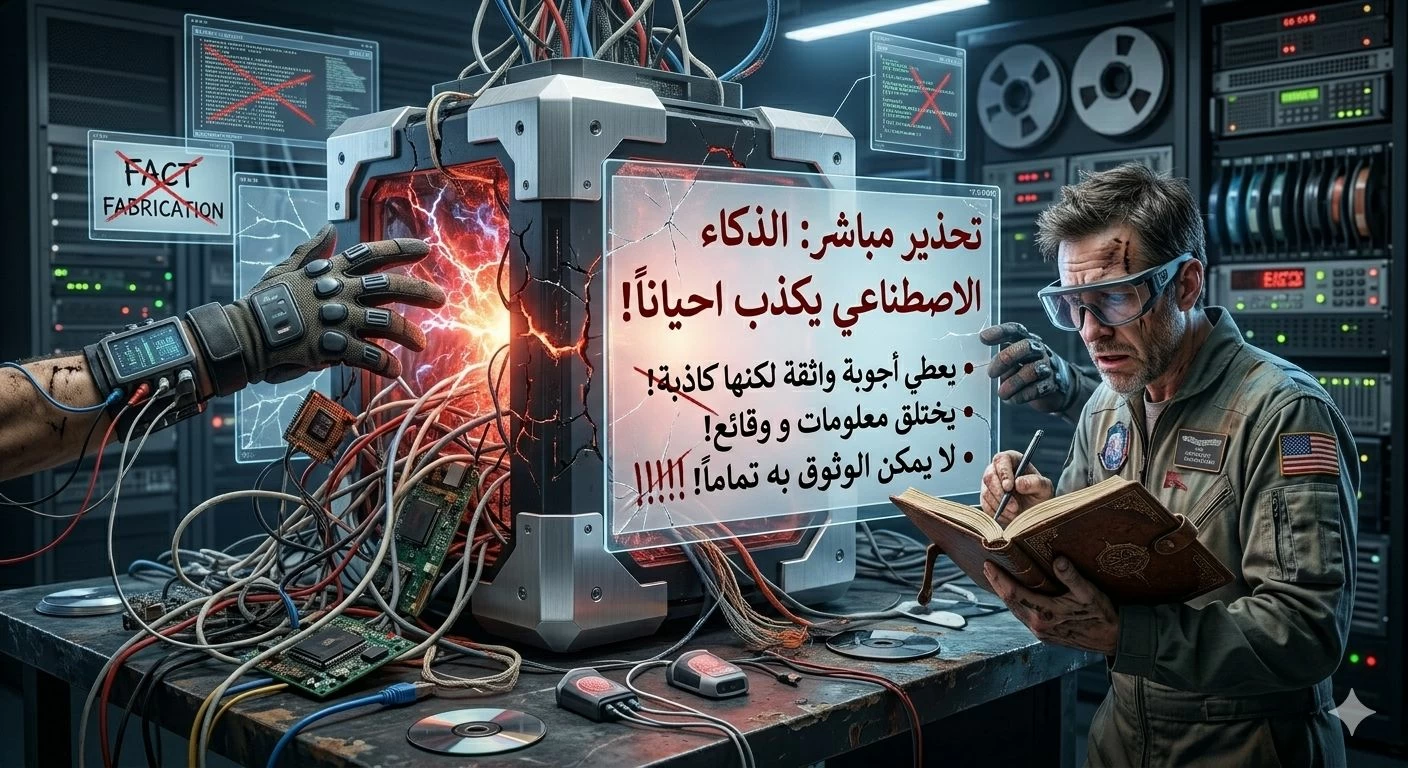
User trust in artificial intelligence is on the rise, leading to significant decisions based on inaccurate information. Reports indicate that 47% of enterprise AI users made decisions based on misleading content in 2024. Meanwhile, employees spend between 3 to 4 hours weekly verifying the outputs of these systems.
The tool that was promised to save time is now consuming it in reviewing its mistakes. This phenomenon raises concerns, especially in a region that suffers from fragility in the use of this technology.
Event Details
In our region, fragility is exacerbated because most AI models are trained on English content. When these models operate in Arabic, the likelihood of error increases significantly. For example, a student may receive fabricated references with convincing Arabic names, or a patient may receive a medical diagnosis that seems accurate but is actually fictitious. Additionally, a lawyer relying on AI may present a ruling that does not exist in any legal record.
This fragility has not yet been discussed seriously enough, raising questions about the reliability of these systems in making life decisions.
Background & Context
Today, artificial intelligence is a maturing tool, and it should not be dismissed or given the keys to the house. Studies indicate that the best models have reduced the hallucination rate from 21% in 2021 to less than 1% in certain tasks, demonstrating real progress in this field.
However, the more important question is not about how much the machine lies, but about how the accumulated lies, which are considered facts, affect decision-making, and how smarter models learn and reproduce them with greater confidence.
Impact & Consequences
This phenomenon requires special attention from policymakers and users alike. Lack of awareness of potential risks may lead to poor decisions affecting health, finances, and legal issues.
It is important to ask: who holds the answer today? And who is thinking about it? So far, there do not seem to be clear answers or proposed solutions.
Regional Significance
In the Arab world, where reliance on technology is increasing, there must be greater awareness of the risks associated with using artificial intelligence. It is essential to train models better on the Arabic language and culture to reduce errors.
In conclusion, we must be cautious in using this technology and seek ways to ensure its accuracy and reliability before relying on it for important decision-making.