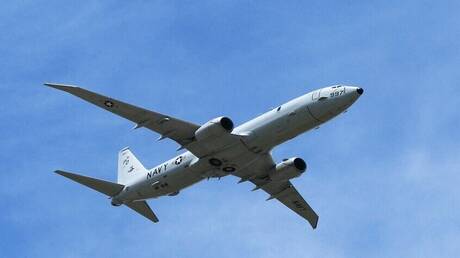
CNN has revealed a notable increase in the number of US intelligence flights off the coast of Cuba since February. The analysis on which the network based its report indicates that this escalation occurs against a backdrop of rising tensions in the region.
Data shows that US forces have intensified their intelligence-gathering activities, reflecting Washington's growing interest in monitoring military and political activities in Cuba. This move comes at a time when the world is witnessing increasing geopolitical tensions, prompting questions about the strategic goals behind this escalation.
Details of the Increased Activity
According to reports, the intelligence flights involve the use of advanced reconnaissance aircraft, allowing US forces to collect precise information regarding military activities in Cuba. This intensified activity may be linked to American concerns over potential military alliances that could form in the region, especially given the changing circumstances in Latin America.
Cuba is considered a strategic point in the Caribbean, where its geographical location enables the United States to monitor activities in the area. Data has shown that intelligence flights have significantly doubled, reflecting a new strategy from Washington to address security challenges in the region.
Background & Context
Historically, Cuba has been a focal point of tensions between the United States and Latin American countries. Since the Cuban Revolution in 1959, relations between the two nations have been strained, with the United States imposing an economic embargo on Cuba that lasted for decades. This embargo has significantly impacted the Cuban economy, prompting Cuba to seek support from other nations such as Russia and Venezuela.
In recent years, Cuba has undergone political and economic changes, bringing it back into the spotlight for the United States. Shifts in Cuban leadership, along with economic challenges, may influence the US strategy towards the island.
Impact & Consequences
The increase in US intelligence flights could escalate tensions between Washington and Havana. This move may provoke reactions from the Cuban government, which could view it as a violation of its sovereignty. Simultaneously, these activities might bolster popular support for the Cuban government, as such events could be used to enhance national sentiment against foreign interventions.
Furthermore, this escalation could affect relations between the United States and other Latin American countries, as this action might be perceived as an attempt by Washington to dominate the region. Neighboring countries may adopt varying stances, complicating the geopolitical landscape in the area.
Regional Significance
The heightened US intelligence operations underscore the growing tensions between the United States and Cuba, which could have broader implications for regional stability. As the US increases its surveillance, it may inadvertently provoke a stronger response from Cuba and its allies, potentially leading to a cycle of escalation.
In conclusion, the increase in intelligence flights off Cuba's coast highlights the delicate balance of power in the Caribbean. The situation remains fluid, and the international community will be closely monitoring developments as they unfold.