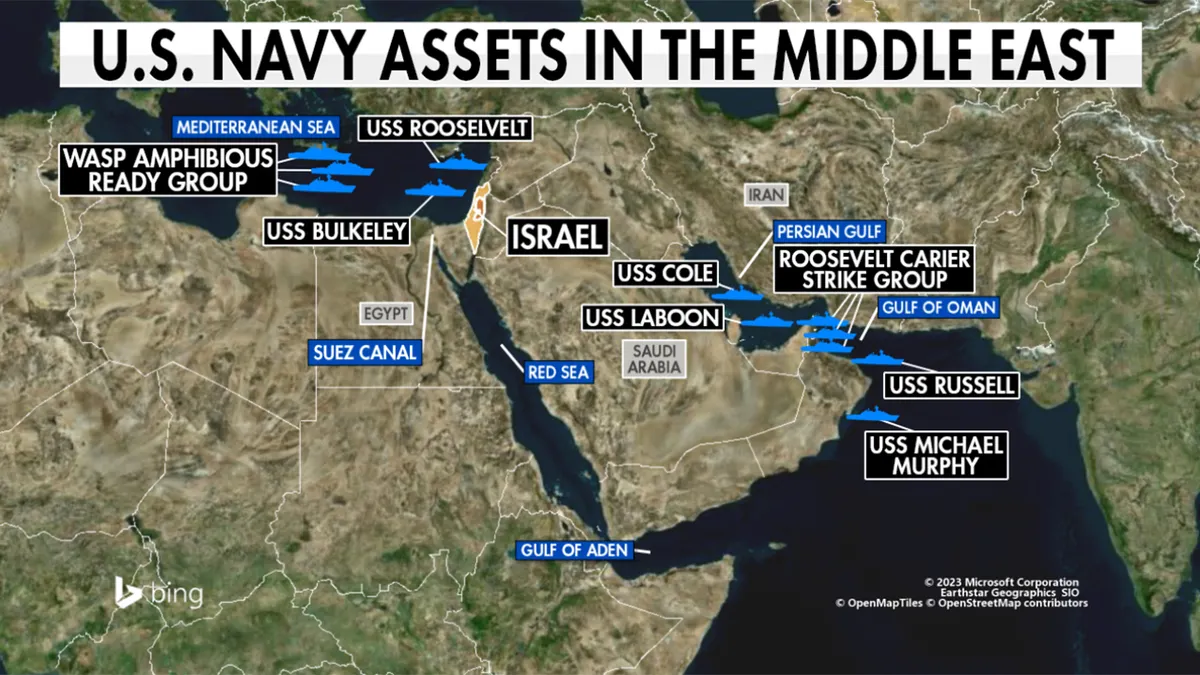
The U.S. military buildup in the Middle East is raising questions about the impact of these actions on Iranian policy. Reports suggest that this buildup could serve as a means to pressure Iran to resume negotiations regarding its nuclear program.
As the United States continues to bolster its military presence, Iran is monitoring these developments with concern. Tehran has expressed its willingness to negotiate, but it conditions the lifting of sanctions as a prerequisite for returning to the dialogue table.
Details of the Military Buildup
Information indicates that the United States has sent military reinforcements, including fighter jets and warships, to the region, aiming to enhance regional security. These movements come amid escalating tensions between Iran and the West, particularly following the U.S. withdrawal from the nuclear agreement in 2018.
This military buildup coincides with statements from U.S. officials indicating that Washington is prepared to negotiate with Iran, but under specific conditions. The U.S. Department of Defense has confirmed that it will continue to support its allies in the region, thereby increasing pressure on Tehran.
Background & Context
Historically, U.S.-Iranian relations have seen increasing tensions since the Islamic Revolution in 1979. Since then, the United States has taken several steps to curb Iran's influence in the region, including imposing economic and military sanctions.
In recent years, Iran has sought to enhance its influence in Iraq, Syria, and Lebanon, raising concerns among Western nations. However, the U.S. military buildup could reshape the equations in the region, potentially prompting Iran to reassess its strategy.
Impact & Consequences
If the U.S. military presence in the region continues, it may lead to heightened tensions between Iran and Western countries. Should Iran fail to respond to the pressures, the situation could escalate into military confrontation, which could have dire consequences for regional security.
On the other hand, these developments may push Iran towards negotiations, especially if it feels that the continuation of the status quo threatens its stability. Thus, dialogue may be the only option to avoid further escalation.
Regional Significance
These developments directly affect Arab countries, particularly those sharing borders with Iran or influenced by its actions. Countries like Iraq, Syria, and Lebanon may experience increased tensions, which could impact their internal stability.
Moreover, any military escalation could lead to a flow of refugees and increased sectarian tensions in the region, complicating humanitarian conditions further.
In conclusion, the U.S. military buildup in the region remains a pivotal point in international relations and could lead to radical changes in Iranian policy. Stakeholders must be aware of the consequences of these movements and strive for diplomatic solutions to avoid escalation.