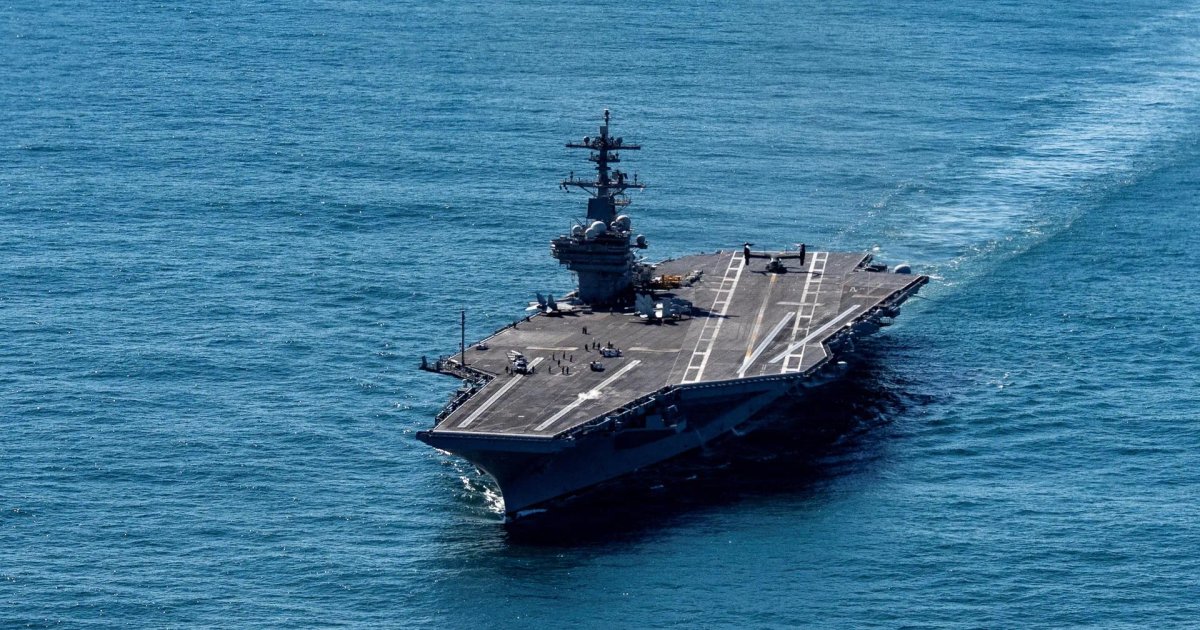
The tensions between the United States and Iran are escalating as Washington intensifies its military maneuvers in the region. This comes at a time when indirect communications between the two sides are ongoing, despite the harsh statements from American officials.
President Donald Trump and Secretary of State Mark Rubio indicated the possibility of ending the conflict within a timeframe of two to four weeks, reflecting a clear pressure strategy on Tehran. In contrast, the military reinforcements from the US, including the deployment of more troops and aircraft carriers, indicate readiness to face open-ended scenarios.
Details of the Military Escalation
As part of the military escalation, reports have emerged regarding the deployment of the aircraft carrier USS George Bush to the region, with uncertainty over whether it will replace one of the two currently stationed carriers. Additionally, information suggests that there are malfunctions in one of the carriers, raising questions about the nature of these issues.
Furthermore, the United States is considering sending approximately 10,000 additional troops to the Middle East, including 5,000 Marine Corps personnel and 2,000 airborne troops, which raises concerns within American political circles regarding operational and strategic objectives.
Background & Context
These developments come at a time when the United States is facing pressures on other fronts, such as the war in Ukraine. European officials have expressed fears about delays in the arrival of Patriot missiles due to Washington's focus on confronting Iran.
In this context, Dr. James Robbins, a senior researcher at the American Foreign Policy Council, emphasized that recent Iranian statements raise questions about the proposed objectives, particularly concerning nuclear facilities, necessitating further clarity regarding the intended goals.
Impact & Consequences
Concerns are growing within the US Congress about the lack of clarity regarding operational objectives, as members of the Armed Services Committee have expressed worries about a potential shortage of munitions, especially interceptor missiles. Polls have shown that about 60% of Americans oppose military intervention, reflecting increasing domestic criticism.
At the same time, Pentagon data indicates that over 850 Tomahawk missiles have been used since the beginning of the war, leading to a concerning depletion of stockpiles, particularly in the Middle East. In an effort to address this shortfall, the Department of Defense is working to expand cooperation with arms manufacturers.
Regional Significance
Attention is turning to the implications of these developments for the Arab region, as military escalation could exacerbate security situations in neighboring countries. Additionally, rising fuel prices within the United States may increase economic pressures on the US administration, affecting its foreign policies.
In conclusion, the situation remains complex as indirect communications between Washington and Tehran continue, raising questions about the future of relations between the two sides and the impact on regional stability.