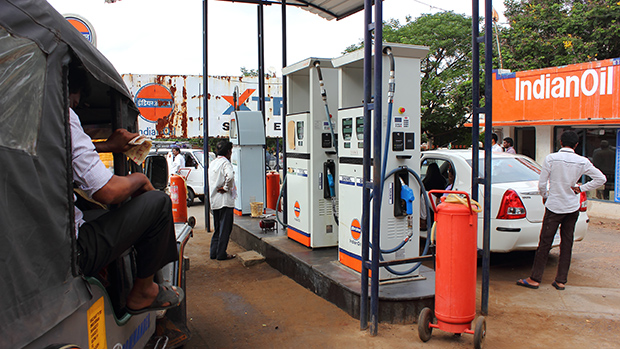
The Indian government is striving to accelerate its transition to renewable energy amid rising geopolitical tensions in the Middle East that are impacting global oil supplies. According to media reports, India is considering increasing the ethanol blend in gasoline from 20% to 25% as part of its strategy to reduce dependence on imported crude oil.
This renewed focus on renewable energy comes at a time when global oil markets are facing uncertainty due to geopolitical disruptions, particularly in the West Asia region. The conflict in Iran has disrupted energy supply chains, raising concerns about supply shortages and rising crude oil prices.
Details of the Initiative
Indian officials have reported that the ethanol blending program has significantly contributed to reducing oil imports, estimating that achieving a 20% blend has helped India save approximately 45 million barrels of oil annually, reducing foreign exchange outflows by around 1.5 trillion rupees (about 17 billion dollars).
The government is currently evaluating the possibility of gradually increasing the ethanol blend percentage, while considering concerns related to fuel efficiency and engine compatibility. India is also working to enhance its refining capabilities, with reports indicating that operating refineries near 100% of their capacity for extended periods is not sustainable.
Background & Context
India aims to build additional refining infrastructure, having recently commenced operations at the Barmer refinery, while expansion work continues at the Numaligarh refinery. Authorities are also focusing on integrated refinery projects along the western coast, including a massive refinery project in Maharashtra and a new facility in Gujarat.
The government is also working to bolster its strategic oil reserves to create a larger emergency stockpile, reflecting the importance of renewable energy, biofuels, and green hydrogen as national strategic priorities.
Impact & Consequences
Recent disruptions in energy markets highlight the risks associated with over-reliance on imported fossil fuels. Consequently, India is increasingly focusing on generating renewable energy and cleaner transportation fuels, which helps to enhance energy independence and stabilize fuel supply chains.
Energy experts believe that accelerating India's efforts toward renewable energy could help shield the economy from fluctuations in global oil prices, thereby strengthening its strategic position in the face of future crises.
Regional Significance
Recent events in the Middle East reveal the fragility of global energy markets, prompting governments to reassess their fuel security strategies. For India, the current crisis seems to accelerate political discussions regarding the adoption of renewable energy, increasing ethanol blending, and enhancing strategic storage.
In conclusion, India's shift towards clean energy represents a significant step towards achieving sustainability and reducing reliance on oil, which could positively impact the stability of regional and international markets.