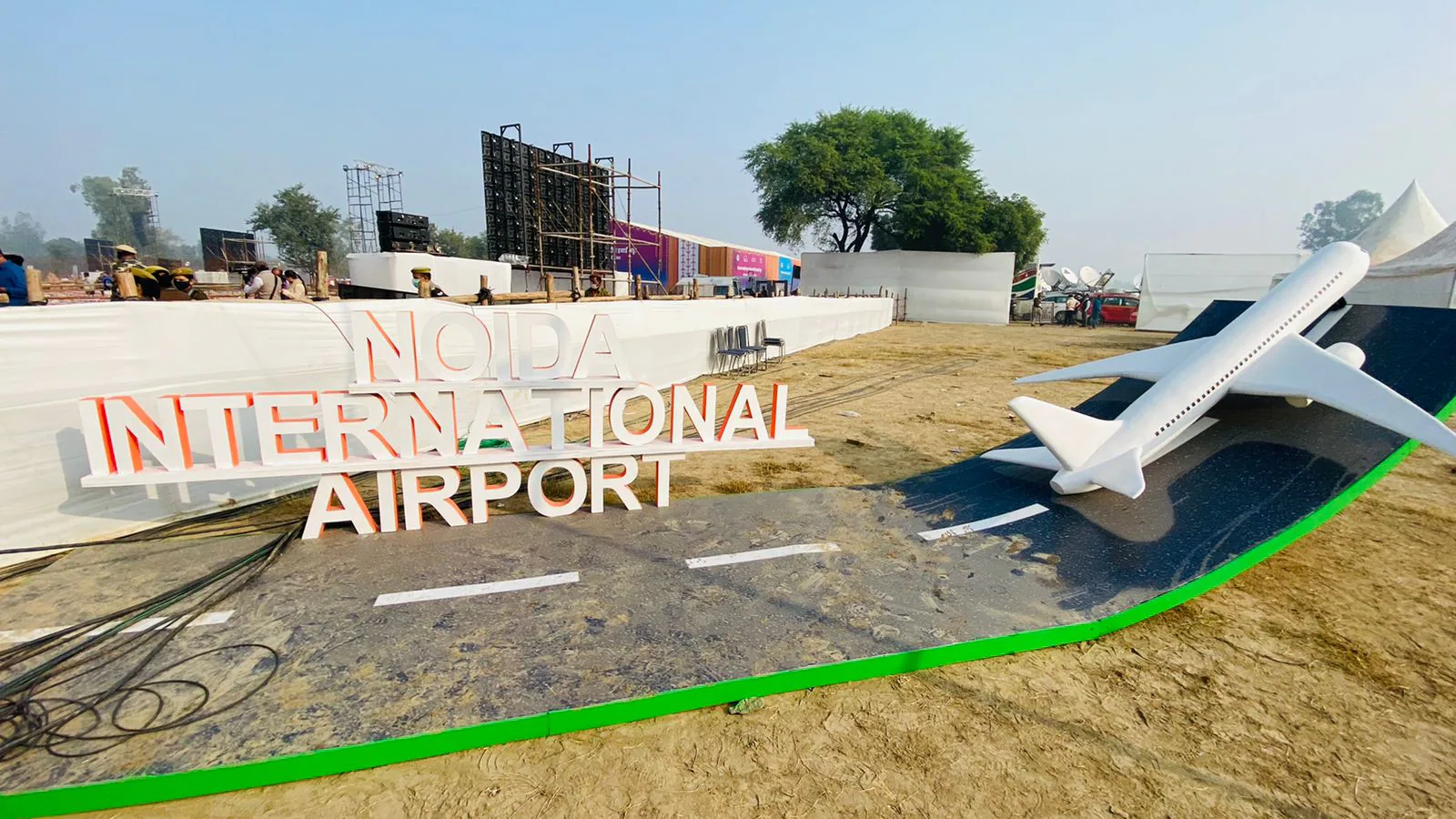
India opened a second international airport in New Delhi on Saturday, March 28, as part of the country's accelerating efforts to expand its aviation industry. The Noida International Airport is located 75 kilometers from the city and aims to serve 12 million passengers annually in its first phase, with the potential to increase capacity to 70 million passengers in the future.
The new airport, inaugurated by Prime Minister Narendra Modi, is a new project in the Jewar area of Uttar Pradesh, which is the most populous state in India, with a population of approximately 243 million people. Modi expressed hope that the airport would become a gateway for the Greater Delhi area, noting that flights would take off every two minutes when fully operational.
Event Details
The new airport will integrate with Indira Gandhi International Airport, which is located 15 kilometers from the capital's center. According to Modi's office, the two airports will operate as an integrated aviation system, contributing to alleviating congestion and increasing passenger capacity, thereby enhancing the status of the Greater Delhi area as one of the world's leading aviation hubs.
This step is part of the Indian government's strategy to boost the aviation sector, which has seen significant growth in recent years. Since Modi took office in 2014, initiatives have been launched to enhance air connectivity between small towns and major cities, contributing to an increase in the number of airports in the country from 74 airports in 2014 to 157 airports in 2024, according to data from the Ministry of Aviation.
Background & Context
Historically, the Indian aviation sector has experienced remarkable growth due to population increase and sustainable economic growth. With a population of 1.4 billion, India has become one of the largest aviation markets in the world, with expectations that the Indian market will soon surpass markets like Japan and Germany. Government policies have contributed to improving aviation infrastructure, making air travel more accessible and convenient for citizens.
These projects are part of the Indian government's vision to enhance economic and social development in remote areas, where the new airport is expected to create new job opportunities and boost economic activity in Uttar Pradesh.
Impact & Consequences
Noida International Airport is expected to have a significant impact on the local economy, providing new job opportunities for farmers, small businesses, and youth. It will also facilitate the movement of goods, enhancing trade between different regions. This airport is seen as a strategic step towards achieving sustainable development in the area, with expectations that it will improve the standard of living for residents.
Moreover, this development reflects the overall trend towards enhancing air connectivity in India, strengthening its position as a global aviation hub. With the increasing number of travelers, the tourism sector is expected to witness a notable recovery, further boosting the national economy.
Regional Significance
India's experience in developing its aviation sector serves as a model for many Arab countries seeking to enhance their air infrastructure. With the rising demand for air travel in the region, Arab countries can benefit from Indian experiences in improving aviation services and increasing airport capacity. Strengthening air links between Arab countries and India could also contribute to enhancing trade and tourism exchanges between both sides.
In conclusion, the inauguration of Noida International Airport is an important step towards enhancing the aviation sector in India, and it is expected to contribute to achieving economic and social development in the region, further solidifying India's status as a global economic power.