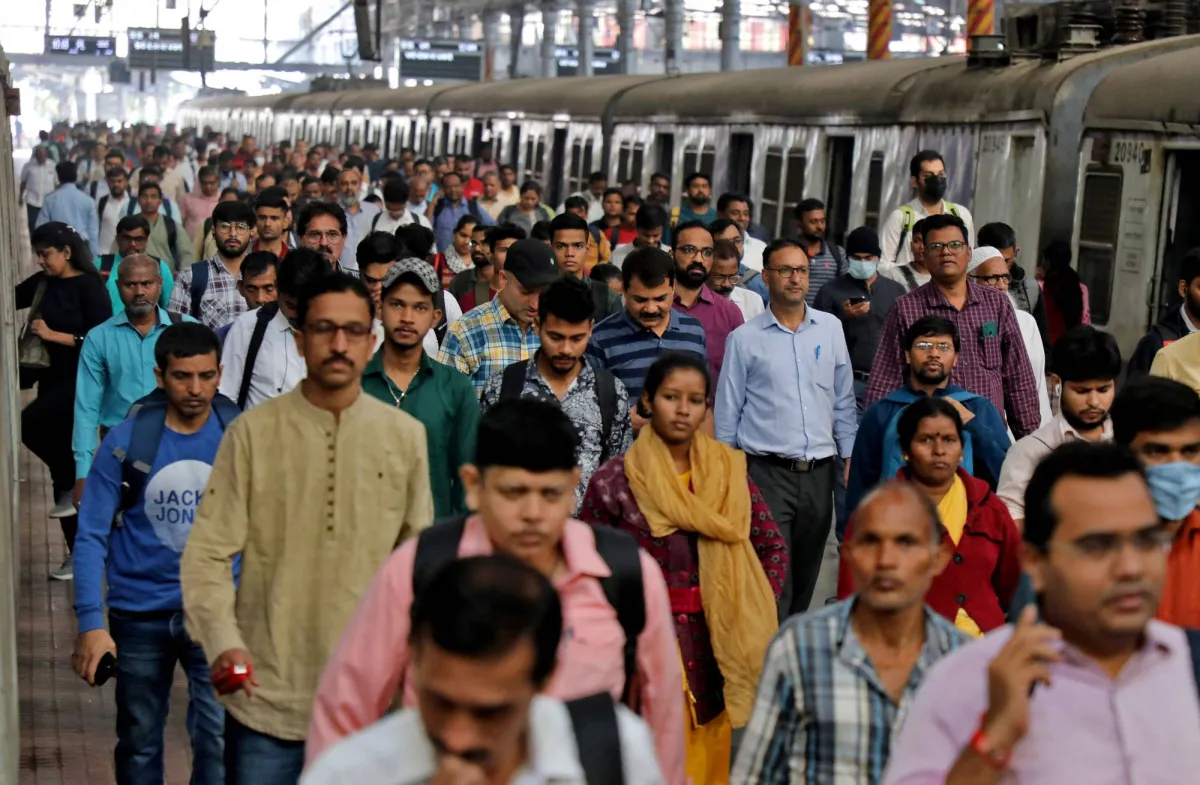
India has begun implementing the largest national population census in the world, a massive project that may have profound effects on public policies and social programs. This census is considered a vital tool for understanding the demographic and economic shifts in a country that is the most populous in the world.
The current census comes after a two-year delay due to the COVID-19 pandemic, as it was originally scheduled for 2021. According to the Independent, India's population is currently estimated to be over 1.4 billion, compared to 1.21 billion in the previous census in 2011.
Details of the Census Process
The first phase of the census process launched on Wednesday and is expected to continue until next September. During this phase, over 3 million government employees will work to collect data related to housing and available facilities, in addition to documenting housing conditions and living circumstances.
The process relies on a mix of traditional and digital methods, allowing residents to input their data via a multilingual smartphone application supported by satellite-based maps. The second phase of the census will be conducted between September and April next year, focusing on gathering detailed information about the social and economic characteristics of individuals.
Background & Context
The social class system in India is an ancient hierarchical structure that plays a significant role in determining social status and access to resources. Despite the existence of hundreds of caste categories, the available data on them remains limited or outdated, with the last attempt to collect detailed data dating back to 1931.
Successive governments have avoided conducting a comprehensive census of social classes, fearing it might exacerbate social tensions. Therefore, the current census aims to provide a more comprehensive enumeration of social classes, extending beyond historically marginalized groups.
Impact & Consequences
The significance of the census goes beyond social and economic aspects, as its results may lead to a redrawing of the political map in India. It is expected that the number of seats in the Lok Sabha and state legislative assemblies will be adjusted in line with changes in population numbers and distribution.
The data resulting from the census will serve as a foundation for planning and distributing social welfare programs, as well as being used in formulating public policies and directing resources, making its accuracy critically important.
Regional Significance
India's experience in conducting the population census highlights the importance of accurate data in guiding public policies, a lesson that Arab countries can benefit from. Given the demographic and economic challenges facing many Arab nations, collecting accurate data is vital for improving planning and development.
In conclusion, the population census in India represents an important step towards a better understanding of demographic shifts and demonstrates how data can influence public policies and social programs.