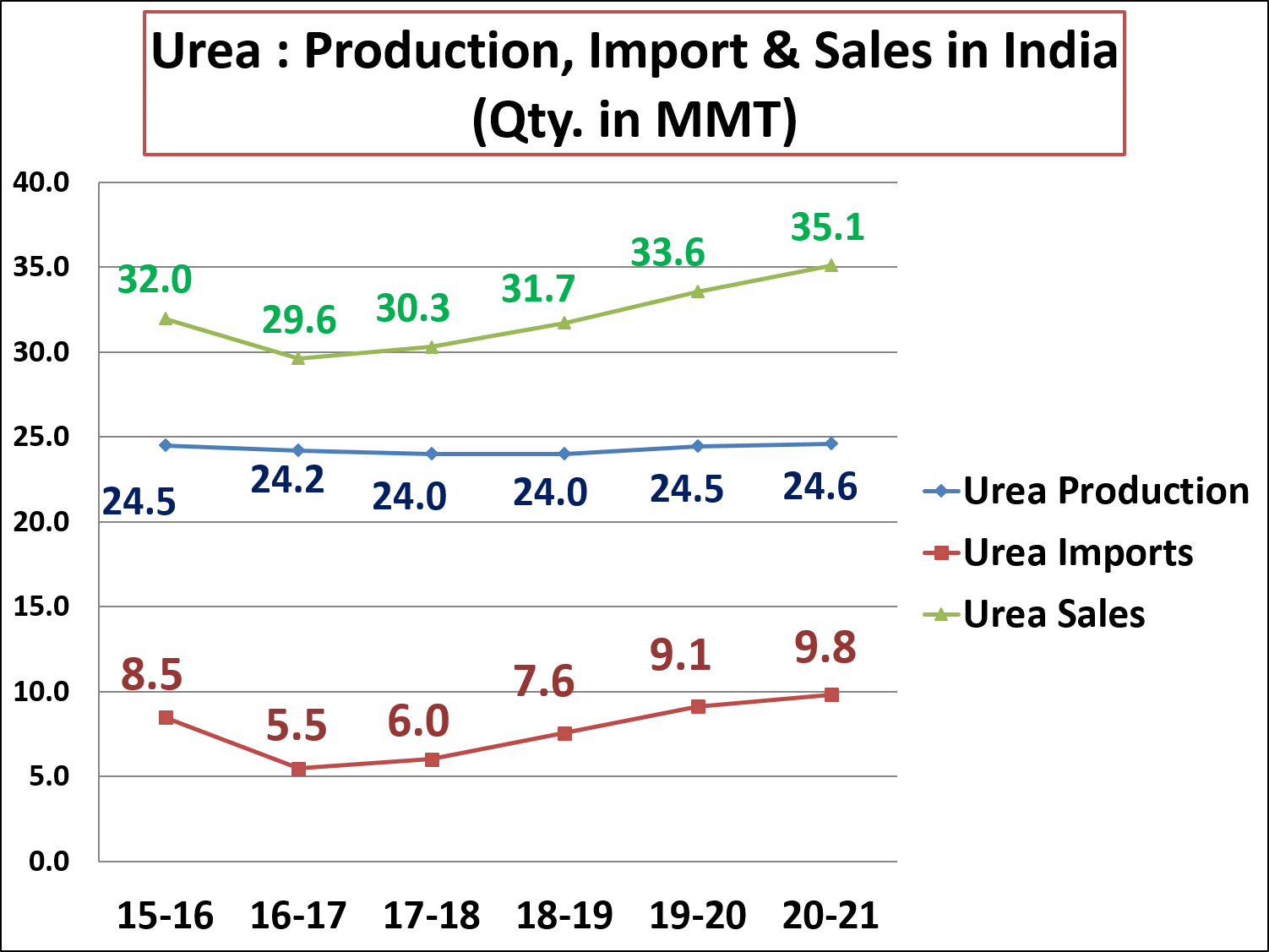
In a move aimed at addressing supply shortages, India has announced a global tender to import 2.5 million tons of urea, an essential agricultural input. This step comes at a time when the region is experiencing political tensions that are impacting supply chains, threatening India's ability to meet its agricultural needs.
Official sources have reported that the Indian Potash Company, a state-owned enterprise, has issued the tender which will close on April 15. India heavily relies on the global market to meet its urea requirements, especially with the monsoon season approaching and agricultural activities set to commence in the summer.
Details of the Tender
Global supply chains are facing significant challenges due to conflicts in the Middle East, where tensions have disrupted fertilizer shipments from major exporting countries. Additionally, the closure of maritime routes, such as the Strait of Hormuz, has directly affected shipping movements, leading to a shortage of liquefied petroleum gas in India and a rise in global oil prices.
Urea is a crucial nutrient needed for agricultural crops, and as the planting season approaches, the demand for it is noticeably increasing. Therefore, this tender is being launched at a highly sensitive time for the Indian agricultural sector.
Background & Context
Historically, India has depended on fertilizer imports to meet its agricultural needs, with urea constituting a significant portion of these requirements. In recent years, fertilizer prices have fluctuated due to geopolitical crises and climate changes, impacting agricultural production.
In previous years, India has sought to reduce its reliance on imports by increasing domestic production, but current challenges are refocusing attention on the importance of securing supplies from abroad. The ongoing situation in the Middle East, characterized by persistent conflicts, complicates this issue further.
Impact & Consequences
Disruptions in the Middle East are affecting fertilizer prices in global markets, which may lead to increased agricultural production costs in India. If these disruptions continue, the Indian government may need to take additional measures to ensure the stability of supplies and prices.
Moreover, supply shortages could impact food security in India, where millions of farmers rely on fertilizers to achieve high productivity. Consequently, any rise in prices or shortages could have negative repercussions on the Indian economy as a whole.
Regional Significance
The Middle East is one of the most important fertilizer-exporting regions, and any disruption in this area directly affects global markets. The current political tensions may lead to increased fertilizer prices, which will reflect on Arab countries that depend on imports to meet their agricultural needs.
Furthermore, food security in Arab countries may be indirectly affected due to these disruptions, necessitating the consideration of alternative strategies to secure food supplies.