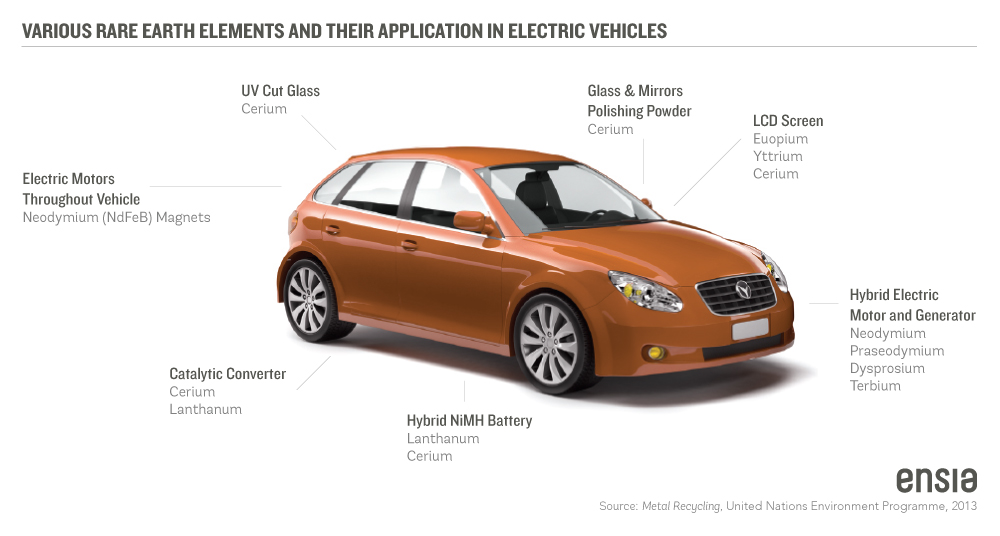
Indian electric vehicle manufacturers are striving to lessen their reliance on rare earth magnets following recent crises that exposed vulnerabilities in the supply chain. This shift is leading to motor redesigns and the exploration of low-cost alternatives, as several Indian companies have begun testing or deploying rare earth-free motor solutions across various sectors.
Despite this, experts indicate that India's advantage lies less in technological innovations and more in market conditions, such as the large number of cost-sensitive consumers and the push towards localization. However, this transition is expected to be gradual, as automotive manufacturers must assess whether alternative designs can match traditional motors in terms of cost, efficiency, and reliability.
Event Details
Rare earth elements, a group of 17 metals, are primarily used in permanent magnets that power most modern electric vehicle motors. China dominates the supply of these elements, accounting for approximately 60% of global mining and 91% of refining production, according to the International Energy Agency. The market felt this squeeze sharply last year when China tightened further restrictions on rare earth exports amid trade tensions with the United States, disrupting global supply chains.
Major companies such as Renault, BMW, and Nissan have begun taking steps to mitigate these risks by shifting to alternative designs for electric vehicle motors that reduce or eliminate reliance on rare earth elements. Renault and BMW have utilized rare earth-free designs in some models since 2011 and 2012, and they are now looking to expand their use. The Nissan Ariya model, unveiled in 2020, features a rare earth-free motor design.
Background & Context
Before the recent supply disruptions, some companies had shown signs of this shift. In March 2023, Tesla announced its aim to develop next-generation motors that do not rely on rare earth elements, without specifying a clear timeline for their rollout. This push is not only geopolitical but also financial, as rare earth magnets can represent a significant portion of the overall motor cost in larger vehicles.
Estimates suggest that rare earth elements account for about 40% to 60% of the cost of active materials in an electric motor, while industry estimates indicate that rare earth-free motors could be 30% to 60% cheaper to manufacture. Alternative motor designs generally fall into two categories: those that eliminate magnets and those that replace rare earth elements with cheaper, more readily available materials.
Impact & Consequences
Indian companies are moving towards developing motors that rely on ferrite magnets, a low-cost material typically used in applications such as refrigerator magnets. These motors offer a closer compromise between supply security, cost, and ease of manufacturing, although they come with trade-offs in performance and efficiency. Sriram Gopal, founder of Veridian Engine Propulsion, states that ferrite magnets are significantly cheaper and more abundant compared to rare earth magnets.
Major Indian companies manufacturing electric scooters, such as TVS Motor and Ola Electric, have been working on ferrite magnet-based motors since July of last year. Companies like Conver and Veridian Engine Propulsion are also developing ferrite magnet-based motors for various original equipment manufacturers.
Regional Significance
With the growing global interest in electric vehicles, Arab countries can benefit from this trend by boosting their investments in the electric vehicle industry and developing new technologies. These shifts could help reduce reliance on importing technologies from abroad and enhance local capabilities.
In conclusion, while India is striving to expand its role in the rare earth-free motor market, the road ahead for widespread adoption of these motors remains long. It requires government support and accelerated innovation to overcome technical and economic challenges.