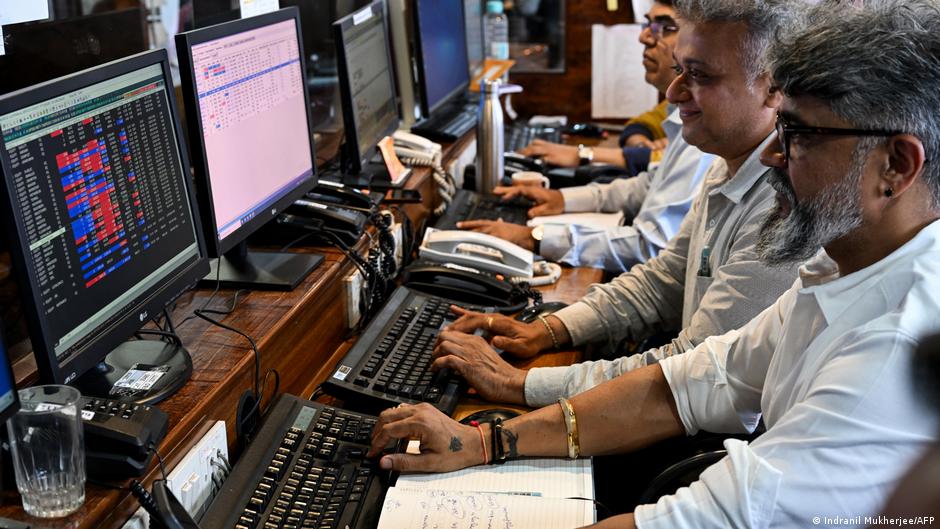
Indian stock markets fell sharply on Monday, with the Sensex decreasing by 1.1% and the Nifty by 1.2%, negatively impacting individual investors who have invested an average of $2 billion monthly over the past five years. This decline comes at a time when the region is witnessing heightened tensions between Iran and Israel, raising concerns about the stability of global markets.
At the same time, the Indian Meteorological Department warned of flood and landslide risks in Kerala due to heavy monsoon rains. Orange and yellow alerts have been issued in some areas, adding to the burdens faced by the government and citizens in that region.
Market Decline Details
Reports indicate that Indian markets have seen a significant drop in their market value, with the Sensex falling by approximately 800 points at the start of trading, while the Nifty declined by over 280 points. Despite a slight recovery during the first hour of trading, both indices continued to decrease by 0.7%. This decline reflects growing anxiety among investors due to rising oil prices and pressures from geopolitical tensions.
These developments come at a sensitive time, as the Trump administration has proposed imposing a new 12.5% tariff on Indian goods, escalating trade tensions between India and the United States. Indian Minister of Commerce and Industry, Piyush Goyal, stated that the government will address these challenges, emphasizing the importance of protecting India's interests in ongoing trade negotiations.
Background & Context
Historically, Indian-American relations have experienced numerous fluctuations, especially under the Trump administration. The United States previously imposed high tariffs on Indian goods, adversely affecting trade relations. Additionally, tensions between India and Pakistan, along with energy-related issues, have complicated these relations.
Monsoon rains are a vital part of India's climatic system, playing a crucial role in agriculture. However, the floods and landslides that may result from these rains can cause severe damage, increasing pressures on the government and farmers.
Impact & Consequences
The decline in Indian markets could significantly impact the local economy, as individual investors are the most affected by these fluctuations. Furthermore, rising oil prices may lead to increased production and transportation costs, negatively affecting local prices.
On the other hand, geopolitical tensions may drive investors to withdraw their investments from emerging markets like India, increasing pressures on the Indian rupee and affecting overall economic stability.
Regional Significance
Tensions in the Middle East directly impact oil prices, which is of great concern to oil-producing Arab nations. Rising oil prices due to conflicts may lead to increased revenues in some countries, but could also create economic pressures on oil-importing nations like India.
Ultimately, Indian markets remain under significant pressure under these circumstances, necessitating swift and effective actions from the government to protect the economy and investors.