A Japanese shipping company announced on Monday that an Indian-flagged oil tanker, belonging to its subsidiary, has crossed the Strait of Hormuz en route to India. This announcement comes at a time when the region is witnessing escalating military tensions, as Iran has effectively closed the strait, a vital waterway for global oil and gas, in response to U.S.-Israeli strikes that began on February 28.
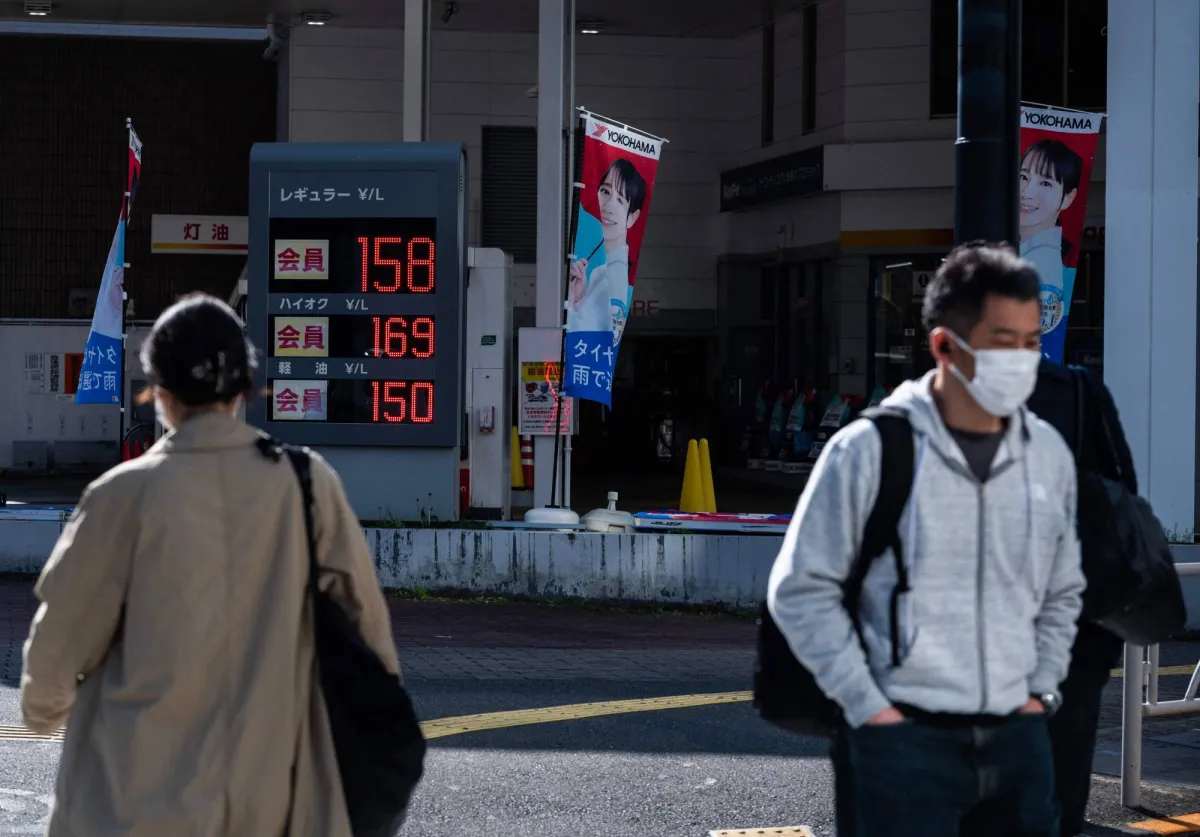
The near-total closure of this international artery has led to fuel shortages and a sharp rise in energy prices worldwide. A spokesperson for Mitsui O.S.K. Lines told AFP that the liquefied petroleum gas tanker 'Green Asha' has successfully crossed the strait, confirming that 'the crew and cargo are safe.'
Details of the Event
This tanker is the third vessel linked to Japan to cross the strait, as the Indian government announced on Saturday that the liquefied petroleum gas tanker 'Green Sanfi', also owned by a Mitsui subsidiary, had safely passed through. Prior to that, three other tankers, one partially owned by Mitsui, crossed the strait. The liquefied natural gas tanker 'Suhar', owned by Mitsui, was the first LNG tanker to transit the strait since March 1.
The few ships that have crossed the strait since the onset of the war in the Middle East have taken a route approved by Iran through its waters near Lark Island, which Lloyd's List magazine has dubbed the 'Gateway to Tehran's Tariffs.'
Background & Context
Earlier, South Korean President Yoon Suk-yeol stated that his country must accept a degree of risk in importing crude oil from the Middle East amid the closure of the Strait of Hormuz. He added during a cabinet meeting, 'There are not many alternative routes, and if shipments are completely cut off due to increasing risks, it could have serious implications for South Korea's crude oil supply.'
Additionally, ruling Democratic Party lawmaker Ahn Do-geol noted that South Korean authorities are consulting with other oil-producing countries to secure alternative routes, including Saudi Arabia, Oman, and Algeria. He explained that diplomatic efforts include the possibility of sending special envoys to support this process.
Impact & Consequences
These events serve as a clear warning to global markets, as many countries, including South Korea, heavily rely on energy imports through the Strait of Hormuz, which was a vital passage for 20% of the world's oil before military tensions escalated. Since then, these developments have led to rising energy prices and heightened fears of a global economic recession.
In this context, the South Korean Ministry of Energy has stated that it plans to achieve a target of providing 100 gigawatts of renewable energy by 2030, increasing the share of power generation from renewable sources to over 20%. The country is also seeking to produce steel using hydrogen reduction technology, which utilizes hydrogen instead of coal or gas.
Regional Significance
Arab countries are directly affected by these tensions, as the Strait of Hormuz is a lifeline for many economies in the region. As these crises continue, the economic situations in oil-dependent countries may worsen, increasing security and economic risks.
In conclusion, attention remains focused on developments in the region, as any further escalation could significantly impact global energy markets and intensify tensions between major powers.