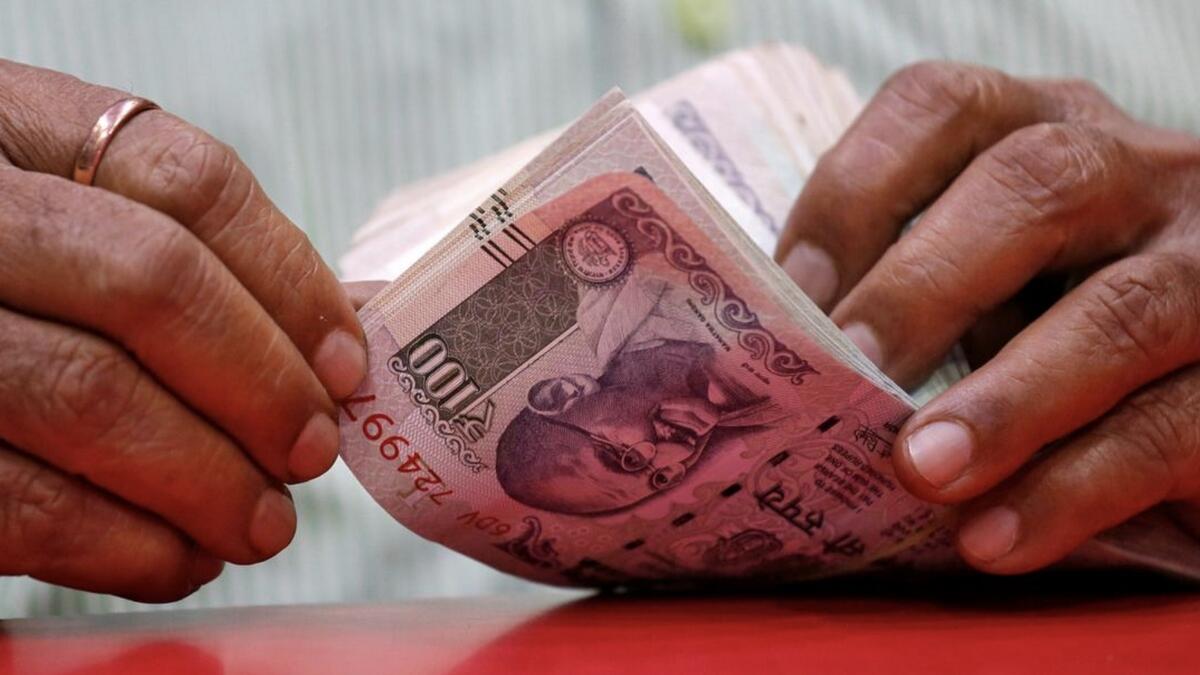
The Indian rupee depreciated against the US dollar today, marking its lowest level ever. The exchange rate closed at 94.8450 rupees per dollar, reflecting increasing pressure on the Indian currency.
This decline comes at a time when the Indian economy is facing significant challenges, with oil prices rising sharply amid stalled peace talks between Washington and Tehran. Additionally, the continued exit of foreign investors from Indian assets is exacerbating the pressure on the rupee.
Details of the Event
The Indian rupee decreased by 0.3% during today’s trading, indicating a state of instability in the market. Analysts noted that dollar sales by state-owned banks, conducted on behalf of the central bank, helped mitigate the currency's losses, according to reports from Reuters.
Pressure on the rupee is increasing due to the Indian economy's sensitivity to rising energy costs, as it heavily relies on oil imports. With prices continuing to rise, analysts expect the rupee to remain under pressure, which may prompt the central bank to take more stringent measures if the rupee falls below 95 rupees per dollar.
Background & Context
Historically, the Indian rupee has experienced significant fluctuations against the US dollar, influenced by various economic and political factors. In recent years, oil prices have been one of the main factors affecting the rupee's value, especially given India's substantial dependence on imported oil.
Moreover, the political relations between India and major countries, such as the United States and Iran, play a crucial role in the stability of the rupee. The stagnation of peace talks between Washington and Tehran increases uncertainty in the markets, negatively impacting the rupee.
Impact & Consequences
The record decline of the rupee may lead to increased import costs, affecting inflation in India. Additionally, the weakening currency could have adverse effects on foreign investors, leading to further withdrawals from the Indian market.
If the rupee continues to decline, the Reserve Bank of India may take measures such as raising interest rates or intervening in the foreign exchange market to support the currency. These actions could impact economic growth in the country, as investments may slow down due to higher borrowing costs.
Regional Significance
The impact of the decline of the Indian rupee extends to the Arab region, where India is one of the largest trading partners for many Arab countries. Rising import costs may affect trade between India and Arab nations, potentially leading to increased prices in local markets.
Moreover, any fluctuations in the rupee could affect remittances from Indian workers in Arab countries, which may reflect on local economies that depend on these remittances.
In conclusion, the Indian rupee's decline to its lowest level reflects significant economic challenges facing India, and future developments should be closely monitored.