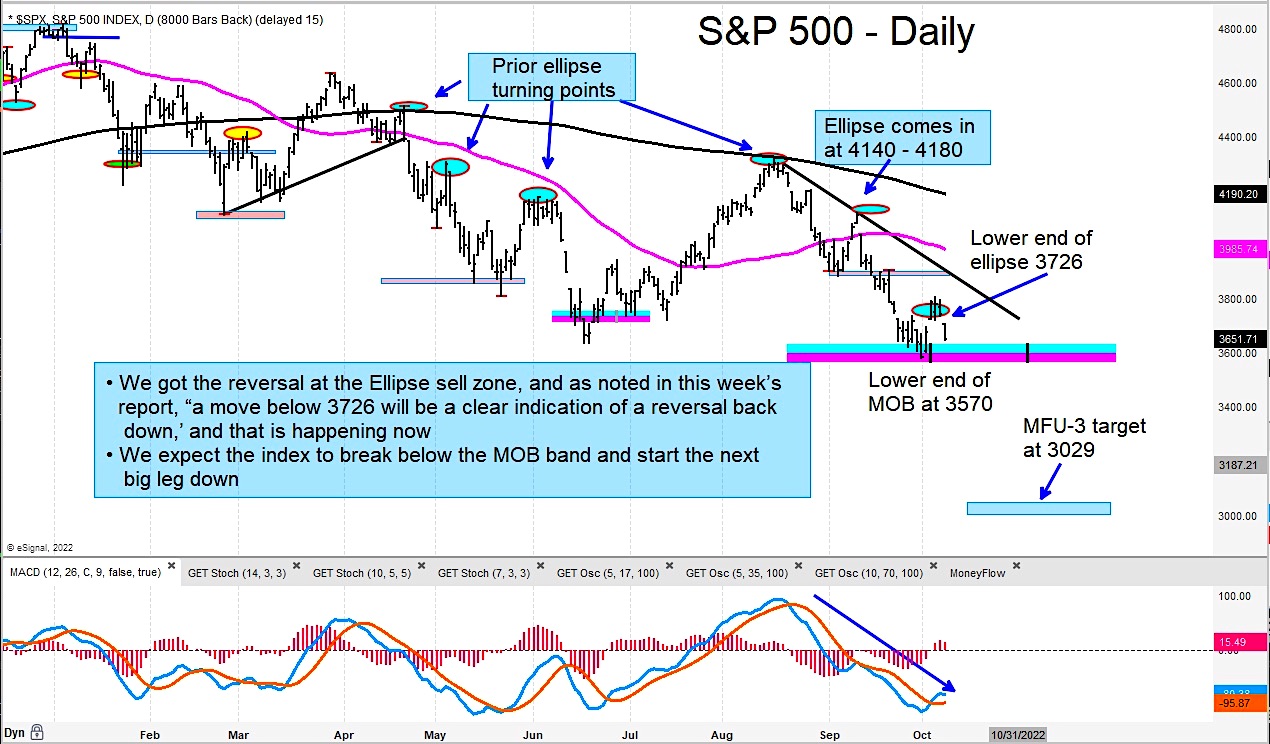
Technical indicators for the S&P 500 suggest increasing weakness in the US stock market, raising concerns among investors about its future. Recent data has shown clear signs of deteriorating performance, which could impact investments in financial markets.
These signals come at a time when global markets are experiencing significant volatility, as investors seek to understand future trends. With growing fears of an economic recession, analysts are closely monitoring developments in the S&P 500, which is considered one of the most important stock indices in the United States.
Event Details
Recently, technical analyses of the S&P 500 have shown a noticeable decline, as the index's value has been continuously decreasing, reflecting a state of uncertainty in the market. Many analysts have pointed out that these changes may be the result of a combination of factors, including rising interest rates and increasing inflation.
Moreover, geopolitical and economic tensions, including trade disputes between the United States and China, play a role in increasing pressures on the market. These combined factors could lead to a decline in market confidence, negatively impacting stock performance.
Background & Context
Historically, the S&P 500 is an important index that reflects the performance of the largest 500 companies in the United States. The market has experienced significant fluctuations in recent years, as global markets have been affected by economic and political crises. In 2020, markets were severely impacted by the COVID-19 pandemic, leading to a sharp decline in prices.
However, the market saw a notable recovery in 2021, as stocks returned to their previous levels. But at the beginning of 2022, indicators began to signal increasing risks, prompting investors to reassess their investment strategies.
Impact & Consequences
If these negative trends continue, they could lead to further deterioration in the market, affecting the overall US economy. A decline in the S&P 500 could result in a loss of confidence among investors, potentially leading to reduced investments in financial markets.
Furthermore, this decline could impact global markets, as the US economy is considered one of the main drivers of the global economy. Any deterioration in performance could lead to negative effects on other markets, increasing uncertainty in the global economy.
Regional Significance
For the Arab region, a decline in US markets could have direct effects on Arab investments. Many Arab countries rely on foreign investments, and any downturn in US markets could lead to a reduction in these investments.
Additionally, a market downturn could affect oil prices, as the US economy is one of the largest consumers of oil in the world. Any decline in demand could lead to lower oil prices, negatively impacting the economies of oil-producing Arab countries.
In conclusion, financial markets remain under significant pressure, requiring investors to exercise caution in their investment decisions. They should be aware of the factors influencing the market and closely monitor developments.