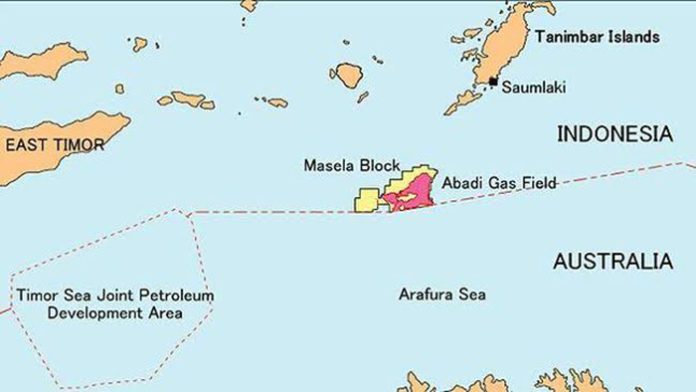
The Indonesian Minister of Energy and Mineral Resources, Bahllal Lahadalia, confirmed that the Indonesian government is working to accelerate the development of the Masela Block project in Maluku, which is considered one of the national strategic projects. This announcement came during a working visit by Indonesian President Joko Widodo to Japan, where new priorities were set to enhance investments in the energy sector.
Lahadalia explained that President Widodo has directed the need to expedite investment in renewable energy and ensure the sustainability of the Masela Block project, which has faced significant delays. He noted that the project has been granted a concession for 27 years, with ongoing discussions about its location, whether offshore or onshore, over the past years.
Event Details
Lahadalia reported that the total investment value for the Masela Block project is approximately $20.9 billion, which includes new technologies such as carbon capture and storage. With the increasing global geopolitical dynamics, this figure is expected to rise to around 300 trillion Indonesian Rupiah during the implementation phases.
The Masela Block is considered one of the largest gas fields in Indonesia, with a production capacity of up to 1,200 million cubic feet per day (MMscfd). Lahadalia confirmed that the government is focused on expediting the project's execution, with tenders for implementation scheduled to be launched in 2026, alongside final investment decisions.
Background & Context
Historically, Indonesia has faced numerous challenges in developing energy projects, particularly amid political and economic changes. Since the concession was granted for the Masela Block project, there have been ongoing discussions about how to effectively utilize natural resources. With the rising demand for energy in Indonesia, it has become essential to accelerate these projects to meet local market needs.
The Indonesian government aims to balance the development of traditional energy and renewable energy, with projects like the Masela Block forming a crucial part of the national energy strategy. The government is also working to enhance the use of renewable energy sources such as solar and wind, reflecting its commitment to transitioning towards more sustainable energy sources.
Impact & Consequences
Accelerating the development of the Masela Block project has significant implications for the Indonesian economy, as the project is expected to enhance energy security and increase foreign investments. Additionally, this project could create new job opportunities and stimulate economic growth in the region.
Furthermore, the development of this project could bolster Indonesia's position in the global gas market, providing it with a greater opportunity to compete with other gas-producing countries. The government also plans to prepare mechanisms to absorb local gas in case export markets are not fully developed.
Regional Significance
Indonesia is one of the largest gas producers in the world, and the development of the Masela Block project underscores the importance of energy in strengthening economic relations between countries. For Arab countries, which heavily rely on oil and gas exports, Indonesia's success in developing energy projects could serve as a model for enhancing investments in this sector.
In conclusion, the Masela Block project represents a significant step towards achieving energy sustainability in Indonesia and reflects the global trend towards increasing the use of renewable energy. The success of this project could open new avenues for cooperation between countries in the energy sector, contributing to global energy security.