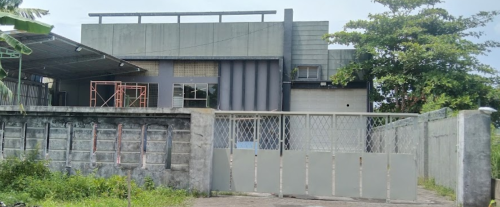
The Director General of the Indonesian Bulog Agency, Agmand Rizal Ramdhani, announced an ambitious plan to construct 100 new warehouses aimed at enhancing national food security by increasing post-harvest storage capacity. This announcement was made during a press conference in the Indonesian capital, Jakarta, where Ramdhani emphasized that the project represents a strategic step in improving the country's food logistics system.
Ramdhani confirmed that the agency is committed to implementing government directives in a professional and transparent manner, noting that this project will bolster the country's ability to address challenges related to food provision. He also explained that all phases of the project will be carefully studied to ensure maximum benefit for the community.
Details of the Project
The new construction plan includes three main steps, starting with the preparation of a feasibility study involving various stakeholders, including academics and experts. This study will address technical and financial aspects to ensure the project's effective and sustainable implementation.
The second step involves collaboration with the Ministry of Agriculture, where technical considerations will be established to ensure that the construction of the warehouses aligns with the local characteristics of each region. The third step pertains to evaluating financial feasibility and providing recommendations regarding the use of government funds.
Background & Context
This initiative comes at a time when Indonesia is facing increasing challenges in food security, particularly with a growing population and rising food demand. Historically, Indonesia has relied heavily on imports to meet its food needs, making it vulnerable to fluctuations in global markets.
The Indonesian government aims to achieve self-sufficiency in food, and studies have shown that improving storage infrastructure can significantly contribute to reducing crop losses and increasing food distribution efficiency.
Impact & Consequences
The construction of these warehouses is expected to enhance food security levels in Indonesia, leading to price stability and more efficient food provision. Additionally, this step will strengthen the country's capacity to face potential food crises, especially under changing climatic conditions.
Moreover, this project will help create new job opportunities in rural areas, contributing to improving the living standards of local populations and promoting economic development in the country.
Regional Significance
Indonesia's experience in enhancing food security serves as a model that Arab countries can benefit from, which also face similar challenges in securing their food needs. Arab nations can learn from Indonesia's experiences in improving agricultural infrastructure and developing storage systems.
Furthermore, cooperation between Arab countries and Indonesia in agriculture and food security can contribute to achieving regional food security and enhancing economic stability.