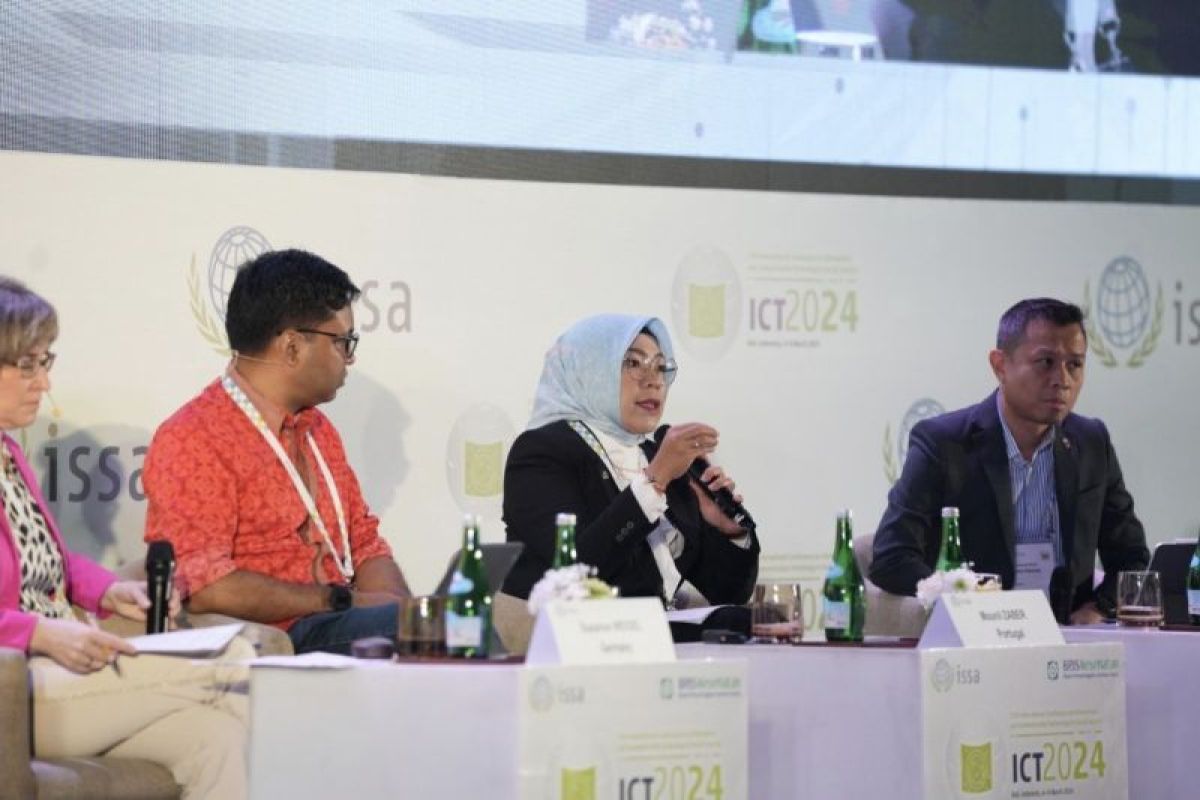
The Indonesian Deputy Minister of Communications and Digital Technology, Nizar Patria, announced the government's readiness to build a strategic partnership with the Health Social Security Agency (BPJS) to implement artificial intelligence technologies to enhance the quality of healthcare services provided to citizens. This announcement was made during a press conference held in the Indonesian capital, Jakarta, where Patria emphasized that reliance on traditional methods of data processing is no longer sufficient given the increasing demand for quick and accurate healthcare services.
Patria explained that the data handled by BPJS is vast and rapidly changing, necessitating the use of artificial intelligence technologies to facilitate and improve the service delivery process. He noted that the Ministry of Communications has prepared a suitable environment for skill development through the "AI Talent Factory" program, which aims to train students from prestigious universities on how to use artificial intelligence in real-world applications.
Details of the Collaboration
The collaboration plan between the Ministry of Communications and BPJS includes integrating available data with use cases and specialized human resources. Patria confirmed that this partnership will help accelerate the pace of services provided to citizens, ensuring greater accuracy in processing healthcare requests.
He also mentioned that the training program includes students from several prestigious universities such as Universitas Brawijaya, Gadjah Mada University, Bandung Institute of Technology, and University of Indonesia, supported by global technology companies like Google, Apple, and Amazon, in addition to renowned academic institutions such as Massachusetts Institute of Technology and University of Oxford.
Background & Context
Indonesia is one of the largest countries in Southeast Asia, facing significant challenges in providing healthcare services to its citizens. With a growing population and diverse health needs, it has become essential to develop health systems that rely on modern technology. The BPJS has already begun exploring the use of artificial intelligence to improve its services, such as developing chatbots and analyzing health claims.
However, challenges remain for the agency, as the IT Director of BPJS, Setyaji, pointed out that the current system is still unable to fully understand user needs, hindering the improvement of services provided.
Impact & Consequences
The collaboration between the Ministry of Communications and BPJS represents an important step towards improving healthcare services in Indonesia. The use of artificial intelligence is expected to expedite the processing of health claims, thereby enhancing the overall efficiency of the healthcare system. Additionally, this initiative may contribute to improving patient experiences by providing more accurate and faster services.
Furthermore, this collaboration could encourage increased investments in the health technology sector in Indonesia, strengthening the country's ability to tackle future health challenges.
Regional Significance
Indonesia's experience in utilizing artificial intelligence in healthcare services could serve as a model for Arab countries. Many Arab nations face similar challenges in delivering healthcare services, making it essential to explore innovative technological solutions. These initiatives could enhance the quality of healthcare services and strengthen the capacity of health systems in the region to meet citizens' needs.
In conclusion, the collaboration between the Ministry of Communications and BPJS represents a positive step towards improving healthcare services in Indonesia, and it may have positive implications for the region as a whole.