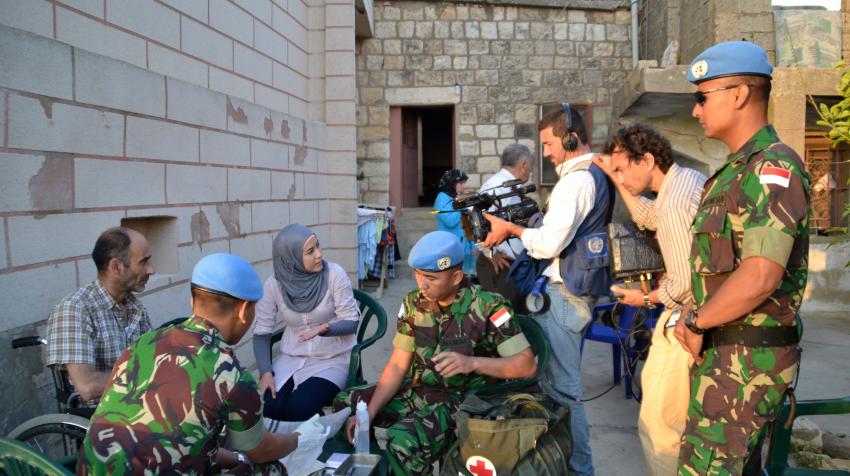
Indonesia's People's Consultative Assembly (MPR RI) has strongly condemned the Israeli attack that resulted in the death of one of its soldiers in Lebanon, who was part of the United Nations peacekeeping forces. The incident occurred last Sunday, provoking angry reactions from Indonesian officials who described the attack as a 'barbaric act.'
In a press conference held at the parliament complex in the capital Jakarta, Assembly Speaker Ahmad Muzani confirmed that the attack carried out by Israel led to the death of soldier Farzal Romadon, who was fulfilling his duty as part of the peacekeeping mission in Southern Lebanon. He also noted that three other soldiers were injured in the attack, reflecting the risks faced by Indonesian forces in that region.
Details of the Incident
The Israeli attack occurred near the location of the Indonesian forces in Adchit al-Qsar, where the troops were subjected to artillery shelling. Muzani expressed his deep condolences to the families of the soldiers who lost their lives while performing their duty, emphasizing that these soldiers represent the best of the Indonesian nation contributing to international peace efforts.
The Assembly also called on the Indonesian government to grant special honors to the soldiers who lost their lives and requested the withdrawal of Indonesian forces from Lebanon if adequate guarantees for their safety are not provided. Muzani confirmed that the Assembly will push for the United Nations Security Council to hold a session to investigate the incident and impose sanctions on Israel.
Background & Context
Historically, Indonesia has been one of the countries supporting peace efforts in Lebanon, having sent its forces there as part of the UNIFIL mission since 2006. These forces have faced numerous challenges, including repeated attacks by armed groups. The recent attack highlights the ongoing dangers faced by peacekeeping forces in conflict zones.
Israel, facing increasing international criticism for its military policies, continues to carry out operations in Lebanon, complicating the security situation. This attack has raised questions about the safety of international forces in the region and the importance of providing necessary protection for them.
Impact & Consequences
The Israeli attack on Indonesian forces may escalate tensions between Indonesia and Israel, especially amid growing calls from the Indonesian government to support the Palestinian cause. This incident could also affect relations between Indonesia and other countries involved in the UNIFIL mission, necessitating a reevaluation of peace strategies in the region.
On the international stage, this attack may increase pressure on the United Nations Security Council to take action against Israel, reflecting the ongoing tensions in the Middle East. Additionally, the Indonesian response may encourage other countries to adopt similar stances, further complicating the political landscape in the region.
Regional Significance
This incident serves as a reminder of the importance of peace and stability in the Middle East, where many countries are suffering from ongoing conflicts. The attack on Indonesian forces reflects the challenges faced by international peacekeeping troops and underscores the need to enhance diplomatic efforts to resolve disputes.
Moreover, this incident may influence the stance of Arab countries towards Israel, potentially leading to increased support for the Palestinian cause and strengthening cooperation among Arab nations in facing common challenges. Ultimately, hope remains for achieving peace and stability in the region, away from violence and aggression.