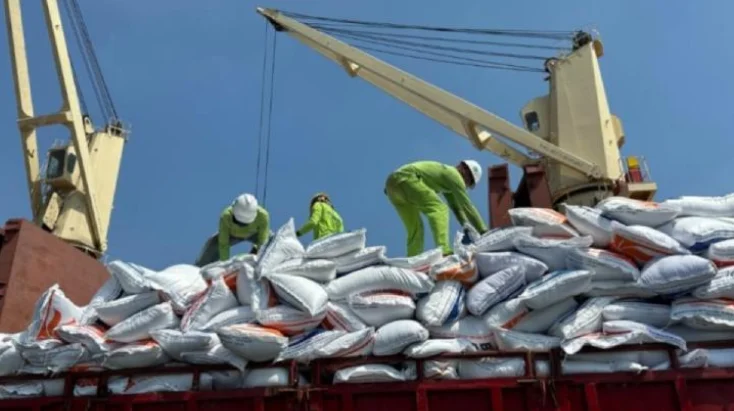
Indonesia's National Food Agency (Bapanas) has announced the distribution of 371,000 tons of rice under the Supply and Price Stabilization Program (SPHP) since the start of 2026. This measure is part of the government's efforts to ensure food availability and price stability throughout the country.
In a statement, the director of the SPHP program, Maino Dwi Hartono, confirmed that the distributed quantity includes 221,000 tons of rice extended from the 2025 program, in addition to 150.2 thousand tons distributed from March to April 25, 2026. He explained that the total quantity distributed so far has reached 371.2 thousand tons.
Details of the Initiative
The Indonesian government aims through the SPHP program to control prices and prevent any unjustified increases in rice prices. The program has been organized to ensure that there are no interruptions in distribution during the transition between years. Additionally, the agency is working with Perum Bulog to expand rice distribution channels to ensure it reaches as many consumers as possible.
The government targets the distribution of 828,000 tons of rice during 2026, utilizing multiple channels including distributors and both public and private companies. Distribution will also be expanded to include modern stores in collaboration with relevant associations, focusing on reaching retailers in traditional markets.
Background & Context
Indonesia is one of the largest rice-producing countries in the world, with millions of residents relying on it as a primary food source. However, the country has experienced fluctuations in rice prices in recent years, prompting the government to take proactive measures to ensure price stability and food availability. According to data from the National Statistics Agency, rice prices have risen in 109 regions until the end of April 2026, raising concerns about the potential for a food crisis.
The government is addressing these challenges through various programs aimed at enhancing local production and reducing reliance on imports. Data has shown that average rice prices remain within acceptable limits, with prices in different regions decreasing compared to last year.
Impact & Consequences
The steps taken by the Indonesian government are crucial in maintaining stability in the local market. The stability of rice prices directly impacts the living standards of citizens, especially amid the difficult economic conditions the country is facing. Minister of Agriculture Andi Amran Sulaiman has confirmed that prices will not change despite challenges related to packaging materials, reflecting the government's commitment to providing food at reasonable prices.
Furthermore, the decline in rice prices compared to previous years indicates the government's success in managing the market and achieving stability. These efforts have contributed to reducing the impact of rice on inflation rates, with data showing that inflation in rice prices during 2026 was significantly lower than in previous years.
Regional Significance
Indonesia's experience in managing food security is significant for Arab countries facing similar challenges in securing food for their citizens. Arab nations can benefit from Indonesia's strategies in enhancing local production and expanding distribution channels to ensure food availability at reasonable prices. Additionally, cooperation between Arab countries and Indonesia in the field of food security could contribute to regional stability.
In conclusion, the Indonesian government's efforts to ensure rice price stability and food availability for citizens serve as a model in addressing global food challenges.