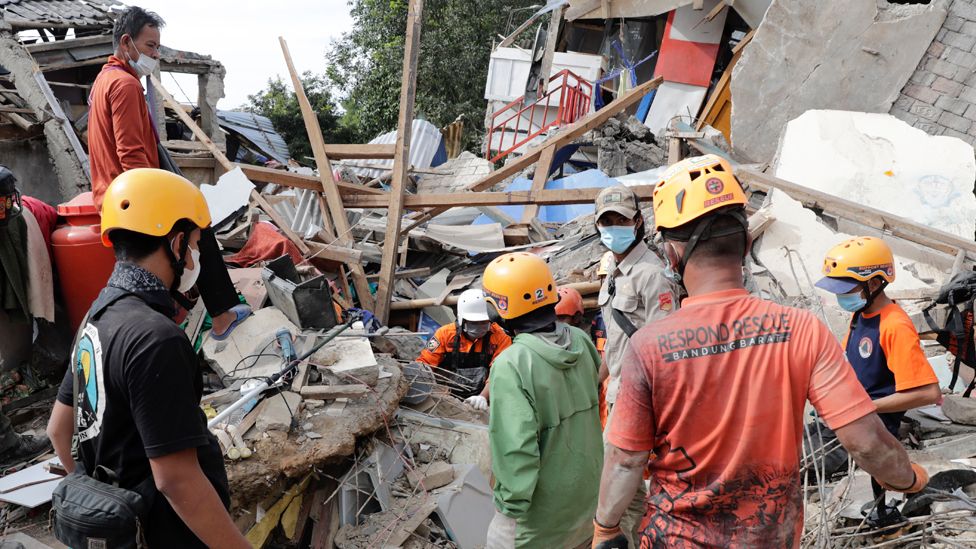
A powerful earthquake struck Indonesia today, raising questions about its potential status as the strongest in the country's history. Expert Abbas Sharqi, a geology professor, confirmed that the earthquake, which registered 6.8 on the Richter scale, could be among the strongest, noting that initial estimates indicate significant damage in some areas.
The earthquake occurred at 10:00 AM local time, with its epicenter in the Java Sea, approximately 100 kilometers from the city of Yogyakarta. Residents across wide areas of the country felt the tremors, including in the capital city, Jakarta, leading to panic among citizens.
Details of the Event
According to initial reports, no human casualties have been recorded so far, but there are reports of damage to buildings and infrastructure in areas near the earthquake's epicenter. Local authorities issued warnings for citizens to stay away from coastal areas in anticipation of a possible tsunami, although these warnings have not yet been confirmed.
The earthquake is part of the ongoing seismic activity in the Pacific Ring of Fire, where tectonic plates converge. Indonesia, which frequently experiences earthquakes, has witnessed many strong quakes in recent years, making this event part of a larger pattern of seismic activity.
Background & Context
Indonesia is located at the intersection of several tectonic plates, making it one of the most earthquake-prone countries in the world. In 2004, the country experienced a devastating earthquake measuring 9.1 on the Richter scale, which triggered catastrophic tsunami waves that resulted in the deaths of over 230,000 people across Indian Ocean countries.
Since then, the Indonesian government has improved early warning systems and developed emergency response strategies. However, the fear of earthquakes and tsunamis remains a part of life for residents, who must adapt to these natural hazards.
Impact & Consequences
If reports of significant damage are confirmed, this earthquake could have substantial economic and social impacts. Affected areas may require urgent support from the government and the international community for reconstruction efforts. Additionally, the earthquake could impact tourism, which is a major source of revenue for Indonesia.
A swift response from local authorities and the international community will be crucial in mitigating potential damages. It is also important to accurately assess the situation to avoid any future repercussions.
Regional Significance
Although Indonesia is far from the Arab world, earthquakes in this region raise concerns globally. Arab countries, which may not experience earthquakes of the same magnitude, need to enhance early warning systems and emergency planning to prepare for any potential natural disasters that may occur in the future.
Ultimately, Indonesia serves as an example of how to deal with natural hazards, with other countries needing to learn from its experiences in facing earthquakes and tsunamis.