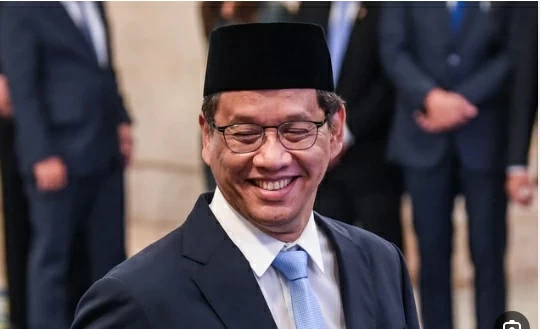
Indonesia's Finance Minister, Burhanuddin Abdullah, revealed the government's expectation to increase spending on energy subsidies by 100 trillion rupiah during the current year, in light of the government's burden from rising global oil prices.
The minister clarified that these estimates pertain to subsidy spending and exclude compensation payments, noting that additional subsidy costs will be covered by reallocating ministerial budgets. He emphasized that the government aims to keep the budget deficit below 3% of the gross domestic product (GDP) during the current year.
Details of the Initiative
In a further step to enhance energy consumption efficiency, the Indonesian government has officially decided to implement a work-from-home policy for government employees on Fridays. The Coordinating Minister for Economic Affairs, Airlangga Hartarto, announced that this policy will come into effect starting from April 1, 2026, with an evaluation scheduled two months after its implementation.
Hartarto indicated during a virtual press conference that the work-from-home system will include employees in both central government institutions and regional governments, applying it on one workday per week, specifically Fridays. This policy is expected to save up to 6.2 trillion rupiah, equivalent to approximately 365 million dollars, by reducing fuel consumption.
Background & Context
These measures come at a time when Indonesia is facing significant economic challenges, particularly with rising global oil prices and their impact on the public budget. The government heavily relies on energy subsidies to ensure price stability for citizens, necessitating a reevaluation of spending strategies.
Historically, Indonesia has struggled with budget deficits, prompting the government to adopt stringent measures to reduce expenditures. However, increasing spending on energy subsidies could exacerbate this deficit if not managed effectively.
Impact & Consequences
These policies are expected to significantly impact the Indonesian economy, as the government seeks to strike a balance between energy support and reducing financial deficits. If successful in implementing these policies, they could contribute to improving energy consumption efficiency and reducing reliance on fossil fuels.
Moreover, the work-from-home policy may enhance the quality of life for government employees, potentially leading to increased productivity and reduced traffic congestion. However, the challenge remains to ensure the effective execution of these policies.
Regional Significance
Indonesia is one of the largest economies in Southeast Asia, and any changes in its economic policies could affect regional and international markets. While Arab countries are also facing similar challenges in the energy sector, Indonesia's experiences may offer valuable lessons in effectively managing subsidies and energy.
In the context of the global shift towards renewable energy, Arab nations could benefit from Indonesia's strategies in enhancing energy consumption efficiency and implementing flexible work policies.
In conclusion, the measures taken by the Indonesian government reflect genuine efforts to address economic challenges and highlight the importance of strategic planning in resource management. It remains to be seen how these policies will impact the national economy and the lives of citizens in the future.