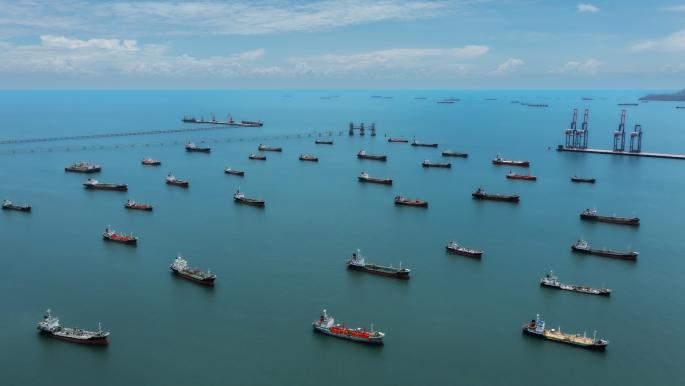
The Indonesian government announced that it held talks with Iran last Saturday regarding the possibility of Indonesian oil tankers passing through the Strait of Hormuz. The spokesperson for the Indonesian Ministry of Foreign Affairs confirmed that these discussions are part of efforts to enhance bilateral cooperation between the two countries, particularly in the fields of energy and trade.
This step is significant for Indonesia, which seeks to secure safe and efficient transport routes for its oil resources. The Strait of Hormuz, considered one of the most important maritime passages in the world, sees a significant flow of oil, with approximately 20% of the world's total oil passing through it.
Details of the Discussions
During the talks, the challenges facing Indonesian oil tankers in the Strait of Hormuz were discussed, including security risks and geopolitical tensions in the region. Iran expressed its readiness to provide the necessary support to ensure the safety of these tankers, reflecting its desire to enhance economic relations with Indonesia.
Additionally, ways to strengthen cooperation in other areas such as trade and investment were addressed, as Indonesia is one of the largest economies in Southeast Asia, while Iran possesses significant oil resources. This cooperation could open new horizons for both countries amid global economic challenges.
Background & Context
Historically, relations between Indonesia and Iran have been characterized by cooperation in various fields, especially within the framework of the Organization of Islamic Cooperation. However, geopolitical tensions in the Middle East, particularly between Iran and the United States, have occasionally affected these relations.
In recent years, Indonesia has sought to diversify its economic partnerships, particularly with countries facing economic sanctions. Iran is one of these countries, as it can provide Indonesia with new opportunities in the energy sector.
Impact & Consequences
If the talks between Indonesia and Iran succeed, they could lead to a significant improvement in economic relations between the two countries. This cooperation could contribute to an increase in bilateral trade volume, benefiting both the Indonesian and Iranian economies.
Moreover, this collaboration may impact global oil markets, as it could lead to an increased flow of Iranian oil to Asian markets, potentially altering the dynamics of supply and demand in the region.
Regional Significance
The Middle East, particularly the Gulf countries, is one of the regions most affected by developments in the Strait of Hormuz. Any change in the movement of oil tankers through this strait could influence global oil prices, reflecting on the economies of oil-producing Arab countries.
Furthermore, strengthening relations between Indonesia and Iran may encourage other countries in the region to reassess their trade relations with Iran, especially amid ongoing tensions between Iran and the West.
In conclusion, the talks between Indonesia and Iran represent an important step towards enhancing bilateral cooperation in the fields of energy and trade, which could open new horizons for both countries and impact global oil markets.