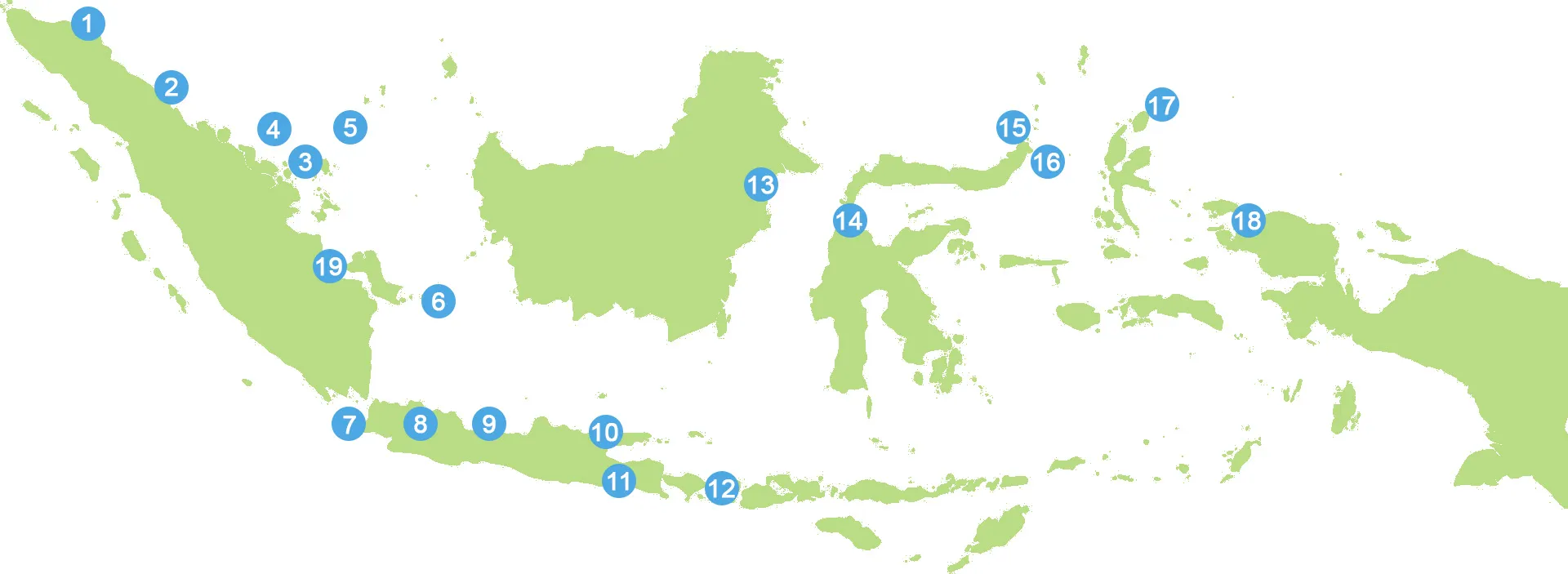
The Indonesian Ministry of Economic Coordination has announced the launch of 25 Special Economic Zones (SEZs) throughout the country, aimed at accelerating national economic growth and promoting balanced development among regions. This announcement was made during a large event in Banjarmasin, where officials emphasized the significance of these zones in improving living standards and enhancing competitiveness.
Rizal Edwin Manansang, the acting secretary-general of the SEZ Council, explained that the distribution of these zones extends from West Indonesia to East Indonesia, reflecting the government's strategy to reduce economic disparities between different regions. Seven zones have been allocated in Java, while eighteen zones are distributed in other areas including Sumatra, Kalimantan, Sulawesi, Maluku, and Papua.
Details of the Initiative
The Indonesian government aims through this initiative to ensure that each region has a new center for economic growth based on its unique potentials. This will help attract investments, create new job opportunities, and sustainably increase the added value to the local economy.
The SEZs in Indonesia are classified into several main categories, including thirteen industrial zones, six tourism zones, two health zones, two technological and educational zones, in addition to one digital zone and another service zone. This diversity reflects a multidimensional national development strategy.
Background & Context
Historically, Indonesia has suffered from significant economic disparities between regions, with Java capturing most investments and economic opportunities. However, the government has been striving for several years to achieve greater balance by developing special economic zones in less developed areas.
This step is part of the government's plan to enhance comprehensive economic growth, with the SEZs representing a strategic tool to address economic challenges and boost investments in vital sectors.
Impact & Consequences
The SEZs are expected to contribute to enhancing economic growth in Indonesia, as they will attract both foreign and domestic investments. They will also help create new job opportunities, thereby reducing unemployment rates in the targeted areas.
Moreover, these zones will enhance Indonesia's competitiveness in global markets by providing a conducive environment for investment and trade. The focus on diverse sectors such as tourism, industry, and technology will further promote sustainable economic growth.
Regional Significance
Indonesia's experience in developing special economic zones serves as a model for the Arab world, where many Arab countries face similar economic challenges. Arab nations can benefit from this experience to develop special economic zones that enhance growth and achieve sustainable development.
In light of global economic challenges, these strategies may prove beneficial in attracting foreign investments and enhancing economic cooperation between Arab countries and Indonesia.