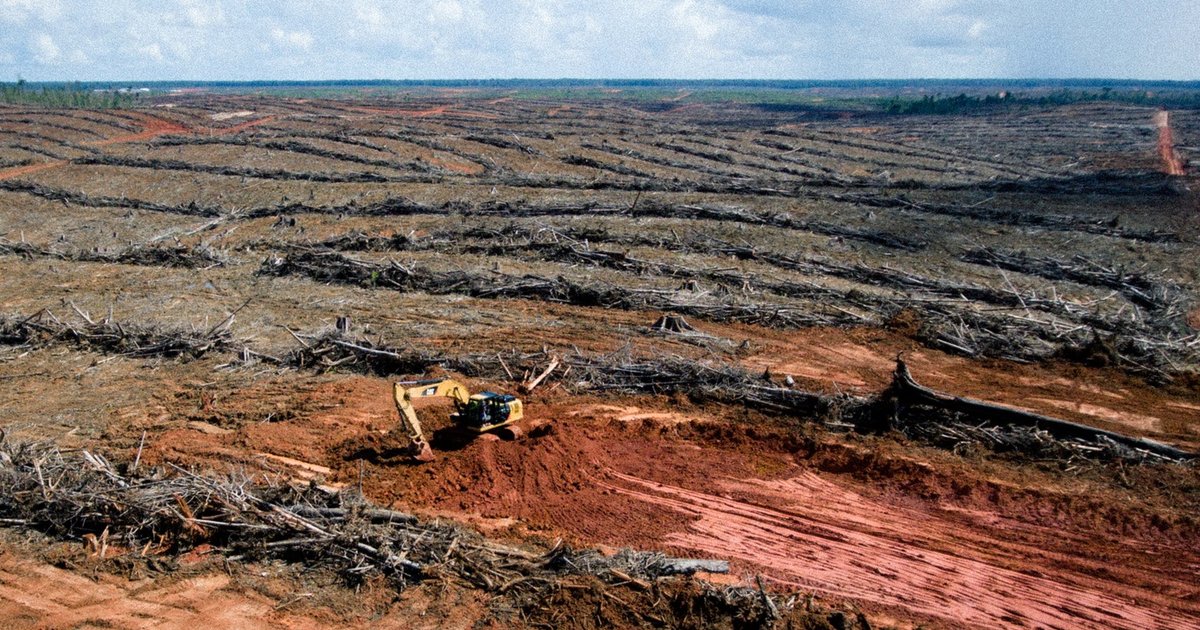
The Indonesian Ministry of Forestry (Kemenhut), in collaboration with the Forest Violations Task Force (Satgas PKH), has launched a campaign to clean up illegal palm plantations in the Karang Gading Forest Reserve and East Langkat in North Sumatra. This initiative is part of the government's commitment to protect forests and preserve biodiversity in the country.
Rudyanto Saragi Nabito, the Director of Environmental Crime Prevention at the ministry, emphasized that this campaign is not merely a legal action against illegal land occupation but also aims to boost the local economy by providing investment assistance to local communities. He noted that coordination between law enforcement and environmental conservation is key to protecting Indonesia's coastlines.
Details of the Campaign
The campaign targets the cleanup of 102 hectares of land planted with illegal palm trees, which is part of a broader plan to restore 389 hectares of land by 2026, supported by the "Mangrove For Coastal Resilience" (M4CR) program and international cooperation with the German Development Bank (KfW). During the campaign, a symbolic removal of palm trees and planting of mangrove seedlings in the cleared areas was carried out.
The Karang Gading and East Langkat areas are home to a diverse range of animal and plant species, including sea turtles and many migratory bird species. Sabto Aji Prabowo, the Director of Area Protection at the ministry, confirmed that restoring the ecosystem by removing illegal plants is a crucial step in regaining the original functions of the area as a vital ecosystem.
Background & Context
Historically, Indonesia has seen a significant increase in palm cultivation, leading to the destruction of natural forests and biodiversity. Indonesian forests are among the most important tropical forests in the world, playing a vital role in regulating the global climate. However, illegal activities such as palm cultivation exacerbate the problem of climate change.
The Indonesian government seeks to balance economic development with environmental conservation, which requires ongoing efforts to combat illegal activities and promote environmental awareness among local communities.
Impact & Consequences
This campaign is seen as a positive step towards environmental protection and the restoration of biodiversity in Indonesia. These efforts are expected to improve the quality of life for local communities by enhancing environmental sustainability and providing new job opportunities in sustainable agriculture.
Moreover, this campaign may inspire other countries in the region to tackle similar challenges, thereby enhancing regional cooperation in environmental protection. Coordination between governments and local communities is vital to ensure the success of these initiatives.
Regional Significance
Environmental issues and sustainable development are also critical concerns for Arab countries, many of which face similar challenges in preserving biodiversity and addressing climate change. Arab nations can benefit from Indonesia's experiences in fostering cooperation between governments and local communities for environmental protection.
Ultimately, this campaign in Indonesia serves as a model for environmental conservation efforts and highlights the importance of coordination among various stakeholders to achieve sustainable development goals.