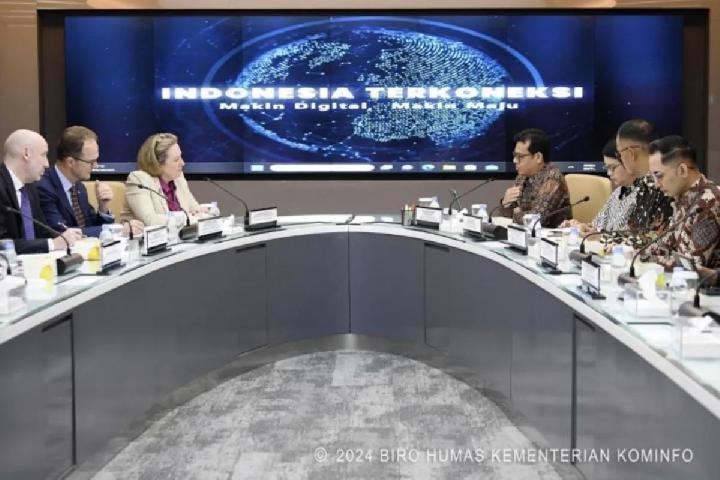
In a move aimed at enhancing national productivity, the Indonesian government emphasized the importance of implementing an e-government system as part of its strategy to tackle global challenges. This was highlighted during the reception of the Economic Coordination Minister, Airlanga Hartarto, for an Australian delegation led by Daniel Wood, Chair of the Australian Productivity Commission, and the Australian Ambassador to Indonesia, Roderick Brazier.
Hartarto explained that Indonesia aims to enhance productivity through the application of effective policies that contribute to sustainable economic growth, noting that e-government represents a vital tool to achieve this goal.
Details of the Meeting
During the meeting, a set of strategic agendas related to the implementation of e-government was outlined, emphasizing that this initiative could significantly contribute to improving productivity, especially under current policies aimed at achieving efficiency.
The discussion also addressed ways to enhance economic cooperation between Indonesia and Australia, focusing on human resource development and strengthening the economic capacity of both countries. Daniel Wood expressed Australia’s readiness to support Indonesia's efforts to improve the efficiency of the public sector.
Background & Context
Indonesia is considered one of the largest economies in Southeast Asia; however, it faces significant challenges related to productivity and economic growth. In recent years, the government has begun implementing a series of economic reforms aimed at improving the business environment and enhancing efficiency.
Historically, Indonesia relied on traditional sectors, but with technological advancements, it has become essential to transition towards the use of modern technology, including e-government, to improve public services and increase transparency.
Impact & Consequences
The implementation of e-government can lead to significant improvements in the efficiency of government services, making it easier for citizens to access information and services. It also enhances transparency and reduces corruption, which is one of the major challenges facing many developing countries.
Moreover, cooperation with Australia in this area can provide Indonesia with valuable experiences on how to effectively implement these systems, contributing to achieving the desired economic goals.
Regional Significance
Many Arab countries are moving towards implementing e-government systems as part of their efforts to improve public services and enhance transparency. Indonesia's experience in this field could serve as a model, especially given the economic challenges faced by many Arab nations.
In conclusion, enhancing e-government in Indonesia represents an important step towards achieving sustainable development, which could have a positive impact on economic growth in the region, thereby strengthening regional and international cooperation.