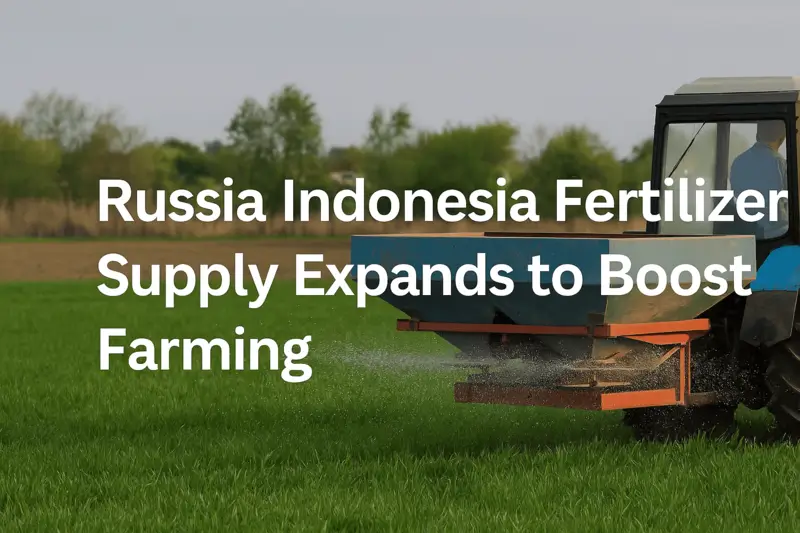
Indonesia's Pupuk Indonesia (PT Pupuk Indonesia) has announced the resumption of fertilizer exports, especially nitrogen fertilizers (urea), after securing local needs. This announcement was made by the company's director general, Rahmad Pribadi, during a press conference following a meeting with the Indonesian Parliament's financial affairs committee in the capital, Jakarta.
Rahmad emphasized that the priority remains to meet local market needs, stating, "The most important thing is that Indonesia is secure first, then we can start exporting." He explained that Indonesia is still capable of exporting fertilizers to assist neighboring countries facing supply shortages, especially amid the crises affecting the Middle East.
Details of the Announcement
Indonesia is considered one of the main fertilizer-producing countries in the region, with an annual production capacity of 8.8 million tons, despite a total installed capacity of 9.4 million tons. Despite the significant rise in global fertilizer prices, where urea prices surged from about $400 per ton to $800 per ton, Indonesia remains in a secure position thanks to its local production.
Regarding export quotas, the company confirmed that the quantity available for export is estimated at around 1.5 million tons, with flexibility in distribution aligning with local conditions. Deputy Minister of Agriculture, Sadario, noted that several countries are looking to import fertilizers from Indonesia, including India, Brazil, Australia, and the Philippines.
Context and Background
This move comes at a sensitive time, as global fertilizer supplies are significantly affected by geopolitical crises, particularly in the Middle East. The Strait of Hormuz is considered one of the vital passages through which about 30% of global fertilizer supplies pass. Disruptions in this region have led to a notable increase in prices, impacting many countries that rely on imports to meet their agricultural needs.
Historically, Indonesia relied on importing certain types of fertilizers, but with increased local production, it has become capable of meeting its internal needs and also exporting the surplus. This shift reflects the Indonesian government's efforts to enhance food security and achieve self-sufficiency in agriculture.
Implications and Effects
This step carries positive implications for the Indonesian economy, as it will contribute to boosting exports and increasing revenues. Additionally, exporting fertilizers will help neighboring countries address supply shortages, thereby strengthening trade relations between Indonesia and these nations.
Moreover, the stability of fertilizer supplies will contribute to enhancing local agricultural production, positively impacting food security in Indonesia. However, the government must monitor local prices to ensure that exports do not adversely affect the domestic market.
Impact on the Arab Region
Indonesia is a significant player in the global fertilizer market, and its exports may have a direct impact on Arab countries that rely on imports to meet their agricultural needs. Amid current crises, Arab nations may find opportunities to strengthen their trade partnerships with Indonesia, contributing to improved food security in the region.
In conclusion, Indonesia's decision to resume fertilizer exports after securing its local needs demonstrates the country's ability to adapt to changing global conditions and reflects the government's commitment to achieving food security and enhancing the national economy.