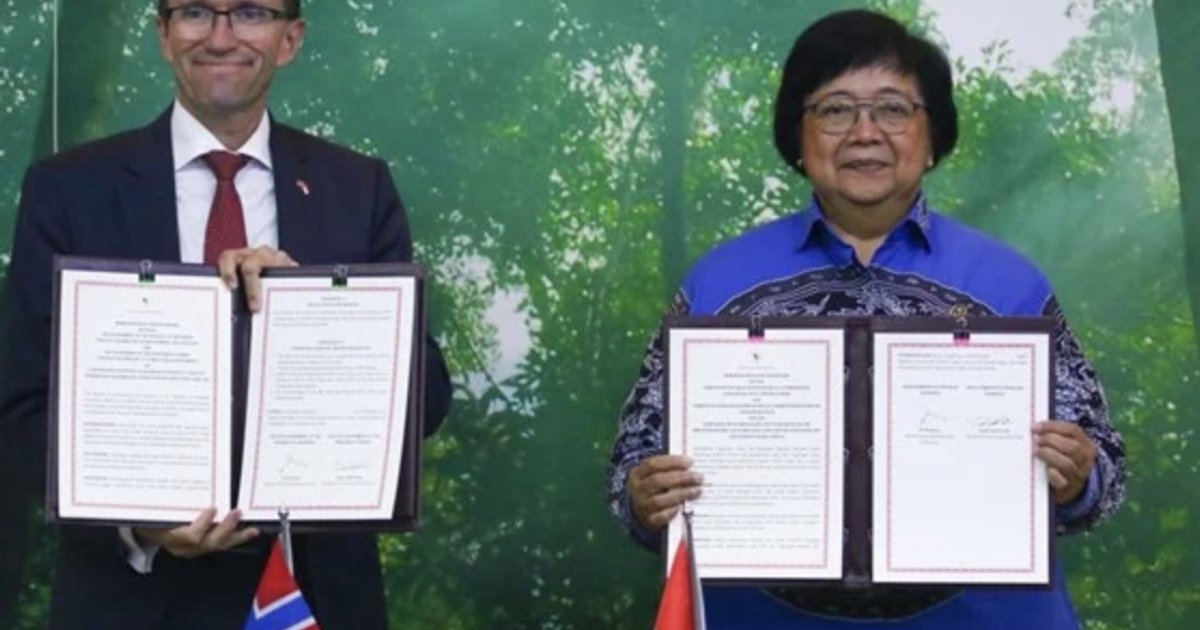
In a move reflecting Indonesia's commitment to addressing climate change, the Indonesian government, through its Ministry of Forestry, announced an enhancement of cooperation with the Japan International Cooperation Agency (JICA) in the field of forestry. This announcement came during a meeting between Indonesian Minister of Forestry Raja Juli Antoni and JICA's Senior Vice President Yoshifumi Yoshikawa in the Japanese capital, Tokyo.
The minister emphasized that this cooperation is part of the directives from Indonesian President Prabowo Subianto to strengthen bilateral relations between Indonesia and Japan, where an agreement was reached to develop a strategic partnership in forestry, focusing on supporting efforts to combat climate change and rehabilitate degraded lands.
Details of the Meeting
During the meeting, Raja Antoni highlighted the importance of enhancing cooperation in the management of protected areas, noting that Indonesia aims to develop its protected areas to become among the best national parks globally. He explained that this cooperation will also include new initiatives aimed at improving forest management and enhancing environmental sustainability.
The discussion also touched upon the Global Mangrove Center project, which aims to promote research and education in the management of mangrove ecosystems, considered part of global efforts to combat climate change.
Background & Context
Indonesia is one of the countries most affected by climate change, facing significant challenges related to deforestation and land degradation. Studies have shown that deforestation in Indonesia significantly contributes to greenhouse gas emissions, making international cooperation in this area critically important.
Historically, Indonesia and Japan have enjoyed strong relations in various fields, including sustainable development. Japan has contributed to numerous environmental projects in Indonesia, reflecting its commitment to supporting sustainable development efforts in the region.
Impact & Consequences
Enhancing cooperation between Indonesia and Japan in forestry could have positive impacts on the environment and local economies. By improving forest management, Indonesia can enhance its capacity to address climate change, contributing to biodiversity protection and improving the quality of life for local populations.
This partnership may also open new avenues for international cooperation in other areas, such as eco-tourism and green technology, thereby enhancing Indonesia's position as a regional hub for environmental innovation.
Regional Significance
Although this news pertains to Indonesia and Japan, there are lessons that Arab countries can learn from it. Many Arab nations face similar challenges related to climate change and natural resource management. Arab countries can draw inspiration from this partnership to enhance cooperation in environmental and sustainable development fields.
In conclusion, this cooperation between Indonesia and Japan represents a significant step towards achieving sustainable development goals and reflects the importance of international collaboration in addressing global environmental challenges.