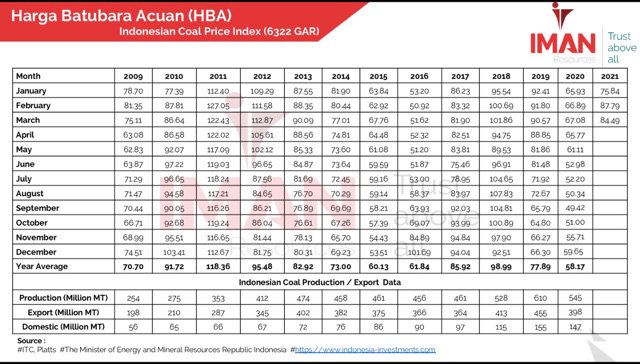
The Indonesian Ministry of Energy and Mineral Resources announced a decrease in the reference price of Indonesian coal (HBA) to $99.87 per ton in the first period of April 2026, down from $103.01 in the second period of March 2026. This decline reflects ongoing changes in the global coal market and the effects of supply and demand.
According to Ministerial Decision No. 135.K/MB.01/MEM.B/2026, coal prices have been divided into four categories based on their calorific value. Other categories recorded varying prices, with HBA I rising to $72.28 per ton, while HBA II fell to $49.99, and HBA III to $35.23.
Details of the Price Changes
These price changes come as the Indonesian Ministry of Energy has reduced the maximum coal production for 2026 to approximately 600 million tons, which represents a decrease of about 190 million tons compared to 2025. This reduction is a result of the imbalance between supply and demand in the international market, particularly during 2025.
Despite this decline, coal prices experienced a significant increase in early March 2026, surpassing $130 per ton due to geopolitical conflicts between the United States and Israel on one side and Iran on the other. This rapid price surge raised concerns in global markets.
Background & Context
Historically, coal prices have experienced significant fluctuations due to various factors, including changes in environmental policies, rising demand from developing countries, and geopolitical conflicts. Indonesia, being one of the largest coal producers in the world, plays a vital role in meeting global market needs.
In recent years, pressures have increased on Indonesia to reduce carbon emissions, impacting production and export strategies. However, the country still heavily relies on coal exports as a primary source of revenue.
Impact & Consequences
The decline in coal prices could significantly impact the Indonesian economy, as many companies and workers depend on this sector. A decrease in prices may lead to reduced investments in the coal sector, potentially affecting job opportunities and economic growth.
Furthermore, the reduction in production may lead to increased prices in the future if global demand continues to rise. Thus, the Indonesian government faces significant challenges in balancing market needs with environmental commitments.
Regional Significance
Considering the situation in the Arab region, the decline in coal prices may affect countries that rely on coal as part of their energy mix. Additionally, geopolitical conflicts affecting energy prices could have repercussions on the stability of Arab markets.
Many Arab countries are seeking to diversify their energy sources and reduce reliance on fossil fuels, making it essential to monitor coal price developments in the context of global economic transformations.
In conclusion, the decline in Indonesian coal prices signifies the challenges facing the global market and reflects the need for flexible strategies to address future fluctuations.