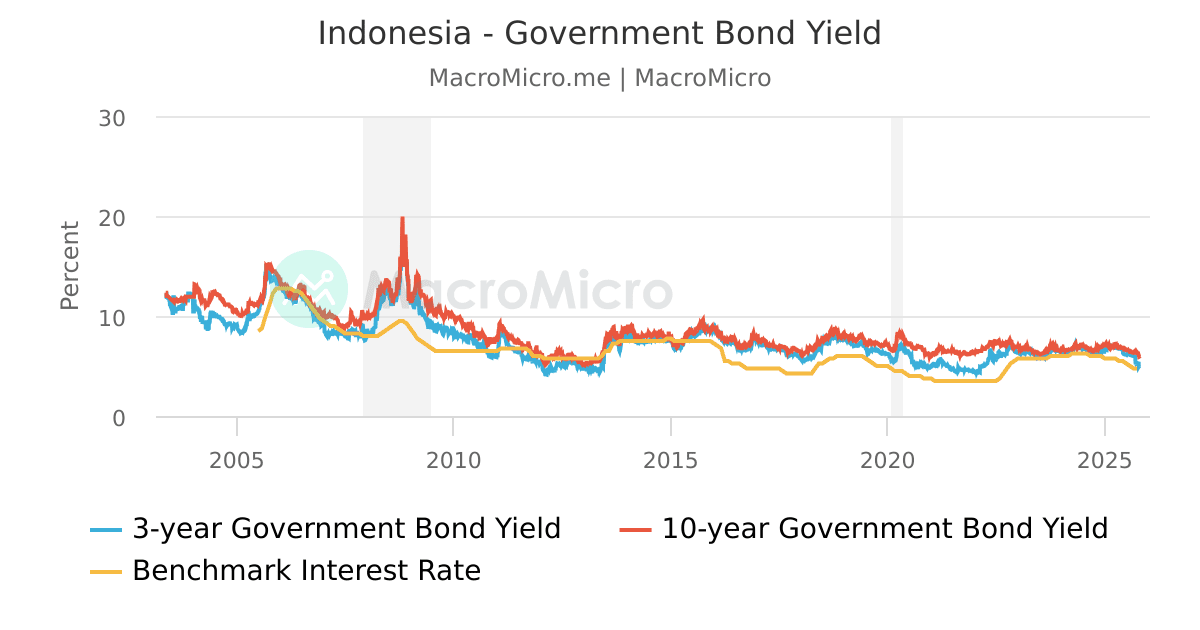
The Indonesian government successfully raised 40 trillion rupiah through a bond auction held on March 31, 2026. Data from the Directorate of Financing and Risk Management under the Ministry of Finance in Jakarta indicated that the auction witnessed strong interest from investors, with total bids amounting to 58.22 trillion rupiah.
The bids for the FR0109 series led the auction, with 16.7 trillion rupiah awarded out of 19.93 trillion rupiah submitted. The average winning yield was 6.57944%, maturing on March 15, 2031.
Details of the Auction Event
Successful bids continued, with the government securing 7.4 trillion rupiah from the FR0108 series, which saw 12.22 trillion rupiah submitted. The average winning yield was 6.86968%, maturing on April 15, 2036.
Additionally, the government raised 5 trillion rupiah from the new SPN12270401 series after receiving 6.6 trillion rupiah in bids, with an average yield of 5.45000% maturing on April 1, 2027.
Regarding the FR0105 series, the government secured 3.15 trillion rupiah from 3.59 trillion rupiah submitted, with an average yield of 6.92991% maturing on July 15, 2064.
Furthermore, 2.4 trillion rupiah was raised from the FR0107 series, 1.7 trillion rupiah from the FR0106 series, and 1.5 trillion rupiah from the FR0102 series, with yields ranging between 4.90000% and 6.93934%.
Background & Context
Indonesia is considered one of the largest economies in Southeast Asia, with the government relying on bond issuance to finance its development projects. In recent years, there has been an increase in demand for government bonds, reflecting investor confidence in the Indonesian economy. The government aims to balance economic growth with the sustainability of public debt.
Historically, Indonesia has experienced economic fluctuations but has managed to recover from past crises through well-considered financial strategies. Expansionary monetary policies have contributed to boosting demand for government bonds.
Impact & Consequences
This move is a positive indicator of the Indonesian government's ability to attract investments, enhancing the stability of the national economy. The success of the auction reflects increasing confidence among investors in the government's capability to manage public debt effectively.
These funds are expected to bolster development projects and infrastructure, contributing to improving the quality of life for citizens and increasing job opportunities. Additionally, the stability of public debt can help reduce borrowing costs in the future.
Regional Significance
Indonesia's experience in managing public debt and bond issuance serves as a model for Arab countries facing similar economic challenges. Arab nations can benefit from this experience to enhance their investments and improve public debt management.
Moreover, strengthening economic cooperation between Indonesia and Arab countries could contribute to achieving sustainable development in the region, especially in light of global economic challenges.