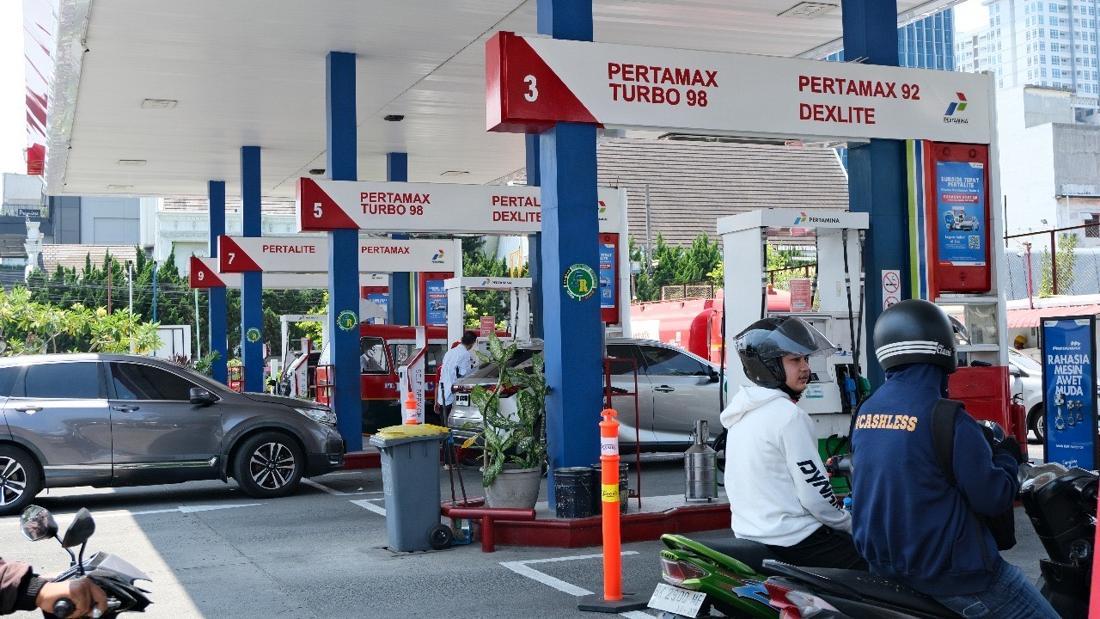
The Indonesian Minister of Finance, Burhanuddin Abdullah, confirmed that Pertamina will temporarily bear the difference in unsupported fuel prices amid the continuous rise in global oil prices. This statement was made during a press conference in Jakarta, where he explained that the government supports this step to ensure price stability for citizens.
Burhanuddin noted that the government has been regularly compensating Pertamina, enabling it to absorb these differences. He clarified that the government pays monthly compensations amounting to 70% of the difference between supported and unsupported fuel prices, reflecting the company's good financial situation.
Details of the Announcement
Earlier, State Minister Prasetyo Hadi confirmed that the government is committed to not increasing fuel prices, whether supported or unsupported. This assurance came after a series of coordination meetings with the Ministry of Energy and Mineral Resources and Pertamina, based on directives from President Joko Widodo.
The government also reassured citizens that fuel supplies in the country are secure and available, urging them not to worry or be disturbed by rumors about price increases. These statements come at a time when global oil prices, such as Brent crude and West Texas Intermediate, have seen significant increases reaching $100 per barrel.
Background & Context
Historically, Indonesia has faced numerous challenges in the energy sector, particularly regarding fuel prices. In recent years, the government has faced increasing pressure due to rising global oil prices, affecting the state budget and local fuel prices. However, the government has taken multiple steps to ensure market stability, including providing financial support to major energy companies like Pertamina.
These steps are part of a broader strategy aimed at achieving economic stability in the country, as the government seeks to balance support for citizens while maintaining the health of national companies.
Impact & Consequences
These measures could significantly impact the Indonesian economy, as stabilizing fuel prices can improve citizens' living conditions and boost economic activity. However, the government must be cautious of future challenges, especially if oil prices continue to rise.
Moreover, Pertamina's absorption of financial differences may help enhance investor confidence in the Indonesian market, potentially leading to increased investments in the energy sector. Nonetheless, there must be clear plans in place to address any future fluctuations in oil prices.
Regional Significance
Oil prices are a vital issue for many Arab countries, as their economies heavily rely on oil exports. Therefore, any changes in global oil prices directly affect the stability of these economies. Indonesia's experience in supporting fuel prices may serve as a model for some Arab countries facing similar challenges.
In conclusion, monitoring developments in global oil prices and their impact on local policies is essential, as a swift and effective response can enhance national economic stability.