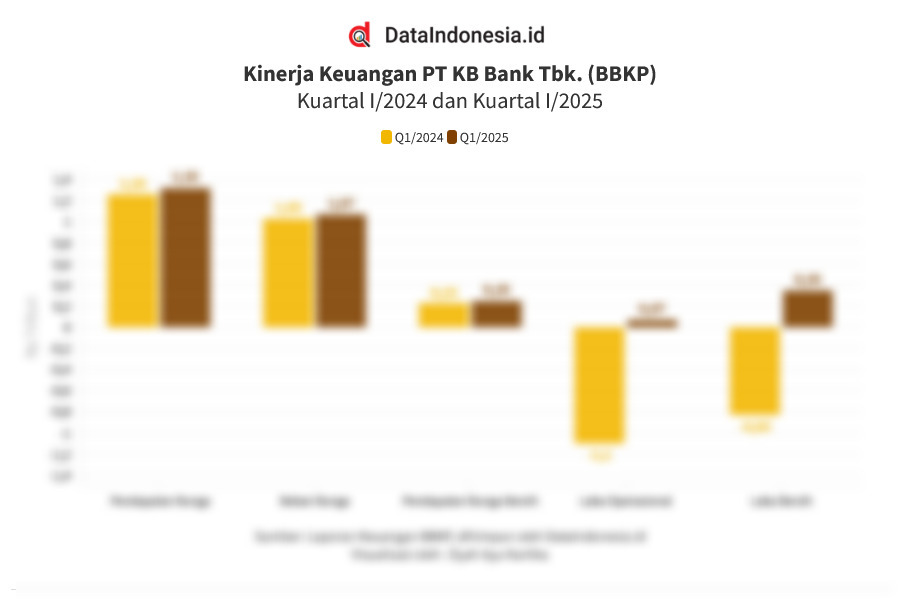
Indonesian KB Bank (PT Bank KB Indonesia Tbk) achieved a net profit of 66.59 billion rupiah in 2025, recovering from a loss of 6.33 trillion rupiah in 2024. This positive shift reflects the success of the transformation strategies the bank has continuously implemented over the past years.
In a statement, the bank's CEO, Konardi Dharma Li, confirmed that the profitability is due to the bank's commitment to executing effective transformation strategies, stating: "We do not only focus on growth, but we also ensure that this growth is sustainable and of high quality."
Financial Performance Highlights
KB Bank showed a significant improvement in its financial performance during 2025, with the ratio of non-performing loans decreasing to 20.31% compared to 22.76% in the previous year. The bank also recorded net interest income of 1.19 trillion rupiah, an increase of 3.40% from the previous year.
Net interest margins (NIM) improved to 1.43%, reflecting enhanced asset quality and more efficient cost management. Additionally, the loan-to-deposit ratio (LDR) improved to 91.07%, indicating a healthier and more balanced funding structure.
Background & Context
KB Bank was established in Indonesia as part of the KB Financial Group and faced significant challenges in previous years, including a high rate of non-performing loans. However, the bank began to implement comprehensive transformation strategies aimed at improving asset quality and increasing operational efficiency.
These positive results represent an important step towards restoring investor and depositor confidence, as the bank seeks to strengthen its position in the Indonesian banking market. The shift towards digitalization and the development of digital banking services have also played a significant role in improving the bank's financial performance.
Impact & Consequences
The financial results of KB Bank are a positive indicator of stability in the banking sector in Indonesia, reflecting the ability of financial institutions to adapt to economic challenges. Furthermore, the improved financial performance of the bank may encourage more investments in the Indonesian banking sector.
Additionally, KB Bank's success in improving loan quality and increasing revenues could serve as a model for other banks in the region, enhancing financial stability and stimulating economic growth.
Regional Significance
In light of the economic challenges facing many Arab countries, the experience of Indonesian KB Bank could serve as an inspiration for Arab banks. Banks in the region can benefit from digital transformation strategies and improving asset quality to enhance their competitiveness.
Furthermore, strengthening cooperation between Arab and Indonesian banks could contribute to the exchange of expertise and the development of financial solutions that meet local market needs.
In conclusion, the positive results of Indonesian KB Bank represent an important step towards restoring confidence in the banking sector and underscore the importance of well-considered strategies in achieving sustainable growth.