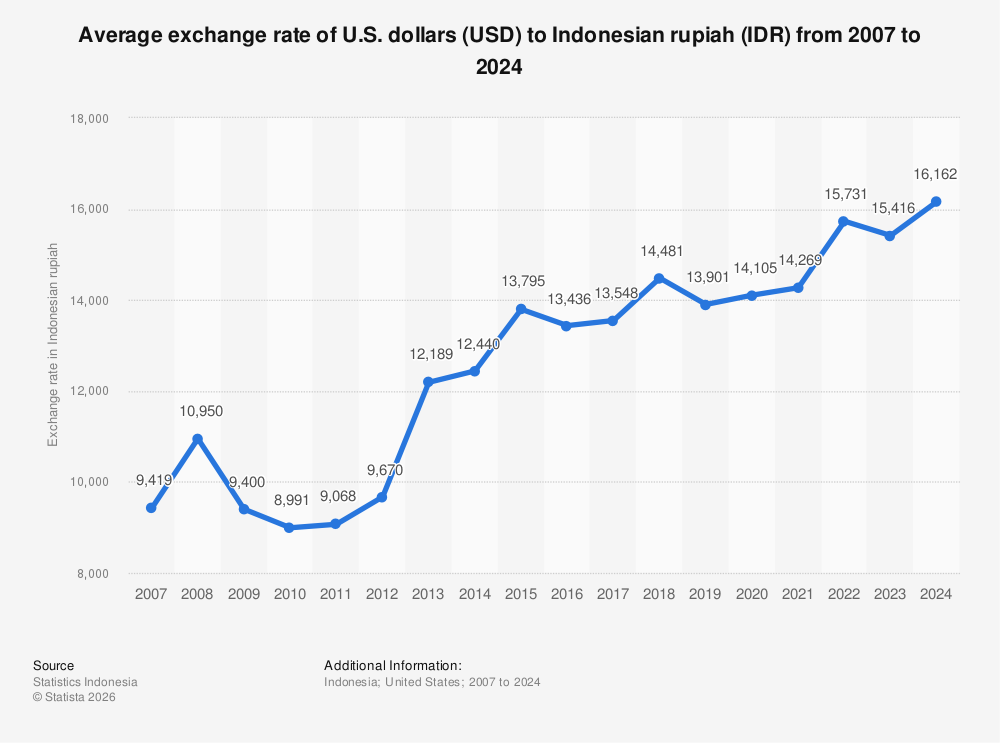
On Monday morning, the Indonesian rupiah dropped by 16 points, or 0.09%, reaching 16,996 rupiah against the US dollar. This decline is attributed to rising fears of escalating conflict in the Middle East and increasing oil prices. Currency analyst at Duw Financial Futures, Lukman Leong, noted that the rupiah is expected to continue its downward trend under these circumstances.
In an interview with Antara News Agency, Lukman confirmed that the rupiah is under pressure due to increasing geopolitical tensions, especially following warnings from US President Donald Trump regarding the possibility of attacks on Iran. Trump indicated that Tehran must open the Strait of Hormuz, threatening that failure to do so would result in significant suffering.
Details of the Situation
These developments come at a sensitive time, as fears of escalating conflict between the United States and Israel on one side and Iran on the other are growing. Oil prices have risen significantly, with West Texas Intermediate crude reaching $115 per barrel before slightly retracting to $112. This increase in oil prices directly impacts the Indonesian economy, which heavily relies on oil imports.
Moreover, economic data from the United States, including the non-farm payroll report, showed an unexpected increase in job numbers, which supported the US dollar. The number of jobs rose by 178,000 in March 2026, exceeding expectations that had pointed to 59,000 jobs. The unemployment rate also fell to 4.3% compared to 4.4% in February.
Background & Context
Historically, the Indonesian rupiah has experienced significant fluctuations due to economic and political crises. In recent years, the rupiah has been particularly affected by geopolitical events in the region, where oil prices play a crucial role in determining the currency's value. As tensions in the Middle East escalate, it becomes increasingly difficult for the rupiah to maintain its stability.
Indonesia is one of the largest oil-importing countries in Southeast Asia, making it vulnerable to global price fluctuations. With increasing economic pressures, the Indonesian government must take effective measures to protect its currency and bolster the local economy.
Impact & Consequences
These developments are expected to significantly impact the Indonesian economy. Rising oil prices may lead to increased production and transportation costs, negatively affecting local prices. Additionally, the depreciation of the rupiah could raise import costs, potentially leading to economic inflation.
Furthermore, these conditions may affect foreign investments in Indonesia, as investors might hesitate to inject their funds into a country facing economic instability. Therefore, the government needs to take swift actions to enhance confidence in the local economy.
Regional Significance
The Arab region is directly affected by tensions in the Middle East, as these events are part of a complex geopolitical landscape. Rising oil prices due to conflicts can have positive effects on some oil-producing Arab countries, but at the same time, it may increase economic pressures on oil-importing nations.
Ultimately, the current situation in Indonesia and the Arab region requires careful monitoring by decision-makers, as any escalation in conflict could impact economic and social stability in both regions.