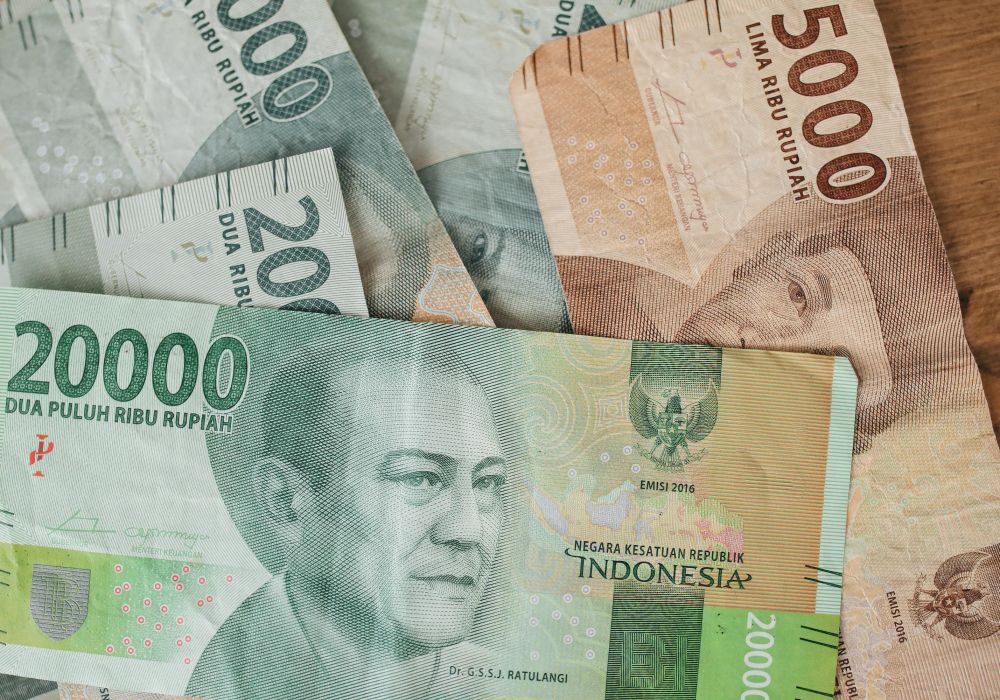
The value of the Indonesian rupiah has notably decreased during trading on Tuesday, dropping by 70 points, or approximately 0.41%, to reach 17,105 rupiah against the US dollar, compared to the previous closing level of 16,980 rupiah. This decline mirrors the increasing fears among investors due to escalating tensions between the United States and Iran.
In this context, financial analyst Ibrahim Aswaibi pointed out that investors are bracing for a potential escalation in the Middle East, especially as the deadline set by US President Donald Trump regarding Iran approaches. Recent disruptions in oil tanker traffic have heightened supply expectations and raised risk levels in oil markets.
Details of the Situation
Recently, Iran rejected the US proposal for a 45-day ceasefire and a gradual opening of the Strait of Hormuz, further intensifying tensions. Iran has called for a permanent end to hostilities, binding guarantees against future attacks, as well as the lifting of sanctions and compensation for damages.
In this context, Trump emphasized that the Tuesday deadline is final, warning that non-compliance could lead to US attacks on Iranian infrastructure, including power stations and bridges. He also indicated that Iran could be defeated quickly, highlighting the increasing risks of a larger escalation in the region.
Background & Context
Historically, relations between the United States and Iran have been tense since the Iranian Revolution in 1979, which led to the severing of diplomatic ties between the two countries. Since then, the region has witnessed numerous crises and conflicts that have affected the stability of global markets, particularly oil markets.
The Strait of Hormuz is one of the most critical maritime passages in the world, through which approximately 20% of the world's total oil passes. Therefore, any escalation of tensions in this area can significantly impact global oil prices and increase uncertainty in financial markets.
Impact & Consequences
The increasing tensions between the United States and Iran are disrupting global energy flows, driving up oil prices and raising inflation concerns. These conditions may also influence the monetary policies of countries, as investors look forward to upcoming US inflation data expected to provide signals regarding future interest rates.
Financial markets are highly sensitive to any developments in the Middle East, as crises can lead to significant price volatility. Consequently, investors worldwide are closely monitoring the situation, as any negative developments could impact their investments.
Regional Significance
The tensions between the United States and Iran are among the primary factors affecting the stability of global markets, especially oil markets. The situation is critical, as it not only influences oil prices but also has broader implications for economic stability in the region.
As the geopolitical landscape continues to evolve, the potential for conflict remains a significant concern for investors and policymakers alike, making it essential to stay informed about developments in this volatile region.