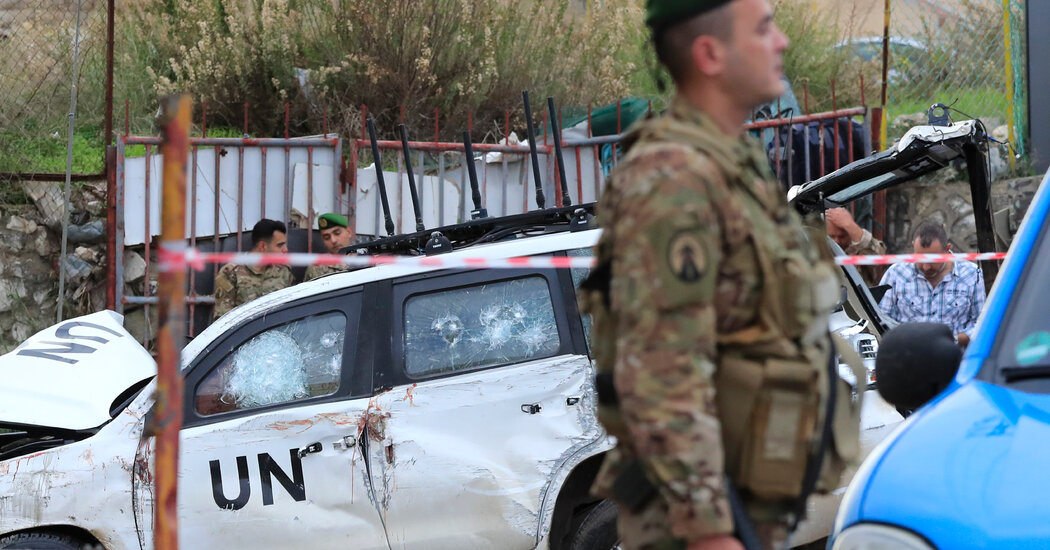
United Nations Secretary-General António Guterres announced the death of an Indonesian soldier within the United Nations peacekeeping forces in Lebanon (UNIFIL) amid escalating conflict between Hezbollah and Israel. The incident took place last Sunday, where the soldier sustained fatal injuries under complex circumstances in the region.
Guterres also reported that another soldier from the same unit was seriously injured, highlighting the risks faced by peacekeeping forces in conflict zones. He expressed his condolences to the Indonesian people and the family of the deceased soldier, wishing a speedy recovery for the injured soldier.
Details of the Incident
This incident comes at a highly sensitive time, as tensions along the Lebanese-Israeli border have escalated following a series of reciprocal attacks between Israel and Hezbollah. Guterres noted that this incident is part of a series of events threatening the safety of peacekeeping forces, urging all parties to adhere to international laws and ensure the safety of United Nations personnel.
It is worth mentioning that the situation in the region has worsened following attacks by the United States and Israel on Iran in February 2026, leading to military responses from Iran and its allies, including Hezbollah. These clashes have resulted in the deaths of over 1,000 Lebanese civilians and thousands more injured.
Background & Context
Historically, Lebanon has always been a theater for regional and international conflicts, where political and military interests overlap. Since 1978, United Nations forces have been present in Lebanon to maintain peace and stability, but these forces face increasing challenges amid rising conflicts.
The peacekeeping forces, known as the Garuda Battalion, are part of international efforts to ensure security in Lebanon, but recent events indicate that the security situation in the region remains fragile. The Indonesian Ministry of Foreign Affairs has confirmed that the safety of Garuda Battalion personnel remains a top priority, as the Indonesian government closely monitors developments.
Impact & Consequences
This incident underscores the dangers faced by peacekeeping forces in conflict areas, which may affect the United Nations' ability to carry out its peacekeeping missions. The escalation of violence could also increase pressure on the international community to intervene or take diplomatic action.
At the same time, these events may exacerbate humanitarian crises in Lebanon, where the population suffers from the effects of ongoing conflict. The deaths of peacekeeping soldiers may also provoke angry reactions in their home countries, potentially impacting international support for United Nations missions.
Regional Significance
The repercussions of this incident extend beyond Lebanon, reflecting the tense situation in the Arab region as a whole. The escalation of conflict between Israel and Hezbollah could affect stability in neighboring countries such as Syria and Palestine, complicating humanitarian and political situations.
This incident may also raise concerns among other Arab countries participating in peacekeeping forces, prompting them to reassess their involvement in such missions in the future. The situation in Lebanon remains indicative of the challenges facing the region amid ongoing conflicts.